
Chair Gets a Million-Euro Swimming Pool - and 1,800 Fifth and Sixth Graders Will Learn to Swim as Part of School
27.05.2026


27.05.2026

27.05.2026
27.05.2026
27.05.2026

27.05.2026
27.05.2026
27.05.2026
26.05.2026

25.05.2026

27.05.2026

27.05.2026

26.05.2026

27.05.2026

27.05.2026

27.05.2026

27.05.2026

26.05.2026

25.05.2026

27.05.2026

27.05.2026
27.05.2026

27.05.2026

27.05.2026

27.05.2026

09.03.2026

27.02.2026

19.02.2026

14.04.2026
07.11.2025
07.11.2025

23.04.2026

23.04.2026

12.04.2026

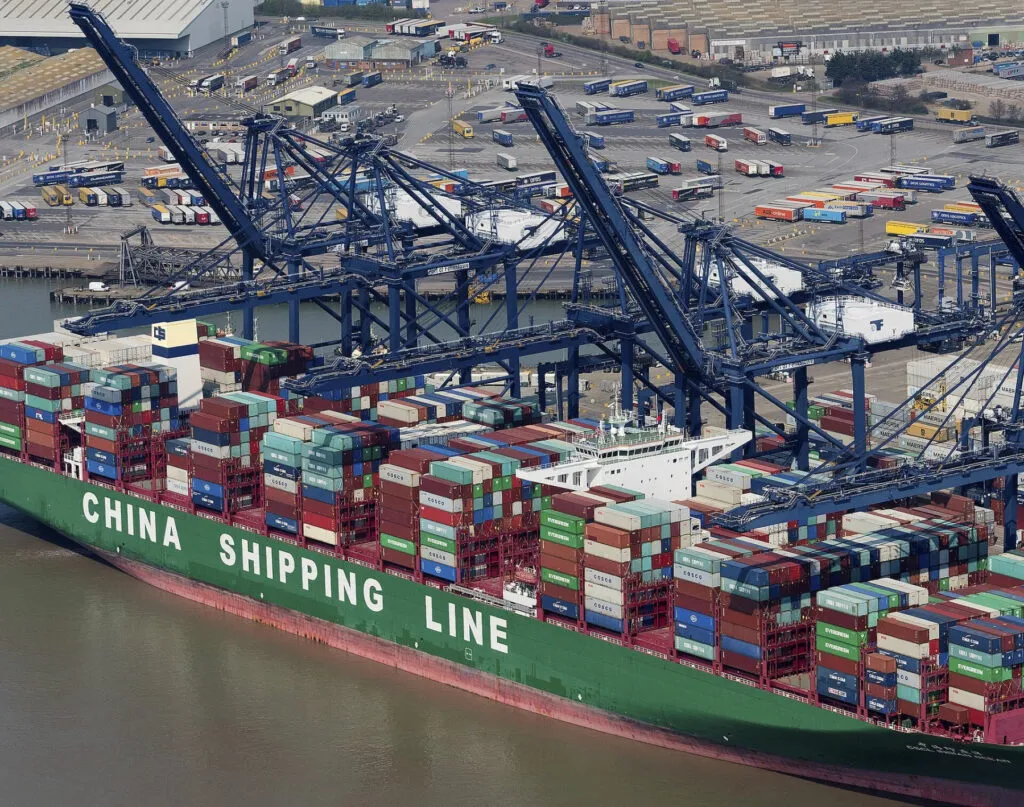
The European Union is preparing its next phase against China. Spain, France, Italy, the Netherlands and Lithuania jointly sent the European Commission a proposal for stricter trade measures against what they describe as „unfair industrial practices and structural overcapacity." The document doesn't name China outright - but no one is pretending they don't know which country it's about.
The numbers they cite: around 1 million industrial jobs lost in Europe between 2019 and 2025 due to rising competition from state-subsidised economies. The proposal calls for faster trade investigations, a simplified process for imposing tariffs, and closing legal loopholes that companies use to dodge restrictions by routing through third countries or by setting up shop inside the EU.
The proposed EU Industrial Accelerator Act is the biggest turn away from Europe's classic free-trade approach. It introduces a „Made in Europe" condition for public procurement and industrial subsidies in strategic sectors. Electric vehicles, for example, would need 70% EU content to qualify for favourable treatment. Aluminium and cement - 25%. Foreign firms that dominate more than 40% of a global market would be obliged to ensure that half of the corresponding economic activity goes to workers in the EU.
But not all EU members are on board. Germany openly opposed the joint proposal of the five countries. The reason is economic - bilateral trade with China hit around 250 billion euros in 2025, with more than 5,000 German firms operating in China. Germany's trade minister Katherina Reiche is in Beijing right now, pushing for „stronger industrial cooperation and better market access." In other words, Berlin is more afraid of losing sales in China than of losing its domestic industry.
It's an awkward paradox. At the same time, German studies released this week warn of „China shock 2.0" - a repeat of the deindustrialisation process the US went through after China joined the WTO in 2001. Reliance on China for batteries: two thirds of direct imports. Solar panels: around 93%. Antibiotics: over 70%. And the dependency is still climbing, not falling.
What does this mean for the Balkans? It looks like a distant topic, but it isn't. Macedonia and the region have become a key transit point for Chinese goods heading into the EU - and at the same time, for European attempts to hold on to local industry. If the EU imposes „Made in Europe" conditions on public procurement and subsidies, that automatically applies to member and candidate countries. For Macedonian producers, that's an opportunity - but only if they have the capacity to take it. For consumers, it means pricier goods in the short term. And for politicians it's a test: will Macedonia position itself as a European partner, or as China's „back door" into the European market?
The latest 10 news from this category
100 employees out of a job, 40 branches closed. The debts remain - but who exactly is going to collect...
Makedonija Turist is selling for a new 17.7 million euro investment. The question - what happens to the protected cultural...
Current Ferrari drivers won't buy it. Regulators will accept it. The question is whether Beijing will love it.

While everyone invests in machines, a Milan company is betting on the loneliness of millennials and Gen Z.

The small private alternative is finally growing - not because it changed, but because Google did.
13.26 million euros a year just for variable-rate interest. Why fast-track procedure when we will be paying for seven years?
The global aviation crisis has reached our airport. Minister Nikoloski promises 5 new lines - all for Ohrid or at...
The global market is in serious deficit. Macedonia is 100 percent import-dependent - which is exactly what we are getting...

200 pages on the concentration of power, disarming the AI race, and defending against deepfakes. The Pope stands on the...
When the whole venture industry only wants AI, Lucra Sports got around the rule with a chance acquaintance and a...