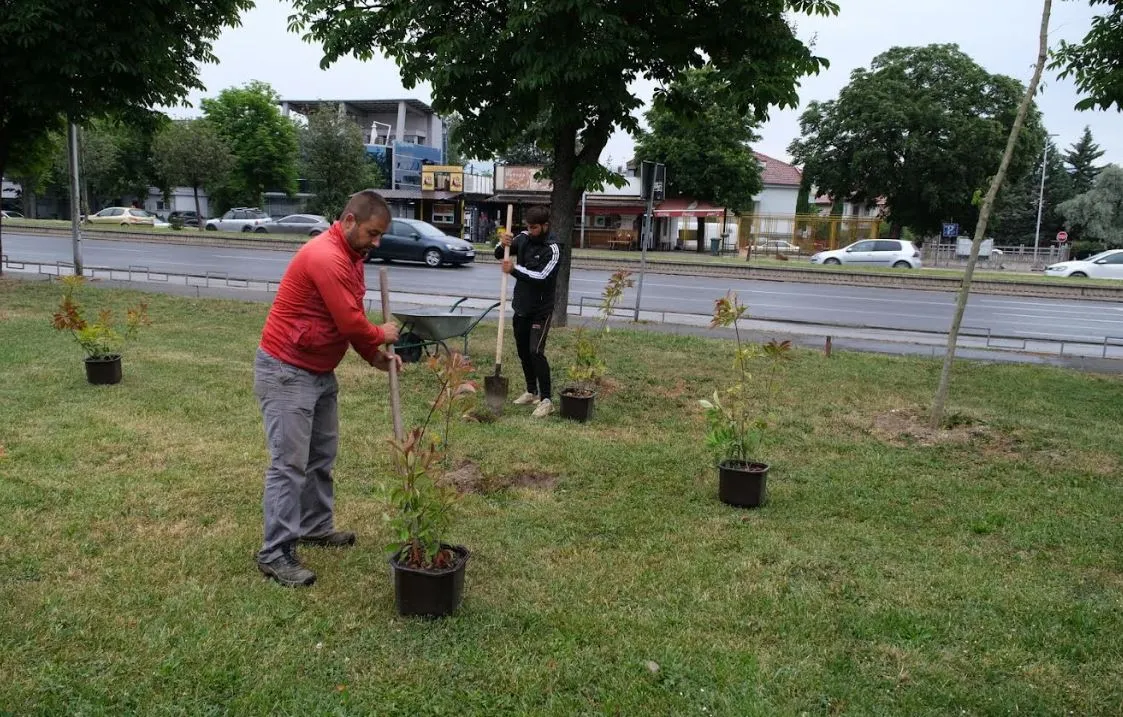
Karpoš Begins Spring Playground Reconstruction - and Plants 1,000 New Saplings Across the Municipality
20.05.2026


20.05.2026

20.05.2026

20.05.2026
20.05.2026
20.05.2026
20.05.2026
20.05.2026
19.05.2026
18.05.2026

20.05.2026

20.05.2026

19.05.2026

20.05.2026

20.05.2026

20.05.2026

20.05.2026

19.05.2026

18.05.2026

20.05.2026

20.05.2026
20.05.2026

09.03.2026

27.02.2026

19.02.2026
19.05.2026
19.05.2026
16.05.2026

14.04.2026

07.11.2025
07.11.2025

23.04.2026

23.04.2026

12.04.2026

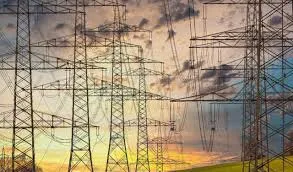
Macedonian energy has functioned for years as a system in which citizens most often see only the last link - the electricity bill. But behind that bill stands a whole chain: production, distribution, supply and grid management. The question that keeps being asked is - when one entity is present in several segments of the same sector, does that represent a monopoly or a concentration of market power?
In the classical economic definition, a monopoly is the situation where one entity has dominant or exclusive control over a given market. But modern energy is more complex. There doesn't always have to be a formal monopoly for there to be a high concentration of power.
The questions that deserve public analysis are:
In Europe, in recent years it is precisely because of such risks that there has been insistence on unbundling of activities - that is, that different roles not be concentrated in the same centre of influence.
In addition, North Macedonia still has relatively high losses in the distribution network compared with regional benchmarks, and every discussion about prices and electricity should begin precisely there - where the losses are, how they are reduced, and who pays for them.
In public, the financial results with huge profits are often mentioned, alongside the losses of the transmission system operator. Are the risks and profits in Macedonian energy distributed evenly?
If the transmission system carries the burden of stability and another part accumulates the profits, then the public has the right to ask:
- Is the current model sustainable?
- Who bears the load when there is a crisis?
- Who invests in the grid?
- Who takes responsibility for the losses?
- And who profits when the system works?
In addition, North Macedonia is entering a new phase - the connection of solar capacity, new investors and an energy transition. That means the load on the grid will grow.
In such conditions, the question of financial balance becomes even more important.
The latest 10 news from this category
Секоја форма на радикализација, без разлика од каде доаѓа, кон кого е насочена или под каков изговор се...
Секојпат кога ќе се отвори некоја афера за тендери, Македонија ја гледа истата слика. Опозицијата обвинува за криминал, власта враќа...
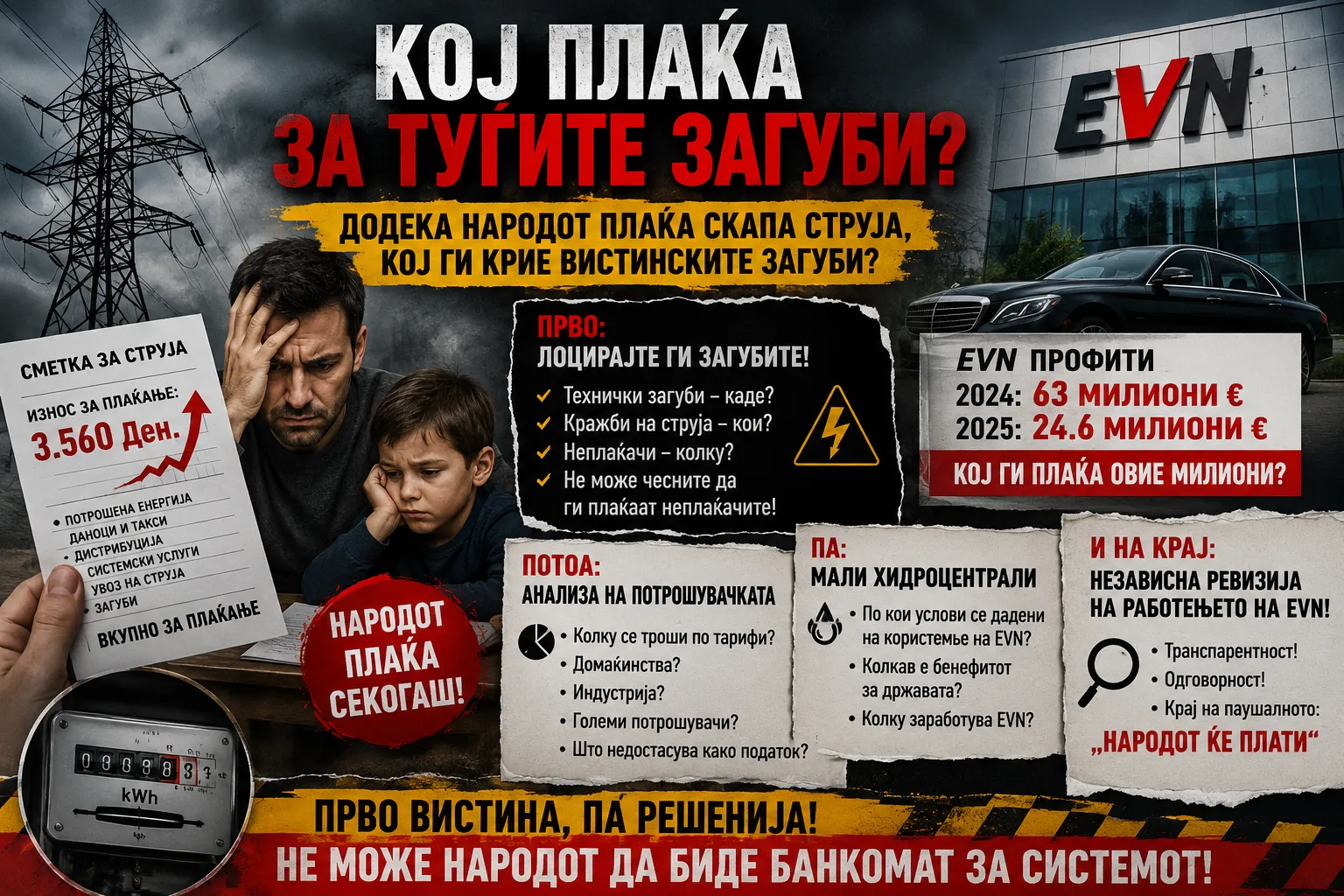
Македонија со години живее во енергетски систем во кој секој проблем завршува на грбот на народот. Кога има загуби –...

Медиумски простор денес е преплавен со колумни. Секојдневно десетици „аналитичари“, „експерти“, „познавачи“ и „независни интелектуалци“ пишуваат текстови во кои наводно...
Во Македонија изгледа најлесно е да се стави катанец. Жичницата на Водно нема да работи цело лето, а никој не...
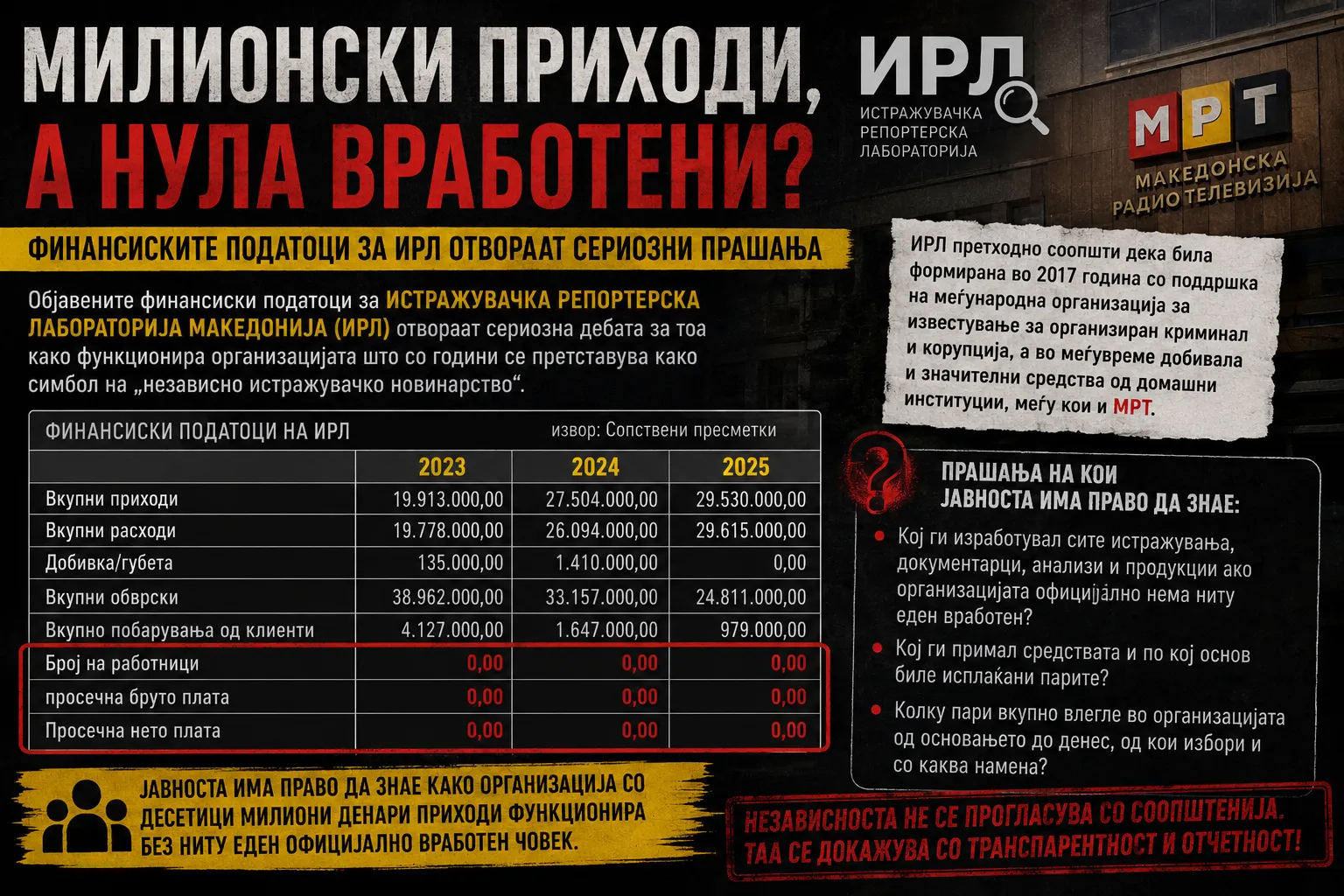
Објавените финансиски податоци за ИСТРАЖУВАЧКА РЕПОРТЕРСКА ЛАБОРАТОРИЈА МАКЕДОНИЈА (ИРЛ) отвораат сериозна дебата за тоа како функционира организацијата што со години...
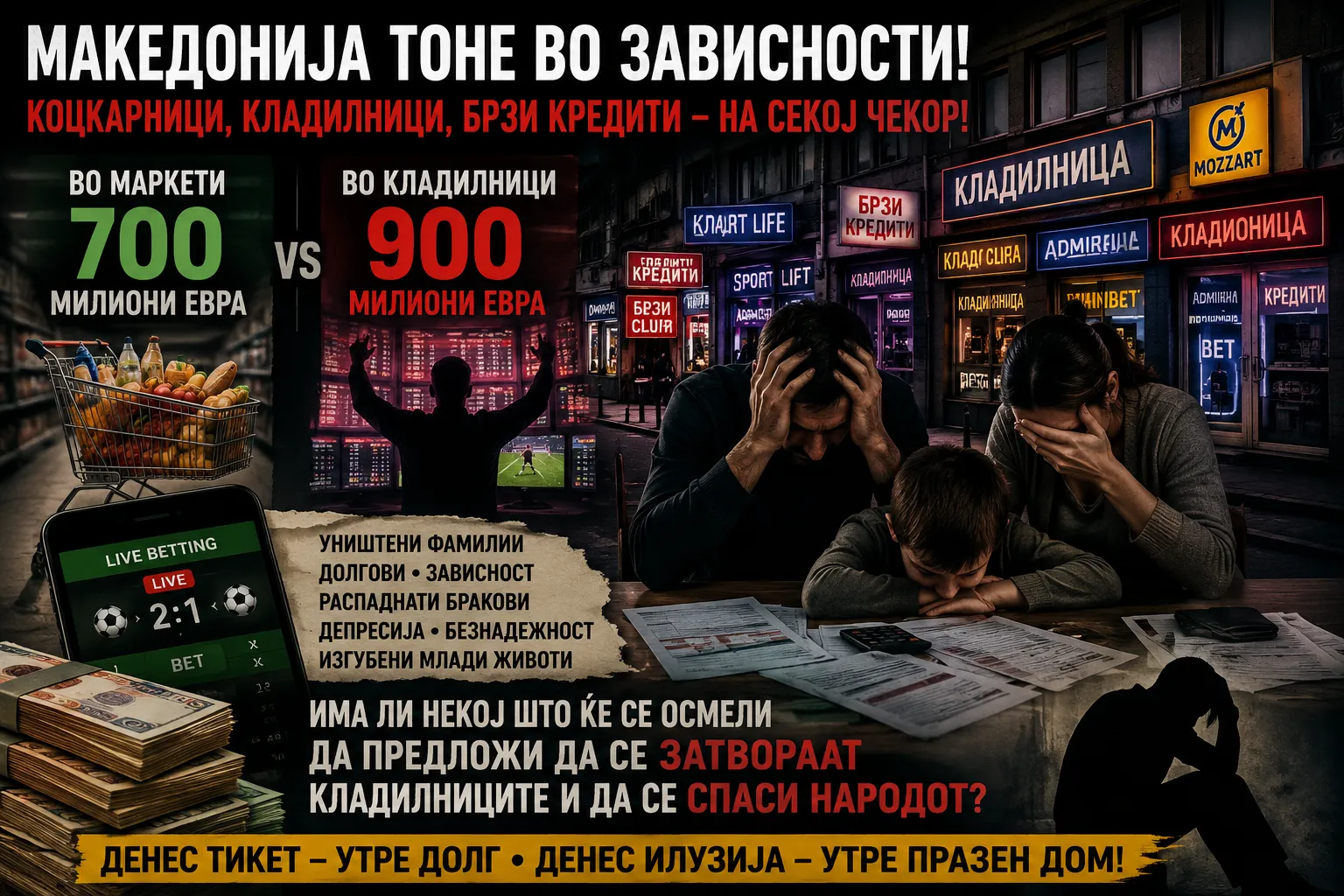
Додека државата зборува за економија, реформи и иднина за младите, реалноста на улиците изгледа сосема поинаку. Во речиси секој град...

Секогаш кога ќе се отвори тема за војна, лесно е да се покаже со прст кон...

Генерацијата З, младите родени отприлика помеѓу 1997 и 2012 година, веќе не се „иднината“ – тие се сегашноста што ги...

Крипто-пазарот сè појасно се движи кон нула — не како техничка вредност, туку како губење на...