


Kratovo man stabs police officer mid-intervention: prosecutors want the 40-year-old detained
15.09.2026


15.09.2026

15.09.2026
15.09.2026

15.09.2026
15.09.2026
15.09.2026

15.09.2026

14.09.2026

13.09.2026

15.09.2026

15.09.2026

14.09.2026

15.09.2026
15.09.2026

15.09.2026

15.09.2026

14.09.2026

13.09.2026

15.09.2026

15.09.2026

15.09.2026

15.09.2026

15.09.2026

14.09.2026

09.03.2026

27.02.2026

19.02.2026

15.09.2026

14.09.2026

14.09.2026

23.04.2026

23.04.2026

12.04.2026

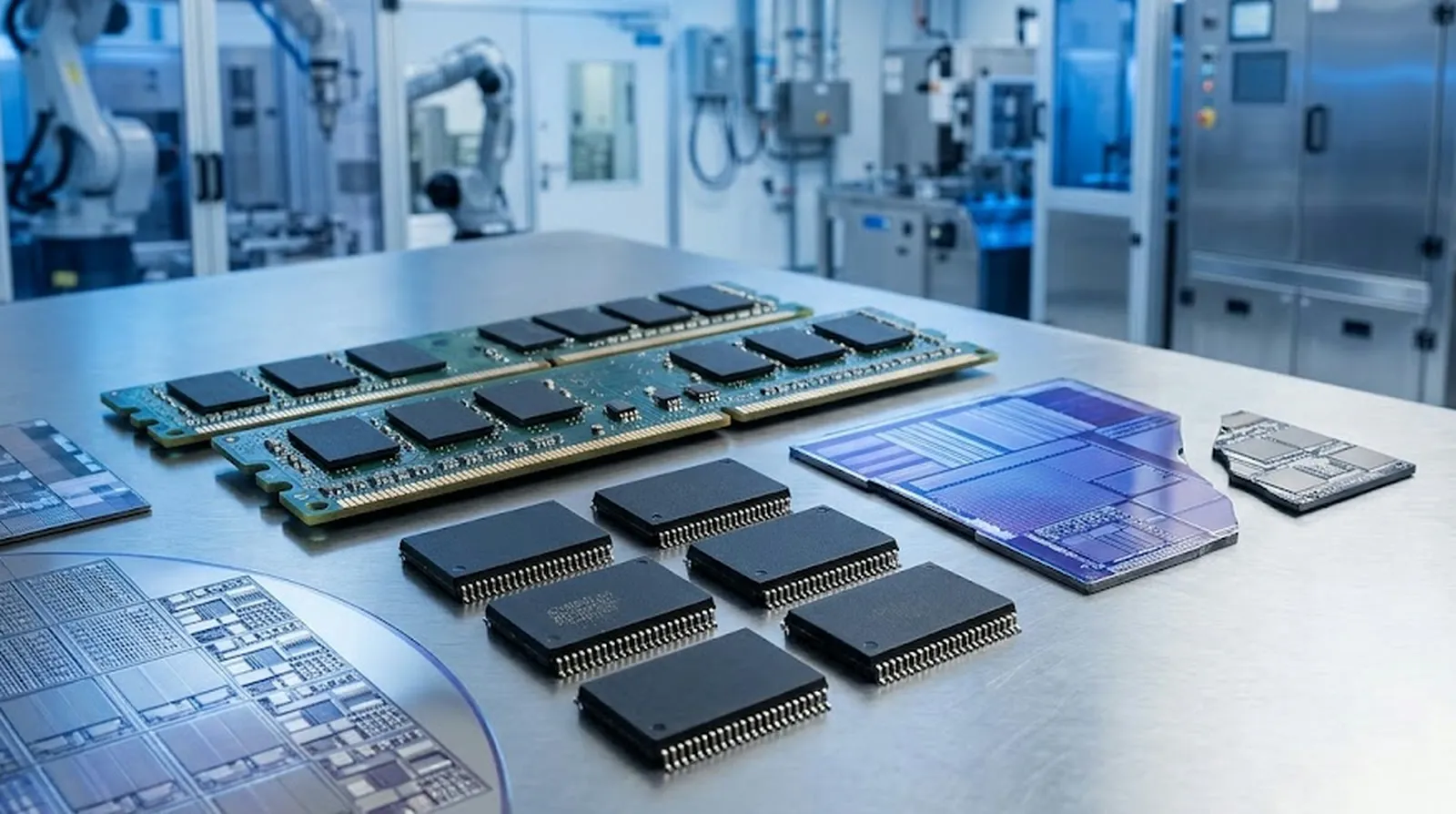
While the world talks about artificial intelligence as software, South Korea has just reminded everyone that all of it sits on something far more physical - memory. Samsung and SK Hynix, the world's two largest makers of memory chips, have announced investments that together exceed 550 billion dollars to ease what the industry calls „RAMageddon."
The term isn't marketing. It refers to a global shortage of memory chips, driven by the race to build AI infrastructure. Every new data centre, every new model, demands huge amounts of memory - and demand has suddenly outstripped capacity. That same shortage is why the Mac and iPad recently got more expensive; when the hunger for chips grows, the bill is paid by the consumer at the end of the chain.
The numbers are enormous even for this industry. Samsung is announcing a plan of over 2,600 trillion won (around 1.7 trillion dollars) for the coming decade, while the SK Group lays out a roadmap of 2,100 trillion won. Specifically for chips, around 518 billion dollars goes to four new memory plants and a further 356 billion dollars to AI data centres by 2035. President Lee Jae-myung called 2026 the year the country becomes an „indispensable" industrial power.
Behind the grand numbers sits a sober calculation. Korea sees that real power in the AI era won't lie with those who write the models, but with those who make the chips without which no model runs. While Washington and Beijing fight over the software, Seoul is quietly positioning itself as the factory that can't be bypassed. It's an old Balkan wisdom in new clothing - when everyone's digging for gold, the one who gets richest is the one selling shovels.
The latest 10 news from this category
A scientist at the same company puts the probability of human extinction above 10 percent within the next decade. The...
The president called in while the event was running, and the man who makes the chips answered that there would...

No virus attached, no suspicious file. Just a box that looks like the "I am not a robot" check and...
A researcher quit because the firms are gambling with our lives. Instead of denying it, Anthropic confirmed it - with...

Write a sentence, get a game. Until now it worked only in New Zealand, now in Belgrade too. Creators on...
When the two biggest firms in an industry ask for rules on how fast anyone may run, the rules rarely...
Not a single password fell. What fell was the assumption that a request from a government domain is automatically a...
The biggest names in mathematics have signed a letter against the AI labs. The dispute is not whether the machine...

Five campaigns, 200 million exchanges, and the defences fell to a request for a Japanese translation. The industry that harvested...

The hackers were inside for a whole year. The company confirmed it only after a journalist found his own licence...
This site uses cookies - is that okay? Learn more
Be the first to know when Metla launches something new
Leave your email and we will write when there is a new guide or something new on Metla.
