

Stiv Naumov dorm renovated for around 10 million euros: a month later water runs through the walls and the ministry counts wet wipes
24.10.2026


24.10.2026

24.10.2026

24.10.2026

24.10.2026

24.10.2026

24.10.2026

24.10.2026

23.10.2026

22.10.2026

24.10.2026

24.10.2026

23.10.2026

24.10.2026

24.10.2026

24.10.2026

24.10.2026

23.10.2026

22.10.2026

24.10.2026

24.10.2026

24.10.2026

24.10.2026

23.10.2026
23.10.2026

24.10.2026

23.10.2026

23.10.2026
24.10.2026
22.10.2026

20.10.2026

23.04.2026

23.04.2026

12.04.2026

It is not about how many moles you have. It is about whether one of them looks different from all the others. Paloma Cornejo, a dermatologist and head of the Más Que Derma clinic, calls this the ugly duckling rule - and it is the fastest test anyone can run at home after summer.
The logic is the reverse of what we expect
In most people, moles resemble one another: similar size, round or oval shape, roughly the same shade of brown. That is the normal for that particular body. When one mark stands out from that pattern - larger, a different shape, a different colour - that is the ugly duckling, and that is the signal to see a doctor.
It matters that this is not self-diagnosis. Standing out can mean seborrheic keratosis, an atypical naevus, a carcinoma or a melanoma - four entirely different diagnoses. The job of the person at home is not to guess which one it is, but to notice it.
ABCDE - and the letter that counts most
The second rule is well known: A for asymmetry - one half looks different from the other; B for borders that are irregular or blurred; C for colour, when one mark contains several shades; D for diameter; E for evolution.
She calls the last the most important. A mark that grows, loses its symmetry or changes colour needs an examination - regardless of how it looks at that moment. In other words: this is not a photograph, it is a film. What matters is what has changed since last year.
The places nobody looks at
She lists the areas that regularly get skipped: between the toes, the soles of the feet, the scalp, the genital area and the back. Of the back she says it is almost impossible to check alone - simply because a person cannot turn that far round. The solution is for somebody else to look, or to photograph it.
Another common misconception: melanoma does not have to appear on an existing mole. It can show up as a new mark that looks different from all the others from the very start.
Who should look more often
People who have already had skin cancer, a family history of melanoma, sunburn in childhood, a large number of moles or a fair phototype. For them a regular examination is not caution, it is routine.
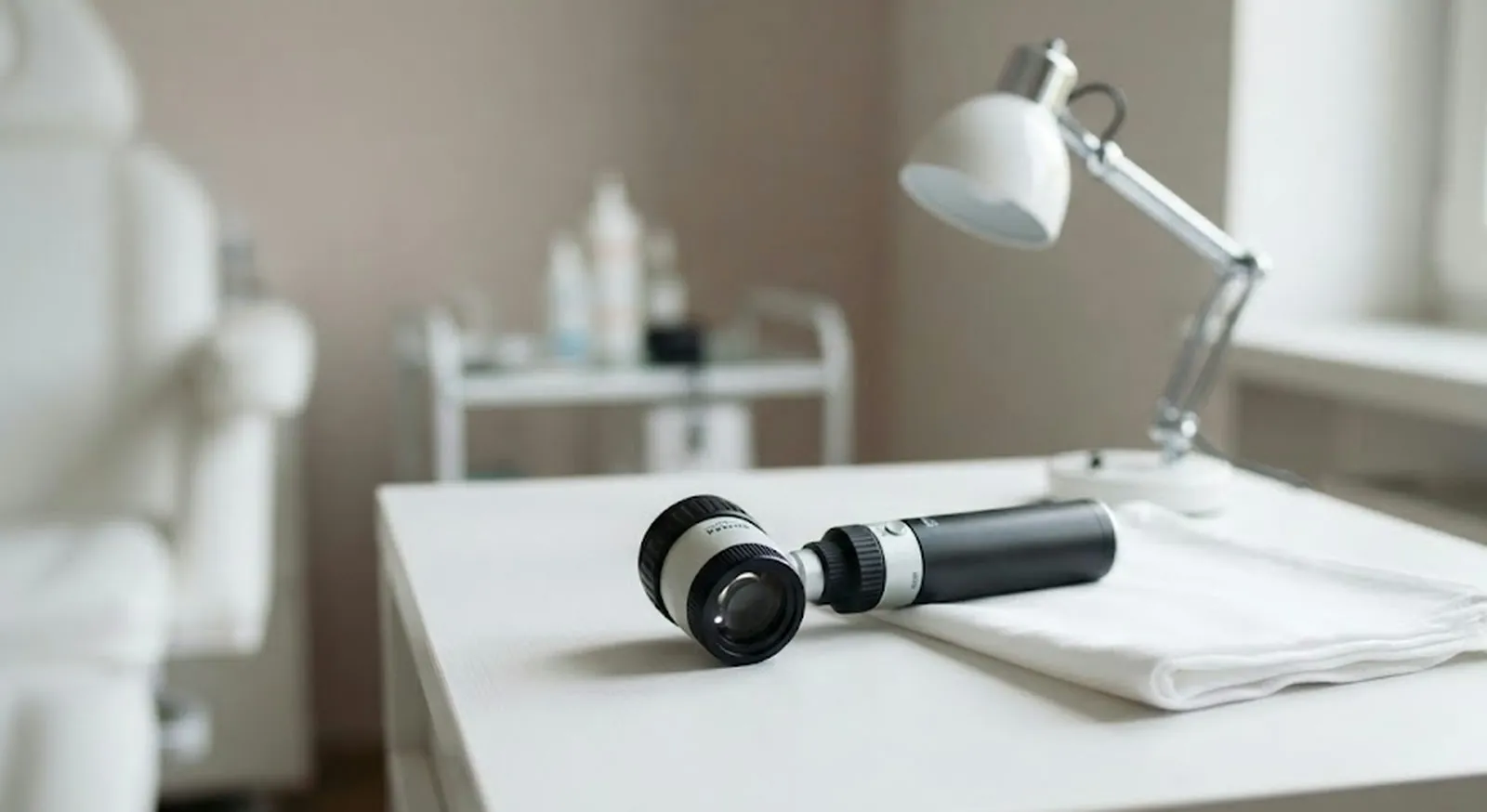
The dermatoscope - the magnifier that shows details the naked eye does not have - is why a self-check is not a substitute for a doctor. But it is not useless either: it is what decides whether the appointment gets made at all. The end of summer is a good reminder, though Cornejo herself says any time is a good time. The question is when anyone here last booked an appointment for something that does not hurt.
The latest 10 news from this category

An aubergine-coloured, fifties-style dress and jewellery her grandmother keeps for herself. When the heiress wears history, the message is also...

Volumising mousse lasts until the first wash; well-cut layers last until the next haircut. Which cut suits which hair, from...

Greece has had no monarchy since 1974, yet on October 23, 2021 Athens got a royal wedding. The bride chose...

The general wanted soldiers to pull it on over their uniform without getting dishevelled. A hundred and seventy years later,...

Two to four times a week is normal, daily only if you work out or have very oily hair. Everything...

Raffia cords took the place of rings, and gardeners with lawnmowers interrupted the ceremony - Agassi asked them to switch...

The order is about endometriosis, infertility and menopause. The photos are about the jacket. That's how the first lady's role...

Hairdressers call it face contouring: light where you want the eye to go, dark where you want depth. The trick...

In 1911 a fairy-tale wedding, in 1916 a crown, after the war exile. Karl died in 1922, and Zita never...

While the fashion industry sells a new "must-have" every season, a queen takes out of the wardrobe the coat she...
This site uses cookies - is that okay? Learn more
Be the first to know when Metla launches something new
Leave your email and we will write when there is a new guide or something new on Metla.