

Studeničani: 35-year-old dies after being electrocuted while washing his car with a pressure washer
18.09.2026


18.09.2026
18.09.2026

18.09.2026
18.09.2026

18.09.2026
18.09.2026

18.09.2026

17.09.2026
16.09.2026

18.09.2026

18.09.2026

17.09.2026

18.09.2026
18.09.2026

18.09.2026
18.09.2026
17.09.2026

16.09.2026
18.09.2026

18.09.2026
18.09.2026

18.09.2026
17.09.2026

17.09.2026

09.03.2026

27.02.2026

19.02.2026

18.09.2026

17.09.2026
16.09.2026

23.04.2026

23.04.2026

12.04.2026

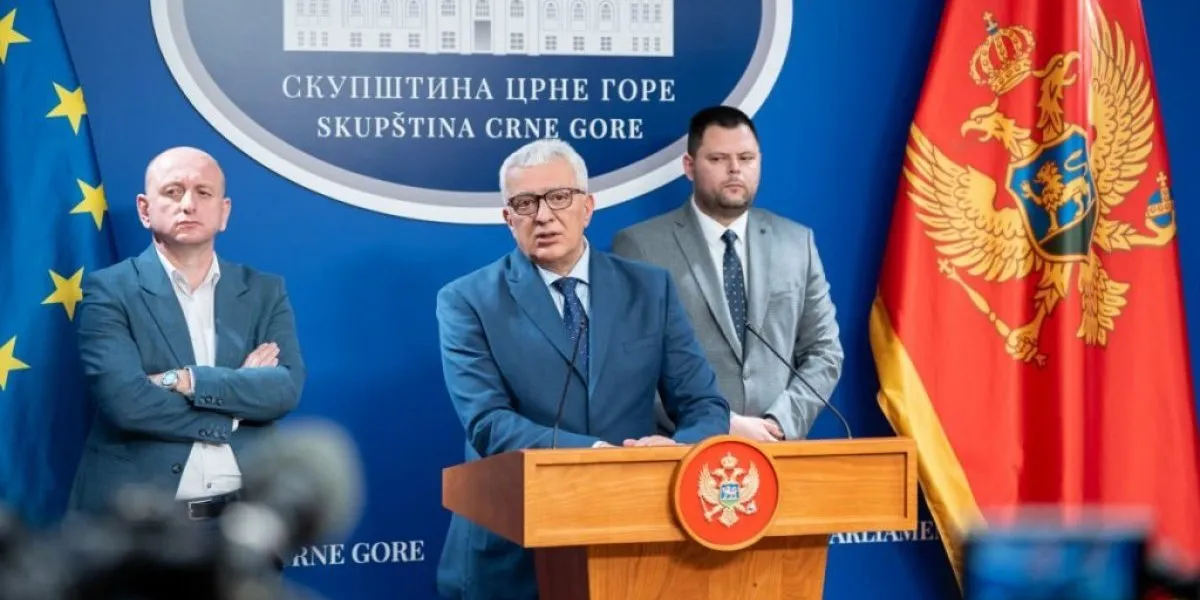
The municipalities of Zeta and Pljevlja adopted declarations rejecting recognition of Kosovo's independence. The initiative was supposed to roll on through Montenegro like dominoes. In Niksic it stopped - and not because of the opposition, but because of Mayor Marko Kovacevic, a man from Andrija Mandic's party.
When it is the ally applying the brakes
Kovacevic refused to back the initiative. Niksic is not just any municipality - it is the city that for years has been considered the pro-Serbian bloc's safest stronghold in Montenegro. If the declaration cannot get a majority there, then the problem is not in the numbers, it is in who no longer wants the same thing.
Milan Knezevic, leader of the Democratic People's Party, said openly that the goal is for the initiative to move through Montenegro's municipalities, „because the people never accepted that decision”, and to eventually put a binding resolution before the government.
A split that was long in the making
Knezevic and Mandic were for years the pair that held the coalition together. Today one demands a resolution, the other stays silent or applies the brakes through his own people. Knezevic's side describes Mandic's conduct as a complete reversal of his earlier line in the Democratic Front.
The difference between opposition and government is simple and old: while you are on the outside, recognition of Kosovo is a question of identity. Once you are inside the institutions, it becomes an item in a negotiating folder. Mandic is now Speaker of Parliament. That chair has its own gravity.
And the ambassador, of course
Knezevic accused EU ambassador Johann Sattler of pressuring parliament and threatening to withdraw support if the withdrawals of recognition continued. The accusation has not been confirmed by the other side, but its very appearance in the public debate is part of a script the region knows well.
In Montenegro, the EU race is the real currency - it brings money, dates and legitimacy. Declarations on Kosovo bring applause at a rally. When the two collide in the same hall, the one that pays usually wins.
Would it be any different here? The question is not rhetorical at anyone's expense - it is the same dilemma every government in the Balkans meets when what was promised to voters collides with what is required in Brussels. The only difference is how long the answer can be postponed.
The latest 10 news from this category
The call was about damaged furniture on a terrace. Armin Dzutovic died three days later. The internal investigation found first...
Four KLA leaders received 81 years in prison, and Albania's parliament immediately adopted a declaration calling the verdict unjust. The...
The court established responsibility for 96 killed, 303 tortured and 385 unlawfully detained. The prosecution asked for 45 years. Serbia...
Thaci and Krasniqi got 25 years each, Veseli 18, Selimi 13. The court established 385 unlawfully detained, 303 tortured and...
"If it is acceptable to the participants" - that is the entire offer. What gets negotiated is the format, not...

Thousands walked from the Rectorate to the electoral commission, and the signatures had to be queued for all weekend because...
Thousands of people under a digital clock and a banner asking for them to be found innocent. On Wednesday The...
The ruling list sailed through without a single problem, the student list was left waiting in line. Nobody banned anything...
The same firm that supplied ammunition to Ukraine for years is burning for the second time in a month. Seven...
A third attempt in three years, but this time the signatures came from the government benches too. Six MPs from...
This site uses cookies - is that okay? Learn more
Be the first to know when Metla launches something new
Leave your email and we will write when there is a new guide or something new on Metla.
