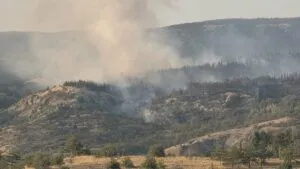
34 fires in 24 hours: three still burning, and the warnings put out nothing
09.09.2026


09.09.2026

09.09.2026
09.09.2026

09.09.2026

09.09.2026

09.09.2026

09.09.2026
08.09.2026
07.09.2026

09.09.2026

08.09.2026
08.09.2026

08.09.2026

08.09.2026

08.09.2026

08.09.2026

07.09.2026

06.09.2026
09.09.2026

09.09.2026

09.09.2026

09.09.2026

09.09.2026
08.09.2026

09.03.2026

27.02.2026

19.02.2026

23.04.2026

23.04.2026

12.04.2026

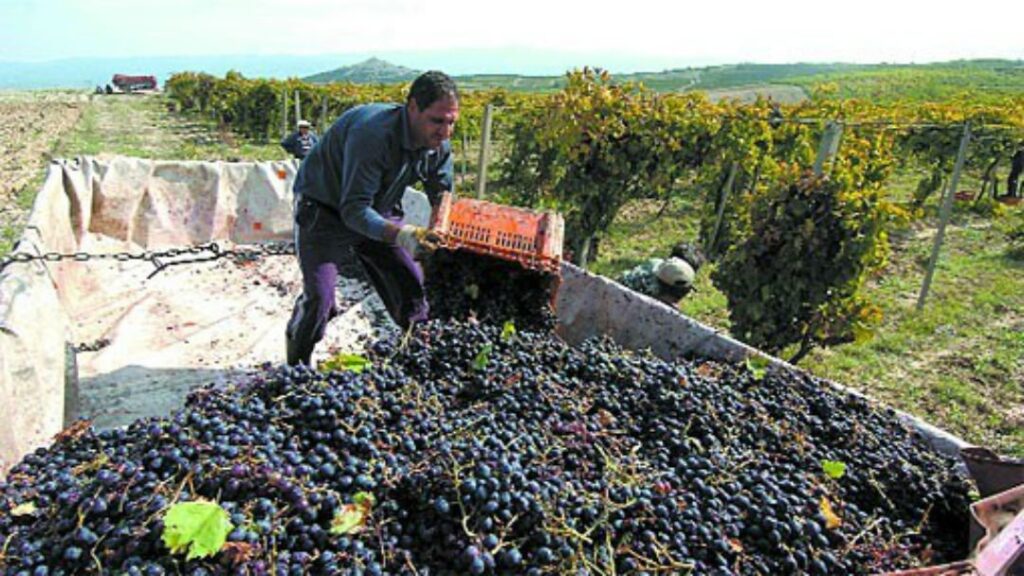
Kavadarci is spending three days celebrating the "Tikves Grape Harvest" - a carnival, tastings, music, a harvest table in the centre of town. A few kilometres from that table, some of the growers are watching their crop sit in the vineyards without knowing whether it will be bought, or at what price.
Both pictures are true at the same time. That is the whole story.
Agriculture Minister Borce Serafimovski said from Kavadarci that the price of grapes is 25 percent higher this year, that purchasing is under way and that 90 to 100 million kilos are expected - less than before because of drought, unfavourable weather and the storms that hit the region. According to ministry figures, around 113 million kilos of wine grapes were bought last year.
That comparison demolishes the most common defence. When the harvest is 13 to 23 million kilos smaller than last year, a grape surplus cannot be used to explain why purchasing is stalling. Supply is down, and yet some growers still have no contract.
The state is sending money. A credit line for the wineries has been opened through the Development Bank of Macedonia - around 540 million denars going directly to them to buy up the "vranec". The funds are available, and all quantities, the minister says, will be taken up by the wine cellars.
The opposition reads the same operation differently. SDSM is demanding urgent intervention buying by the state, the scrapping of the 8 percent reduction on the purchase price, an additional subsidy for every kilo bought, and a transparent price-setting methodology with clearly defined yield and sugar units. Deputy leader Fani Karanfilova-Panovska announced legislative proposals in parliament for a purchase price of 28 denars for vranec and 25 for smederevka.
The 8 percent reduction is the detail that rarely makes the headlines, and it is the key one. According to the opposition's demands, that reduction applies when the price is paid within eight days - which means a grower who wants his money quickly gets it at a discount. Whatever else the system is, it is a system in which being paid fast is expensive for the producer.
In Kavadarci, Mayor Mitko Jancev insists the situation is no worse than in previous years. "For nine years as mayor I have taken part in the negotiations on buying up the grapes and I can say that this year, on top of the law on the price of wine grapes being settled, nothing is worse or more disorganised", he said, rejecting speculation that vranec would not be bought or would go at lower prices.
Nine years of purchase negotiations is both the best and the worst argument in that sentence. The best, because the man genuinely knows how it works. The worst, because if after nine years the same negotiating scene repeats every September, that is not a seasonal misfortune - that is a mechanism.
The growers put it plainly, without the economic terminology. "What 'Grape Harvest', this is a 'Grief Harvest'", says farmer Dragi Dzalev, comparing the grape purchase to the buying of ajvar peppers. "Whole fields have been left with grapes on them, it will all rot and never be picked, while they parade about with dancing and singing", says Gordana Stosic.
Calls have also appeared publicly to boycott the festival, under the message "Buy the crop first, sing afterwards". That is not a demand to scrap the harvest festival. It is a demand to change the order - first let it be known who pays and how much, then celebrate.
The problem this year, according to the producers themselves, is not only the price. The problem is that some of them do not know whether or at what price they will sell the vranec - and without that figure a grower cannot even calculate whether a whole year's investment will come back. The price, the credit line and the quantities have all been announced. What is missing is the signature under which a grower knows his crop is sold rather than his problem.
The latest 10 news from this category

The largest round ever by a European tech firm is led by Samsung, and Macron called it a third way...

The queue for putting cargo into orbit is growing faster than the capacity, and one supplier holds almost all of...

A consultant paying 200 dollars a month could not get an itemised bill for his own usage. When he asked...

The headline number is low. But year on year recreation went up 8.8 per cent and food 1 per cent...
Extra-light heating oil went up by 8 denars and reached 105 denars a litre. That is the fuel some households...
Nikoloski called it the highest quarter on record. The growth comes from projects set up in 2024 - which means...
Opendoor's founder raised 25 million dollars for an app that tells construction workers whether they installed something correctly. What the...

They set off at three in the morning, reached the summit at seven in the evening, spent the night in...

The head of Google Photos boasted about an agent for her 143,206 photos. The feature applies only to paying users...

22 million listings across 31 countries, a 30-year mortgage and one third of income as the threshold. The gap between...
This site uses cookies - is that okay? Learn more
Be the first to know when Metla launches something new
Leave your email and we will write when there is a new guide or something new on Metla.