

30 days' custody for the fan who knocked a child unconscious outside "Jane Sandanski": how did two fan groups end up right at the entrance?
03.11.2026


03.11.2026

03.11.2026

03.11.2026

03.11.2026

03.11.2026

03.11.2026

03.11.2026

02.11.2026

02.11.2026

03.11.2026

03.11.2026

02.11.2026

03.11.2026

03.11.2026

03.11.2026

03.11.2026

02.11.2026

01.11.2026

03.11.2026

03.11.2026

03.11.2026

03.11.2026

02.11.2026

01.11.2026

23.04.2026

23.04.2026

12.04.2026

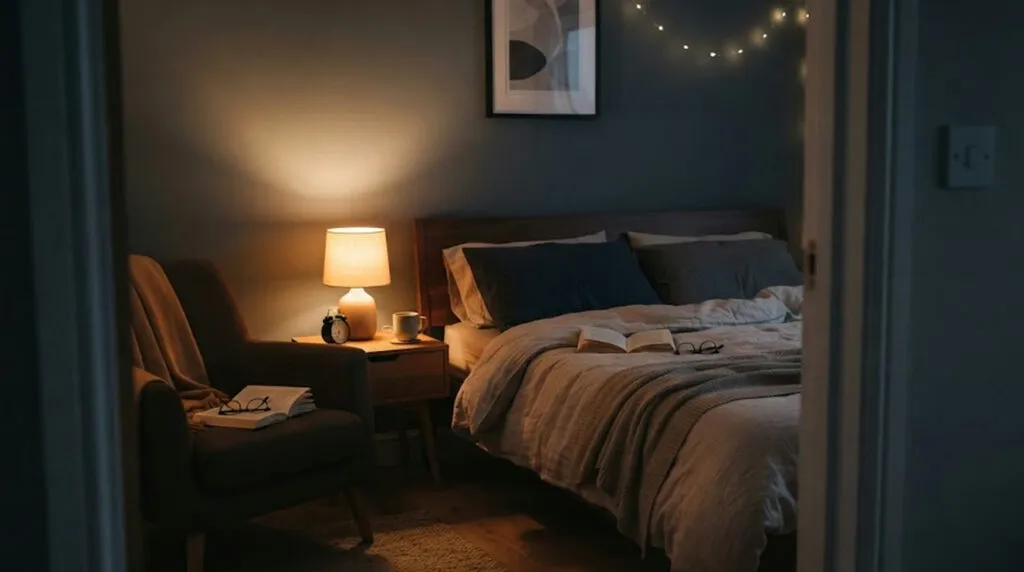
You wake up in the middle of the night, stare at the ceiling and tell yourself: just relax and you'll fall asleep. Half an hour later you're even more awake. According to sleep specialist Dr Francisco Díaz García, that effort is exactly the problem. Sleep can't be forced, and lying in bed straining to fall asleep keeps the brain in a state of alertness.
"Sleep isn't something we do, it's something that happens when the brain lets its guard down," he says. The more you fight, the further away you push that guard.
There's a deeper trap too. When waking at night keeps happening, the brain learns to associate the bed with frustration and sleeplessness. Experts call it conditioned arousal: the bed stops being a place of rest and becomes a signal for restlessness.
The advice sounds counterintuitive: get up. Go to another room with dim, warm light and do something calm and low-stimulation - read, listen to a podcast or watch something light. Leave work, email, social media, thrillers and the news for the morning. If you have to look at a screen, keep it dimmed and away from your eyes.
You go back to bed only when you're genuinely sleepy, and if you wake up again - repeat the routine. According to Díaz García, within a few weeks sleep usually comes faster and becomes more stable. How many of us, instead, reach for the phone first the moment our eyes open at three?
If the problem doesn't go away, it's time for professional help. Chronic insomnia is when you sleep badly at least three nights a week, for longer than three months, and it disrupts how you function during the day. It can be treated, often without medication - and stimulus control, the technique described above, is one of the first tools in cognitive behavioural therapy for insomnia.
The latest 10 news from this category

Almond flour instead of wheat, chocolate melted over steam and a glaze you spread the moment the cake comes out...

Hate your job and work twelve hours, and you get worried questions. Love it and work fourteen, and you get...

Legend has it the first ones were hurled red-hot from the walls of besieged Almogía. Today they're filled with cream,...

A book with "revolution" in the title and advice every grandmother knows: dinner earlier, beans on the table, vegetables before...

Two fillets, ham, cheese and breading from the finest crumbs. The biggest mistake is adding everything you've got in the...

If you sleep six hours and need eight, you run up two hours of debt a day. The weekend is...

The name sounds expensive, but the dish is mountain food from Auvergne: potatoes, bacon and cheese that stretches into long...

The recommendation is 25 to 30 grams of fibre a day, but your gut won't accept it overnight. A nutritionist...

Before "trick or treat" there were soul cakes: spiced biscuits with raisins, baked for 15 to 20 minutes at 180...

It sounds like an ad for the lazy, but the number only covers the intense intervals. The rest of the...
This site uses cookies - is that okay? Learn more
Be the first to know when Metla launches something new
Leave your email and we'll write to you when there's a new guide or something new on Metla.