After 19 Months on the Run, Bajrami Handed Himself In at Blace at 5:35 AM: Same Crossing, Same Early Hour as Grubi
10.09.2026


10.09.2026

10.09.2026

10.09.2026
10.09.2026

10.09.2026

10.09.2026

10.09.2026
09.09.2026

08.09.2026

10.09.2026

10.09.2026
09.09.2026
10.09.2026
10.09.2026

10.09.2026

10.09.2026

08.09.2026

07.09.2026

10.09.2026
10.09.2026

10.09.2026

10.09.2026

10.09.2026

09.09.2026

09.03.2026

27.02.2026

19.02.2026

23.04.2026

23.04.2026

12.04.2026

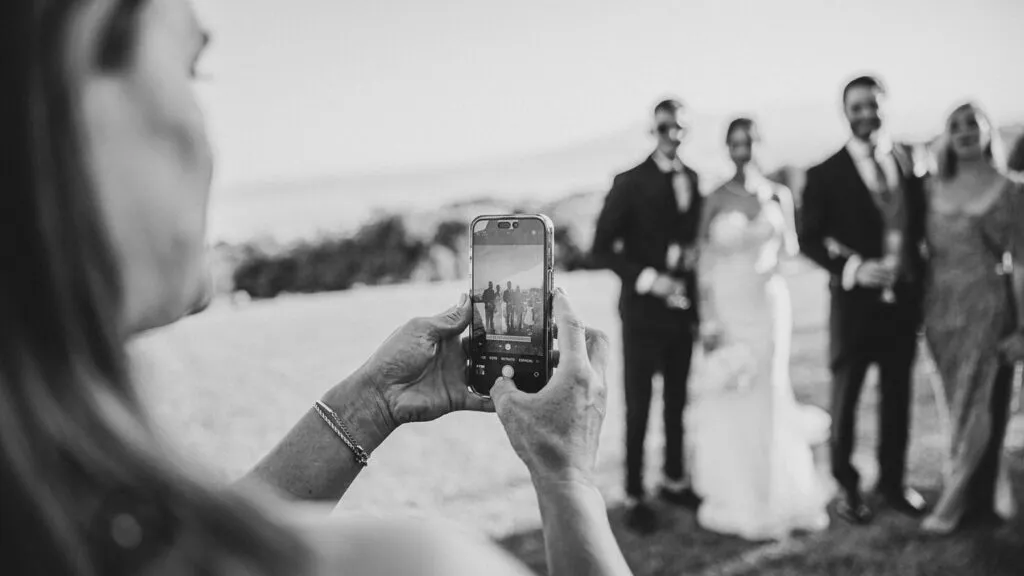
There is a scene anyone who has been to a wedding in the last ten years recognises: the bride walks in, and the first thing she sees is a row of raised screens. Wedding planner Patricia Navarro describes it in three words - "something breaks".
Out of that comes what is slowly turning into a request rather than a whim: more and more couples are asking guests to leave phones in their pockets or at home. Abroad it already has a name - the unplugged ceremony. Here it does not yet, but the scene is identical.
The argument is not technophobia. The photographer and videographer are already paid and already working; all the guest with a phone produces is a duplicate from a worse angle. The problem starts when that duplicate obstructs the original. Cristina, from a Spanish wedding agency, puts it most concretely: "We see guests struggling to catch the perfect moment, planting themselves in front of the professional photographers at exactly the key moments - the couple leaving the church, the first dance, the couple's session."
The second, less obvious point is how it looks later. Wedding photographs from the last decade are full of screens. That is not only an aesthetic problem - it is a record of divided attention in the very moment everyone came for.
How to ask without it sounding like a ban
Here the planners agree: you do not write a rule, you write an invitation. Wedding planner Aradia Gómez says more and more couples ask about this kind of ceremony, and that she presents it as an invitation to be present rather than a list of prohibitions. In practice that means guests know in advance - through the invitation or the wedding website - and with an explanation of why, not just a prohibition.
Some weddings solve it a third way: they hire a dedicated person to capture spontaneous moments for posting the same day. Which means the need for content has not disappeared - it has simply been given an owner instead of being left to a hundred guests at once.
Fashion or change
Here opinions diverge, and that is exactly what makes the story more interesting. Gómez sees it as a generational reaction: "More than a fashion, I see it as a reflection of a generational concern. We live hyper-connected, so the genuinely important moments take on a different value." Cristina is more practical and more hopeful: "I hope it is not temporary. A lot of wedding memories have been ruined by badly placed phones. The wedding day cannot be repeated."
A Macedonian wedding is a serious affair - nobody here disputes that. A hundred and fifty guests, people who travelled for hours, families that meet once in ten years. And it is precisely at a wedding like that where the cost of divided attention is highest, because the fewest of those people will ever be in the same room again. Whether anyone here would dare put that on the invitation is another question entirely.
The latest 10 news from this category
Padded shoulders, XL earrings and an accentuated waist. Caroline of Monaco wore a leopard print that was only visible when...
Three years without makeup. What has been removed is precisely the part of a woman's face the industry treats as...
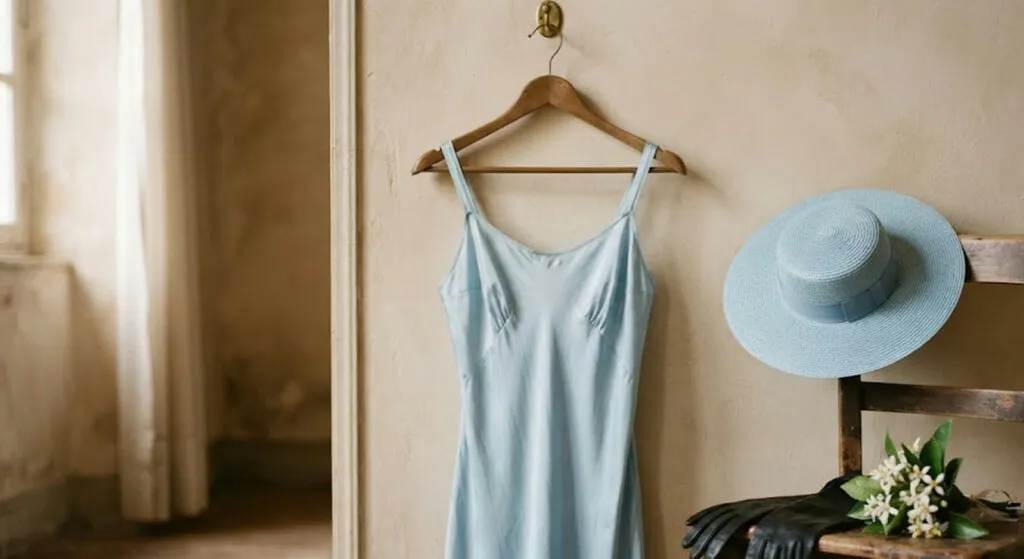
Bianca Jagger usually gets the credit for breaking the white-bride tradition. Rita Hayworth did it twenty-two years earlier.

The midi skirt is that rare piece that changes only the top half, not the whole wardrobe. From black lace...
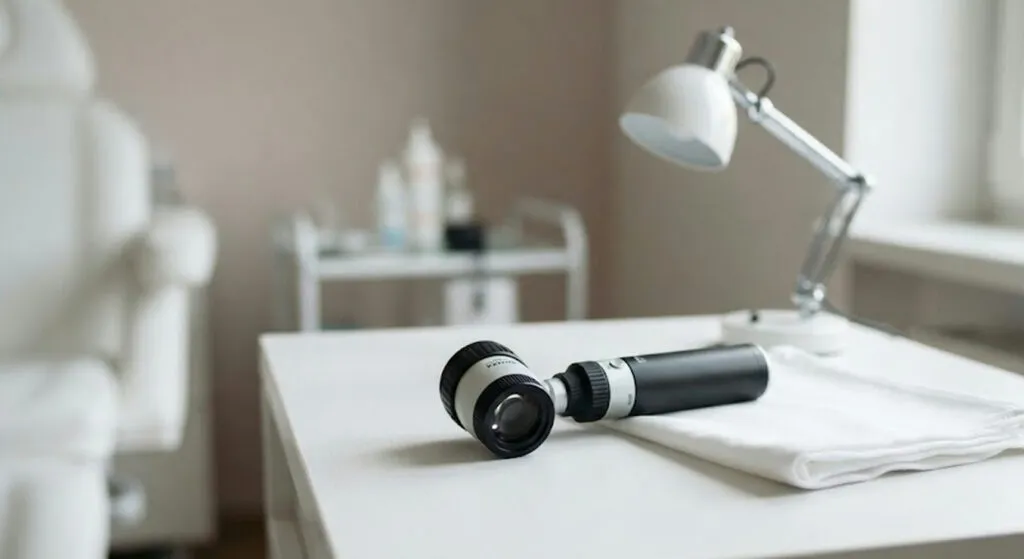
Melanoma does not have to appear on an existing mole. A dermatologist lists the five areas almost nobody checks -...
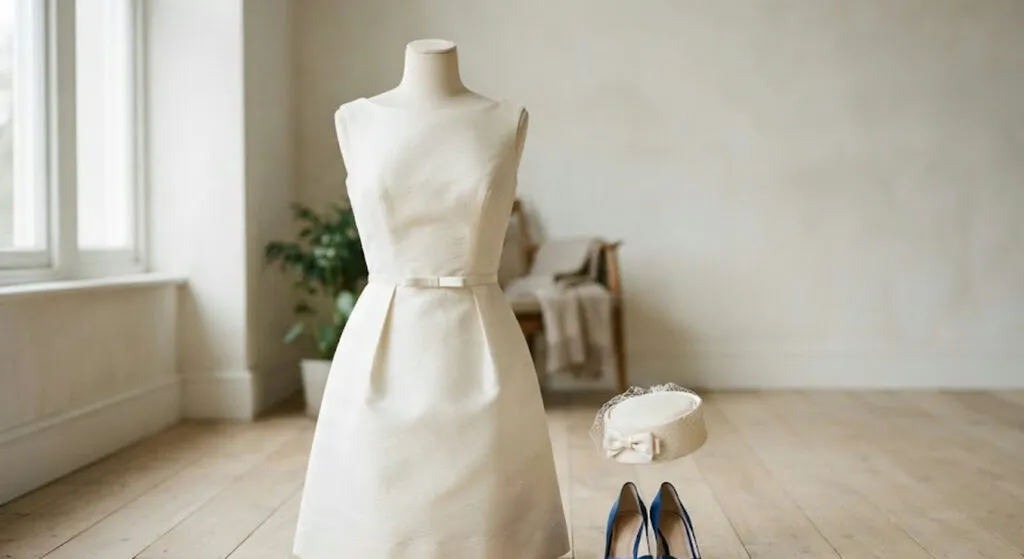
Isabel Getty could have bought anything and chose a dress that looks modest in a photograph. Here a wedding works...
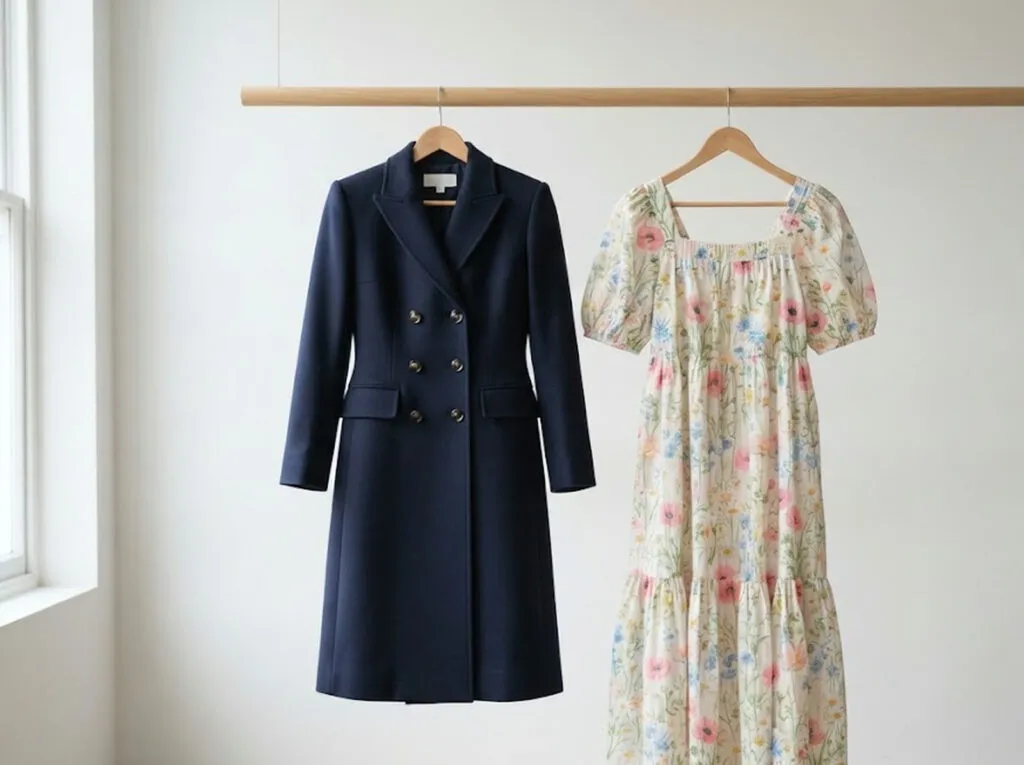
It is not a question of taste but of what each is allowed. For one the dress is a choice,...
The fix does not require a new makeup bag. It is a sequence, not a purchase.
Wedding bands are bought, and that does not change. Everything else on the bride is suddenly an open question.
A firm base, a dark colour, a zip and one internal pocket. That is not luxury, it is construction -...
This site uses cookies - is that okay? Learn more
Be the first to know when Metla launches something new
Leave your email and we will write when there is a new guide or something new on Metla.