34 fires in 24 hours: three still burning, and the warnings put out nothing
09.09.2026


09.09.2026

09.09.2026

09.09.2026

09.09.2026

09.09.2026

09.09.2026

09.09.2026
08.09.2026

07.09.2026
09.09.2026

08.09.2026

08.09.2026

08.09.2026

08.09.2026

08.09.2026

08.09.2026

07.09.2026

06.09.2026
09.09.2026

09.09.2026
09.09.2026

09.09.2026

09.09.2026
08.09.2026

09.03.2026

27.02.2026

19.02.2026

23.04.2026

23.04.2026

12.04.2026

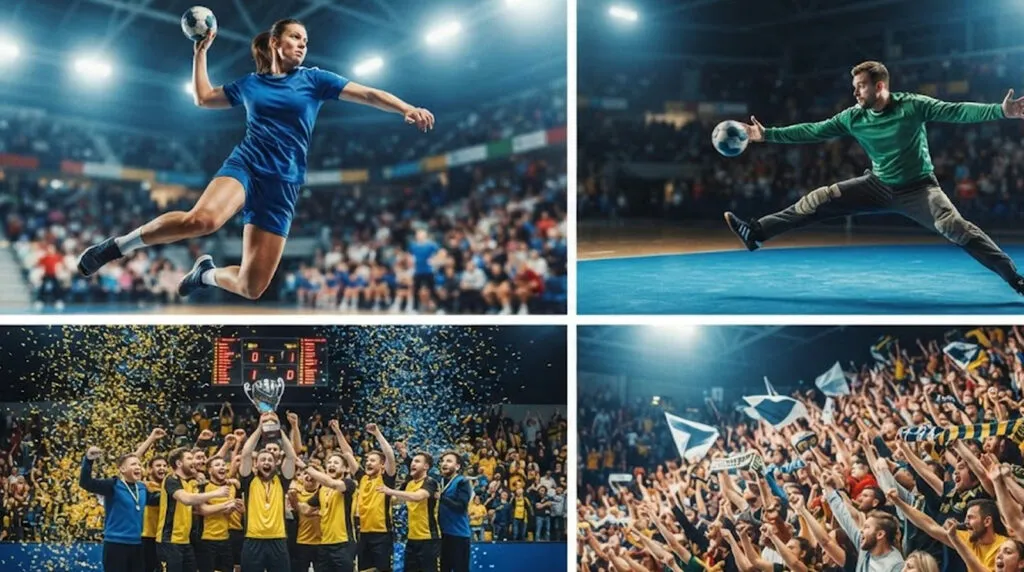
RK Vardar have put tickets on sale for the home tie with France's Nantes - the club's first home match this season in the EHF Champions League. The match is set for 16 September at 6.45pm at the Jane Sandanski hall in Skopje, with sales taking place exclusively online. The price for blocks 3, 4, 5, 6, 7, 8, 11, 12, 13, 14, 15 and 16, as well as for block G, is 500 denars. The club's message is direct: fill the hall for the return to the strongest club competition. The red and blacks were once European champions, then it all fell apart in a matter of months. Now they are back, and the question is whether the crowd came back with them.
The Macedonian men's Super League opened with a match decided literally at the death. At the Biljanini Izvori sports centre, GRK Ohrid and Eurofarm Pelister drew 28:28. After the first half the Bitola side led 14:13, and at one point were two goals up. In the second half Boris Rojevic's team held a minimal lead, but in the closing stages Lino Cervar's side got a point through Petar Atanasijevic in the final seconds. Ohrid's top scorer was Dominik Mate with 11 goals, while Kuzmanovski scored 10 for Pelister. Elsewhere in the round: Alkaloid - Multi Esens 38:28, Prilep - Kumanovo 38:31, Butel Skopje - Mladost 30:30, Struga - Tikves 27:28, Vardar 1961 - Eurofarm Pelister 2 31:19. Two draws out of six matches on the opening day. The league is not settled even on paper.
Macedonia's international goalkeeper Martin Tomovski was among the best on the court in the German Bundesliga, but his Bietigheim lost at home to Lemgo 29:36. That is a seven-goal margin in a match where the goalkeeper was among his team's most important players - a combination familiar to anyone who has played that position. The saves are remembered by the statistics, the defeat is remembered by the table. Tomovski is part of a generation of Macedonian goalkeepers who keep the national team in matches where we are weaker on paper. The problem has never been who stands on our line. The problem is that six more people are needed in front of it.
The first round of the 2026/27 women's Champions League began with something unusual: in all four Saturday matches the visitors won. Defending champions Metz opened their title defence with a 32:23 win at Storhamar, with goalkeeper Sabrina Novotna making 15 saves. Finalists Gyor beat Croatia's Podravka 26:23 in the Match of the Week - Tjasa Stanko scored eight goals, five of them from seven metres, against the club where she played in 2019/20. CSM Bucharest won 37:29 at Slovenia's Krim, who now have ten matches without a win in this competition. Esbjerg took Dortmund apart 33:24, with Henny Reistad scoring ten goals from ten attempts. Home advantage in women's handball evidently means less and less.
Before the start of the new season, the EHF published a 2025/26 accounting that reads like an advertising catalogue, but with figures that mean something: a cumulative TV audience of over 540 million for the Champions League and the European League, more than 40 broadcasters across over 80 territories, 50 percent growth on its own platform and a digital reach of 1.6 billion. Attendance in the halls was 1.2 million, and both Final Four tournaments set records - 20,022 spectators a day in Budapest and 20,122 in Cologne, where 14,000 tickets for 2027 sold out in 24 hours. The most important thing, though, is structural: from this season the men's Champions League expands from 16 to 24 teams. More places means more chances for clubs from our region. And more matches in which the gap between the budgets will be visible from the first minute.
The latest 10 news from this category
On the Melsungen bench in Kassel sits Roberto García Parrondo, the man who led Vardar to the European throne in...
The EHF is pulling archive footage from 2017 and 2019, and Vardar enter a group with Nantes, Melsungen and Wisła...
Tickets for the Nantes match are already on sale, and the man who brought the first European trophy has signed...
The champion started the way it had to, and one Macedonian in the Bundesliga outplayed two goalkeepers with European titles...
One goal separated Gevgelija from Ohrid's first trophy. In Germany one Macedonian goalkeeper saves more than anyone else, and still...
Twenty seconds left, level at 31:31, and a seven-metre throw that decided a trophy. Ohrid lost its first Super Cup...
The lakeside side won both previous finals, so the favourite is not the one everyone names automatically. Alkaloid won 40:29...
Vardar return to the Champions League after four years, Alkaloid broke Lovćen with a 6:0 run, and the combined cadet-junior...
The man who scored the most important goal in the club's history now sits on its bench - and after...
After a four-season break Vardar return to the Champions League, and on the bench sits the man who scored one...
This site uses cookies - is that okay? Learn more
Be the first to know when Metla launches something new
Leave your email and we will write when there is a new guide or something new on Metla.