

The Young Men From Saraj Say They Were Beaten After Being Subdued, the Union Claims They Tried to Run Police Over: The Interior Ministry Is Still Just Investigating
11.10.2026


11.10.2026

11.10.2026

11.10.2026
11.10.2026

11.10.2026

11.10.2026

11.10.2026

11.10.2026

11.10.2026

11.10.2026

11.10.2026

10.10.2026

11.10.2026

11.10.2026

11.10.2026

11.10.2026
10.10.2026

09.10.2026

11.10.2026

11.10.2026

11.10.2026

11.10.2026

11.10.2026

10.10.2026

11.10.2026

11.10.2026

09.10.2026

10.10.2026

08.10.2026

06.10.2026

23.04.2026

23.04.2026

12.04.2026

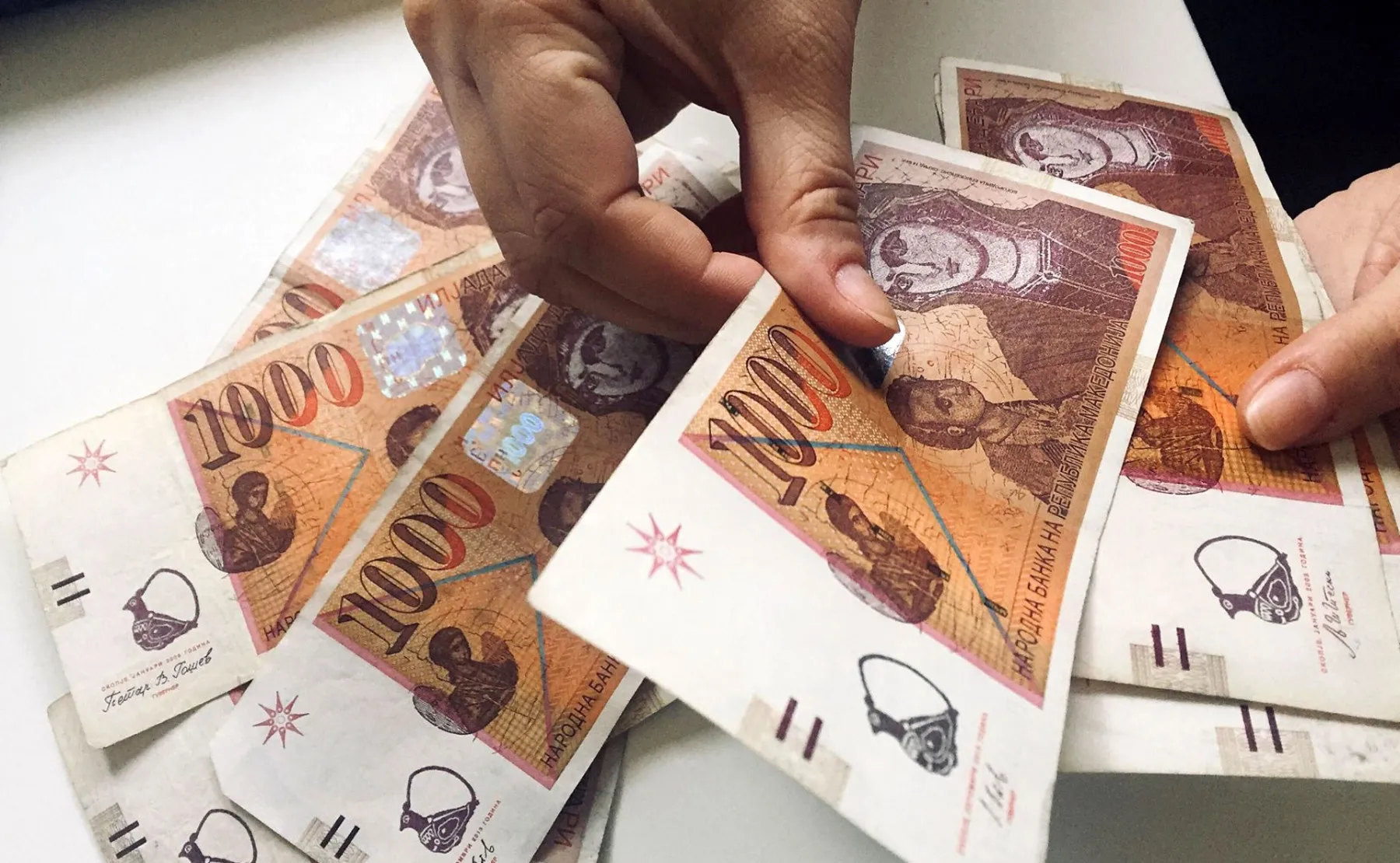
The average net wage paid out in June was 48,381 denars. In May it was 49,544. The difference is 1,163 denars less - or 2.3 percent month on month, according to State Statistical Office data.
That is the nominal drop. The real one, once inflation is subtracted, is 1.9 percent. Either way the number moves in the same direction, and it is not a direction anyone will call a press conference about.
The annual growth nobody feels
Year on year the picture looks different: wages are 6.4 percent higher in nominal terms. In real terms, once inflation takes its share, the growth melts down to around three percent. That is the gap between the number in the press release and the number in your pocket.
Most of the annual growth comes from administrative and support service activities, where wages rose by almost 11 percent, followed by agriculture, forestry and fishing, and transport and storage at around 8 percent.
Where did they fall? In wholesale and retail trade and motor vehicle repair - around 9 percent in a single month. In arts, entertainment and recreation, 6.2 percent. In electricity, gas and air conditioning supply, around 6 percent.
An average almost nobody lives on
The lowest average net wage in June was recorded in accommodation and food service activities - 34,200 denars. The highest is in information and communication: 88,262 denars.
Between those two numbers sits everything the word "average" leaves out. Someone lives on the minimum wage, someone on 30-35 thousand denars, someone on 70 or 80. Add them up and divide, and you get a figure that describes nobody in particular.
Economists assess that wage growth exists mainly on paper, because inflation ate it long ago - so there is no improvement in purchasing power and none in living standards.
Where we stand in the region
Despite continuous growth, Macedonia remains near the bottom of Europe in average wage levels. By comparison, the average wage in Serbia is around 945 euros, in Bosnia and Herzegovina 815, in Montenegro 1,018, in Croatia 1,500 and in Slovenia 1,630 euros a month.
As long as the story is told in percentages, the growth looks solid. The moment it is converted into euros and placed next to the neighbours, the conversation is over.
June's drop will probably be explained by seasonal factors and bonus payments in May - and that explanation will probably be correct. But the rest of the picture is not seasonal: growth that inflation eats, a sector averaging 34,200 denars, and an average almost nobody actually feels.
The latest 10 news from this category
A citizens' bond is coming by year-end, and new foreign borrowing in 2027. Public debt is projected above 60 percent...
The crisis regime expires on October 20, and the government is already announcing an extension to April. In July, Parliament...
The Economic Chamber wants fewer days off, Minister Durmishi says acquired rights won't be cut, and the union reminds everyone...

Victims in 42 countries lost 442 billion dollars last year, and scam tools are available from 500 dollars a month....
The startup pulled its app and deleted user data, and less than three weeks later Apple was already filing a...
The company valued at 126 billion dollars has so far lived off investors, and now it is borrowing from Blackstone...

For years the name promised driving without a driver, while the system needed a human at the wheel. The German...

The ministry calculated 58,475 denars a month for a family of four. The unions say that even with that figure,...
The bond's size, interest rate and maturity have not been announced. All that's clear is that interest on the debt...
Proex International has taken over the chain the Todorović family spent 30 years building. Nobody mentions the price, but there's...
This site uses cookies - is that okay? Learn more
Be the first to know when Metla launches something new
Leave your email and we will write when there is a new guide or something new on Metla.