

Two young men say police officers beat them while they were tied up: the investigation is being run by the Interior Ministry itself
10.10.2026


10.10.2026

10.10.2026

10.10.2026

10.10.2026

10.10.2026

10.10.2026

10.10.2026

10.10.2026

09.10.2026

10.10.2026

10.10.2026

09.10.2026

10.10.2026

10.10.2026

10.10.2026

10.10.2026

09.10.2026

08.10.2026

10.10.2026

10.10.2026

10.10.2026

10.10.2026

10.10.2026

09.10.2026

09.10.2026

08.10.2026

07.10.2026
10.10.2026

08.10.2026

06.10.2026

23.04.2026

23.04.2026

12.04.2026

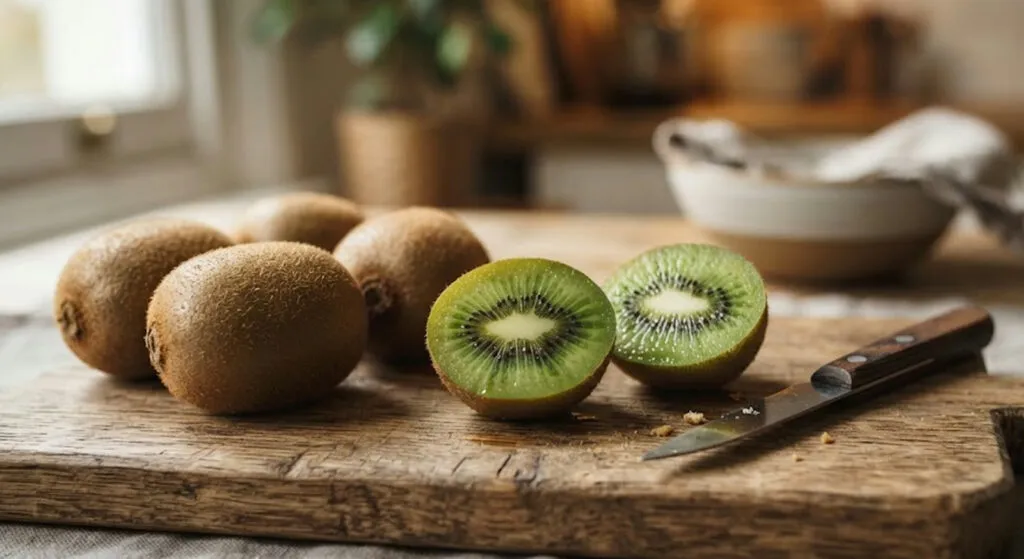
We usually remember kiwi for its vitamin C. Dietitian-nutritionist Salena Sainz points out that this is only the beginning. One kiwi contains fibre, vitamin C, folate, potassium, vitamin K, carotenoids, polyphenols and other antioxidants - quite a workload for one small fruit in a fuzzy skin.
Actinidin - the enzyme few have heard of. Kiwi contains a proteolytic enzyme that helps break down proteins and can make digestion easier. If you feel heavy after a pastrmajlija, the meat-topped Macedonian flatbread, or a big Sunday lunch, this is the fruit that, on paper at least, has a job to do.
Digestion. Insoluble fibre adds bulk to stool, while soluble fibre holds water and softens it. Clinical studies, the expert notes, link eating kiwi regularly with more frequent bowel movements and partial relief from constipation. But it is not a miracle in a skin: water, exercise and a diet with other fruit, vegetables, legumes, nuts and whole grains matter just as much.
Immunity and heart. Vitamin C contributes to normal immune function, and potassium, fibre and antioxidants fit into a heart-friendly diet. Sainz chooses the word "contributes" carefully - she does not claim kiwi cures anything. That distinction is one many supplement ads skip right over.
Diabetes. Kiwi has a moderate amount of carbohydrates and a relatively low glycaemic load per normal portion, so it can fit into a diabetic diet - with attention to portion size and to how each individual's blood sugar responds.
When and for whom. There is no ideal time - at breakfast, as a snack or as dessert. It does not have to be every day either; it can be swapped with other fruit. People allergic to kiwi should avoid it, and those allergic to latex should be careful because of a possible cross-reaction. In some people kiwi also causes stomach upset, so tolerance is individual.
The message at the end is the opposite of the one "superfoods" sell: one kiwi a day is an easy way to get fruit, fibre and micronutrients in, but it is not mandatory, and the effect depends on everything else you have been eating for months.
The latest 10 news from this category

A dish born of ration coupons after the Spanish Civil War: potatoes, peppers, tomato, onion and garlic. The secret is...

Think your cat purrs because it's content? Vets say that sound can also mean fear, stress or pain - and...

In our part of the world, pears mostly end up as compote or in a rakija still. Three ways to...

"Eat less, move more" has been repeated for decades, and obesity keeps rising. The problem, says Aitor Sánchez, is that...

Legend has it that it was born from a French pastry cook's mistake around 1613. Today it's the fastest route...

The first autumn rain feels like relief after a scorching summer. But for up to 60% of people, a grey...

If "steamed" means bland hospital vegetables to you, the problem isn't the technique - it's the minutes. Here are the...

You can be perfectly capable of the new job or your first wave - and still feel your chest tighten....

The markets are filling up with quinces and pumpkins, hunting season is opening, and after the first rains the mushrooms...

A mother and daughter on a rugby team, friends who met playing padel. When we can message anyone at any...
This site uses cookies - is that okay? Learn more
Be the first to know when Metla launches something new
Leave your email and we will write when there is a new guide or something new on Metla.

