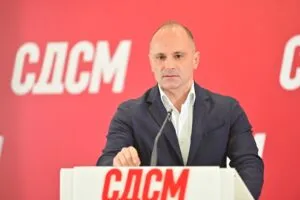
Filipče Demands Slaveski's Resignation and a Probe Into Alta Banka: Two Days Before the License Was Pulled in Belgrade, Mickoski Was Saying "I Don't Know If Everything Is in Order"
01.11.2026


01.11.2026

01.11.2026

01.11.2026

01.11.2026

01.11.2026

01.11.2026

01.11.2026

01.11.2026

01.11.2026

01.11.2026

01.11.2026

31.10.2026
01.11.2026

01.11.2026

01.11.2026

01.11.2026

31.10.2026

30.10.2026

01.11.2026

01.11.2026

01.11.2026

01.11.2026

01.11.2026

31.10.2026

23.04.2026

23.04.2026

12.04.2026

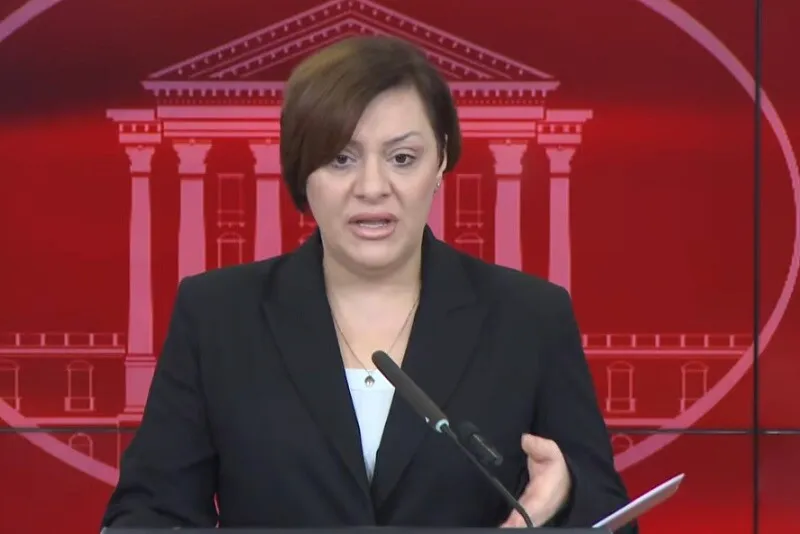
On 30 October the government adopted the Draft Budget for 2027: revenue of 395.4 billion denars, spending of 440.4 billion and a deficit of 45 billion denars, or 3.5 percent of GDP. Finance Minister Gordana Dimitrieska-Kočoska also promised that public debt will be under 60 percent at the end of both this year and next.
The presentation sounds like progress. This year, after the second budget revision, the deficit is 46.3 billion denars or around 4.1 percent of GDP. But a difference of 1.3 billion denars is no revolution. The fall in the percentage depends largely on whether GDP grows as projected, and the projections are real growth of 3.8 percent and inflation of 3.2 percent. If either one misses, so does the consolidation story.
Where the money comes from
Tax revenue is planned at 223.1 billion denars, up 6.4 percent, with no change in the direction of tax policy, just better collection and more digitalisation. All phrases every minister knows by heart. Dimitrieska-Kočoska herself says they were most pessimistic on excise duties, raised by 1.5 billion denars, and that next year they have another 1.5 billion denars to repay from the solidarity tax. She shifted the blame for that onto the previous government.
Roughly half of spending, 220.8 billion denars, goes on social transfers. Pensions alone are allocated 123.8 billion denars, up 4.8 percent. Healthcare gets 3.9 billion more, and 2 percent of GDP is planned for defence.
Capital spending and the old loan
Capital spending is set at 40.8 billion denars, a little over 9 percent of total spending. A government that boasts of a development budget should answer one question: how much of that money will actually be spent on roads and railways? The second 2026 budget revision cut both revenue and capital investment without cutting the deficit at the same time, and the Fiscal Council warned that the higher deficit is increasingly financing current spending.
The 500 million euro Eurobond issued in March 2023 also matures in 2027. So the new borrowing won't only cover a new deficit, but also repayment of old debt. The promise of debt under 60 percent also depends on how much GDP grows. The real test of this budget isn't today, at a press conference, but at the end of 2027, when the plan will have to be compared with what actually happened.
The latest 10 news from this category

The National Bank says the license pulled in Belgrade doesn't automatically mean anything for Bitola. Legally, that's true. But the...

World Savings Day is being celebrated with billions in the accounts. Nobody says whose they are, and a new deposit...
Profit is slightly down on last year but above plan. The biggest interest growth comes from the state, and fees...

Google is paying for AI that eats its search earnings, Amazon burned through 42 billion dollars more cash than it...
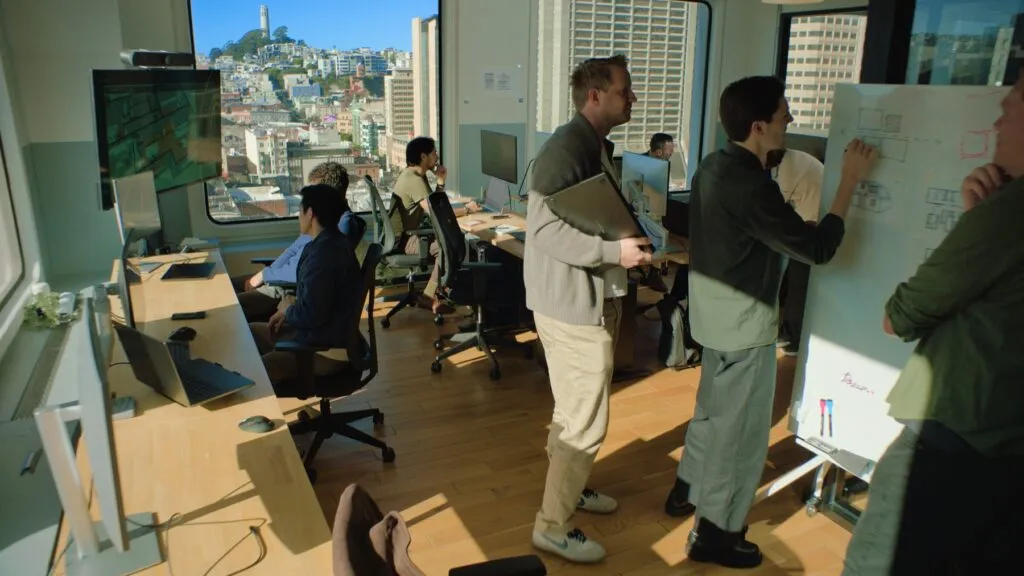
The model learned from building permits across America and promises buildings that stand. What remains is the question everyone in...

The researcher who found the hole had nowhere to report it, so he turned to journalists. The company now says...

The prime minister is looking for someone to blame for small pensions among the private companies. An audit, meanwhile, showed...

The statistics say the economy grew last year. The tables also show what grew: concrete and shopping more than factories.

Most of the money left in twenty minutes, and the preparations took at least 36 hours. If the trail to...

Washington bought 10 percent of Intel and is now learning what being a shareholder means. Its data centres are up...
This site uses cookies - is that okay? Learn more
Be the first to know when Metla launches something new
Leave your email and we will write when there is a new guide or something new on Metla.