
Expert witness at the Puls trial: the change-of-use application had to come from the owner, not the tenant
26.08.2026


26.08.2026

26.08.2026

26.08.2026

26.08.2026

26.08.2026

26.08.2026

26.08.2026

25.08.2026

24.08.2026

26.08.2026

26.08.2026

25.08.2026

26.08.2026

26.08.2026

26.08.2026

26.08.2026

25.08.2026

24.08.2026

26.08.2026

26.08.2026

26.08.2026

26.08.2026

26.08.2026

25.08.2026

09.03.2026

27.02.2026

19.02.2026

26.08.2026

25.08.2026

24.08.2026

23.04.2026

23.04.2026

12.04.2026
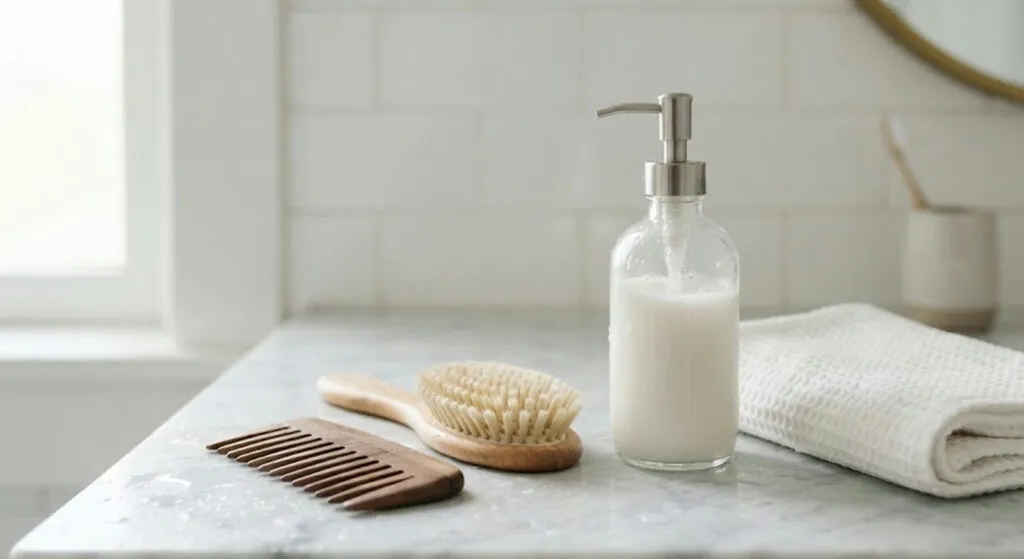
Anyone who has ever stepped out of the shower and grabbed a brush knows the warning - do not comb wet hair, it will snap. And then you walk into a salon, they detangle your hair while it is still dripping, and nothing happens. So who is lying?
Nobody. The difference is not in whether, but in how.
What exactly happens inside the hair
When hair is wet, the strand swells and becomes more elastic, but at the same time more vulnerable to tension and friction. Pharmacist Elvira Mateos of the Mateos Cáceres pharmacy explains it like this: "Combing wet hair can damage it because when the strands are wet they tend to swell, and swollen hair breaks more easily. On top of that, it contributes to frizz."
Juan Leal, education director at Pierino Cosmetics, puts the problem exactly where it belongs: "In that state, the strand is more elastic but also more brittle. If we apply tension or friction, we create micro-fractures that accumulate over time." The key word is accumulate. It is not about one combing - the damage is done by repetition.
Eighty percent, not one hundred
Should you wait for hair to dry? Yes, but not literally all the way. Mateos recommends waiting until the hair is about 80 percent dry before using certain styling tools - by then the strand has recovered part of its resilience.
But if you have to detangle while it is still very wet, then two things apply: a product that provides slip, and the right tool. And there is the explanation for why hairdressers work on wet hair without consequences. A leave-in product or a detangling spray reduces the friction between the hair and the tool. "These products help smooth the cuticle, reduce friction and let the brush glide more easily without pulling," Mateos says.
The mistake almost everyone makes
According to Mateos, the most common mistake is putting the brush at the root and pulling down to the ends - which gathers every knot in one place. The correct technique is the reverse: start at the ends and work gradually toward the mid-lengths and the root. "Hair should be combed slowly and gently from the ends working toward the scalp to prevent breakage. That way the knots dissolve gradually without creating excessive tension on the strands."
So the conclusion is less absolute than the headlines sound. You do not have to banish the brush from the bathroom for good. If you use a product that gives slip, choose the right tool and detangle without pulling, you can work with damp hair. What is being avoided is the combination of water, friction and force on a strand that is at its most vulnerable at that moment.
Or as Leal puts it: "The real problem lies in what we do every day without noticing." Small movements, repeated often enough, become visible damage - and that is not a sentence that applies only to hair.
The latest 10 news from this category

She still wears the 1993 Chanel jeans, the same ones on the cover of Elle in 2020. Lagerfeld's lesson was...
Heels of 5, 6.5 and 8.5 centimetres, white for a second year running, and a move away from crystals toward...

Collagen loss in the first five years after menopause reaches 30 percent. A shelf full of bottles standing untouched is...

The theme is the moment we like least in a wardrobe - the transition, when mornings are cold, afternoons are...

A long dress for the godmother, midi for the mother, French sleeves for both. And the most important advice is...

She inherited the visibility, then pointed it at work that has nothing to do with what made her visible. The...
When there is not enough material, the only thing that works is how it is cut. A fringe moves the...
The institution with the budget never to repeat a garment, repeats. Earrings from 2018, sandals from past seasons - and...
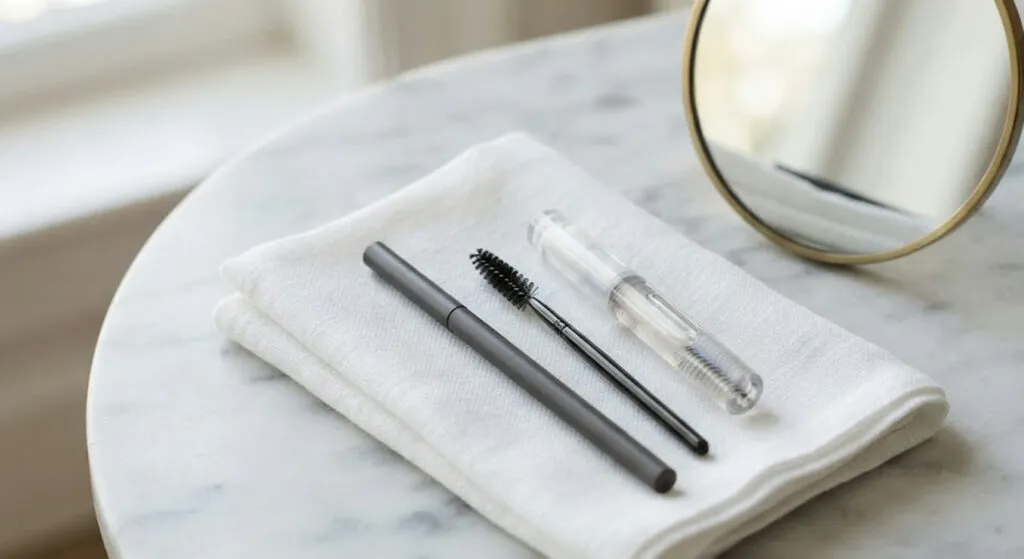
Two specialists say most people start at the wrong step. Comb first, fill second - the other way round means...

Solitaire, halo, trilogy, signet - names rarely said out loud here, yet every ring in the window is one of...
This site uses cookies - is that okay? Learn more
Be the first to know when Metla launches something new
Leave your email and we will write when there is a new guide or something new on Metla.