Filipče Calls for a New Opposition "Front for Freedom and Justice": A New Name for an Old Opposition?
31.05.2026


31.05.2026

31.05.2026

31.05.2026

31.05.2026

31.05.2026

31.05.2026

30.05.2026

28.05.2026

27.05.2026

31.05.2026

31.05.2026

30.05.2026

31.05.2026

31.05.2026

31.05.2026

31.05.2026

30.05.2026

29.05.2026

31.05.2026

31.05.2026

30.05.2026

09.03.2026

27.02.2026

19.02.2026

14.04.2026

07.11.2025
07.11.2025

23.04.2026

23.04.2026

12.04.2026

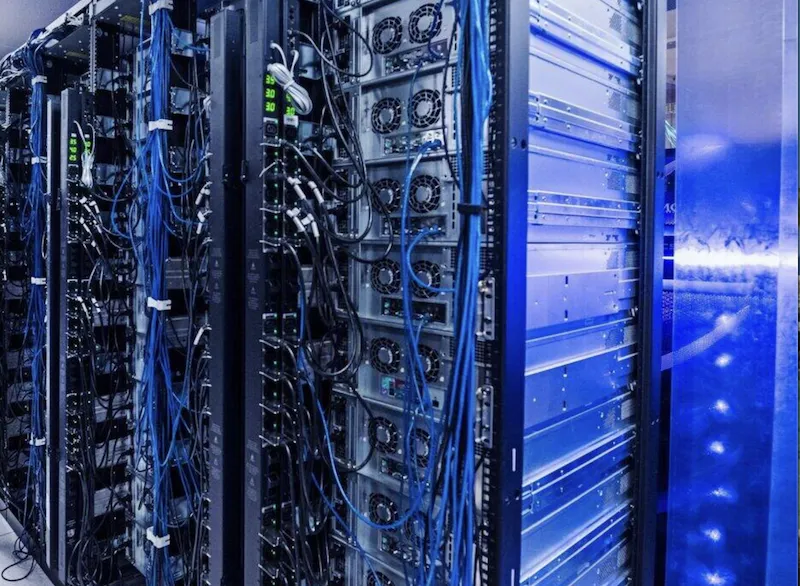
The European Union is pressing tech companies to open up the numbers on the environmental footprint of their mega data centres. The argument is simple. The director of the European Environment Agency, Leena Ylä-Mononen, put it in one sentence: "What you can't measure, you can't manage."
Why is the problem exploding now? Because the EU plans to triple data-centre capacity in seven years in order to stay competitive in the development of artificial intelligence. Today, data centres consume around 3 percent of the Union's total electricity. In Ireland that has already reached 20 percent - and that is what Brussels is trying to avoid at the EU level.
And here comes the paradox. Only 36 percent of the data centres legally obliged to report on energy efficiency have actually done so. The rest hide behind a confidentiality clause that, according to European sources, was inserted after lobbying by US tech giants including Microsoft. The result: 64 percent of the biggest electricity consumers do not have to say how much they use.
The regional examples are instructive. In Ireland, a fresh report from Friends of the Earth Ireland showed that data centres last year consumed 22 percent of total electricity - more than all urban households combined. According to the study, they drained 715 million euros from the Irish economy and added 360 euros to the average household bill between 2015 and 2023. In other words, Irish families have been quietly paying a "hidden tax" through electricity bills - for infrastructure that belongs to corporations.
In the neighbourhood, the data centre in Kragujevac currently consumes 123 GWh a year, or 25 percent of the city's total consumption. Once fully expanded to 56 MW, it will use as much electricity as all of Kragujevac without it. That is 1-1.4 percent of Serbia's total annual electricity output. A country that has just shifted from being an exporter to an importer of electricity, in winter, does not have the luxury of ignoring these numbers.
For Macedonia this is a direct signal. If the EU introduces strict environmental rules for data centres (and that is happening by 2030), our energy resources need to be ready to withstand that pressure. The question is whether the government has a strategy for the energy mix, or whether we will wait until problems are already here - the same way it played out with wastewater treatment. The numbers are already speaking. Over the next 4 years, every decision on a data centre becomes a critical decision for the energy balance.
The latest 10 news from this category

The first serious overhaul since 1995. Every country in the region has a strict law on paper - and smoke-filled...

One goes up, the other comes down, and the final bill depends on what you drive. The price cut is...

Palm oil instead of milk fat, gaps that directly deceive consumers. How many products like this passed through the checkout...

KPop Demon Hunters and a popular YouTuber's film won the weekend. The audience stopped asking long ago whether you come...

From a video app to bookings, payments and loans - TikTok is copying the WeChat model. When one app knows...

From a flat subscription to pay-as-you-go - the model that promised predictability now brings bills of hundreds of dollars. The...

3.5% deficit in 2025, forecast of 4.3% in 2027. Radev blames the old government for lying. A Balkan lesson for...

The energy sector uses 99% of the water and discharged 3 billion cubic metres untreated. With a global water crisis...

The 163-page Delhi High Court ruling could become a precedent for European regulators. The founders of Zerodha and Zoho welcome...
The AI chip startup walked out of December's non-acquisition with Nvidia with 20 billion. Now the round is all but...