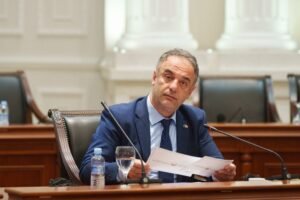
Filipče Calls for a New Opposition "Front for Freedom and Justice": A New Name for an Old Opposition?
31.05.2026


31.05.2026
31.05.2026

31.05.2026
31.05.2026
31.05.2026

31.05.2026
30.05.2026
28.05.2026
27.05.2026
31.05.2026

31.05.2026

30.05.2026

31.05.2026

31.05.2026

31.05.2026

31.05.2026

30.05.2026

29.05.2026

31.05.2026

31.05.2026

30.05.2026

09.03.2026

27.02.2026

19.02.2026

14.04.2026

07.11.2025
07.11.2025

23.04.2026

23.04.2026

12.04.2026

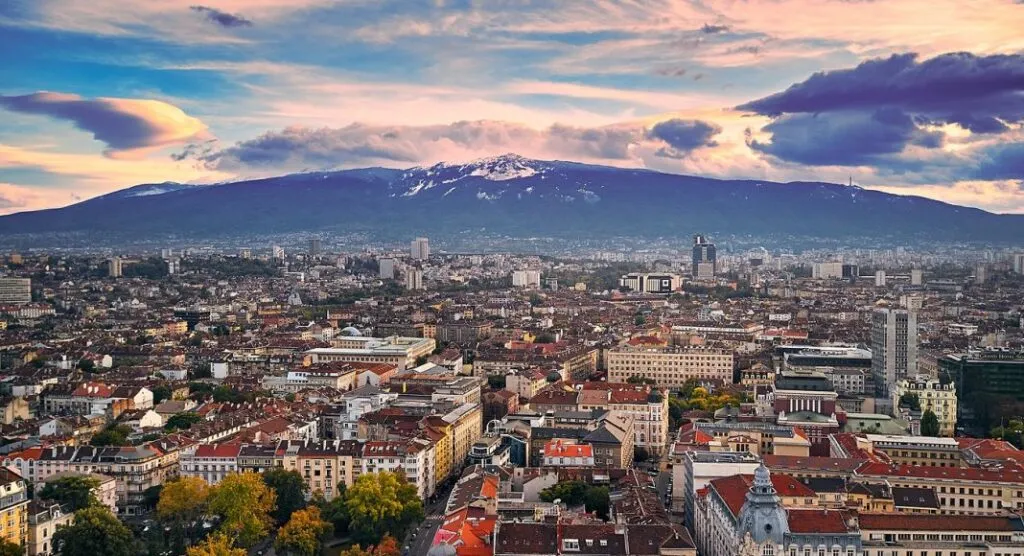
Bulgaria will be the first country in the history of the Eurozone to join it and then, just months later, get hit with sanctions from Brussels over an excessive budget deficit. A 3.5 percent deficit in 2025, while the permitted maximum is three. The forecast for the coming years looks even worse: 4.1 percent in 2026 and 4.3 percent in 2027.
Prime Minister Rumen Radev, a leftist who came to power in May after the left-populist Progressive Bulgaria won, blamed the previous centre-right government. "They lied to get Bulgaria into the eurozone," he said on returning from Brussels. That is undoubtedly a political punch - but also a real one. The old government, under the eurozone entry conditions, used one-off flexibility for defence spending to bring the official deficit down. Once that flexibility lapsed, the reality of the budget became visible.
Former Finance Minister Temenuzhka Petkova (GERB) rejected the accusations. According to her, Bulgaria was under the 3 percent limit in 2025 thanks to the defence flexibility, and the worsening came due to decisions by caretaker administrations and the delayed budget planning for 2026. Which version is true - the European Commission will decide. But the question everyone is quietly thinking is: should Bulgaria have been let into the eurozone at all before it had finished with the fiscal games?
The context is broader than Bulgaria. Ten other member states are already under the excessive deficit procedure, including Italy and France. Malta, which last year cut its deficit to 2.2 percent, is on the way out of the procedure. In other words, entry into the eurozone has long since stopped being a guarantee of fiscal discipline. It means political access to euro money. Discipline is the thing that comes later - or not.
For the Balkan countries that view the eurozone as the destination (Croatia is already there, Macedonia as a candidate), the Bulgarian case is an important lesson. Entry is not the end - it is the start of a new phase of oversight. And if the economy is not ready for it, the consequences - sanctions, restrictions, supervision - come fast. Bulgaria is now going to break this ice. Skopje should watch closely.
The latest 10 news from this category
The first serious overhaul since 1995. Every country in the region has a strict law on paper - and smoke-filled...
One goes up, the other comes down, and the final bill depends on what you drive. The price cut is...
Palm oil instead of milk fat, gaps that directly deceive consumers. How many products like this passed through the checkout...

KPop Demon Hunters and a popular YouTuber's film won the weekend. The audience stopped asking long ago whether you come...

From a video app to bookings, payments and loans - TikTok is copying the WeChat model. When one app knows...

From a flat subscription to pay-as-you-go - the model that promised predictability now brings bills of hundreds of dollars. The...

In Ireland 22% of the electricity already goes to data centres. In neighbouring Kragujevac one centre eats as much as...

The energy sector uses 99% of the water and discharged 3 billion cubic metres untreated. With a global water crisis...

The 163-page Delhi High Court ruling could become a precedent for European regulators. The founders of Zerodha and Zoho welcome...

The AI chip startup walked out of December's non-acquisition with Nvidia with 20 billion. Now the round is all but...