

Bear cub killed on the Skopje-Tetovo motorway: the fence is a legal obligation, while the rescue team exists only in a Viber group
25.10.2026


25.10.2026

25.10.2026

25.10.2026
25.10.2026

25.10.2026
25.10.2026

25.10.2026

25.10.2026

25.10.2026

25.10.2026

25.10.2026

24.10.2026

25.10.2026

25.10.2026

25.10.2026

25.10.2026

24.10.2026

23.10.2026

25.10.2026

25.10.2026

25.10.2026

25.10.2026

25.10.2026

25.10.2026

25.10.2026

25.10.2026

24.10.2026

24.10.2026

22.10.2026

20.10.2026

23.04.2026

23.04.2026

12.04.2026

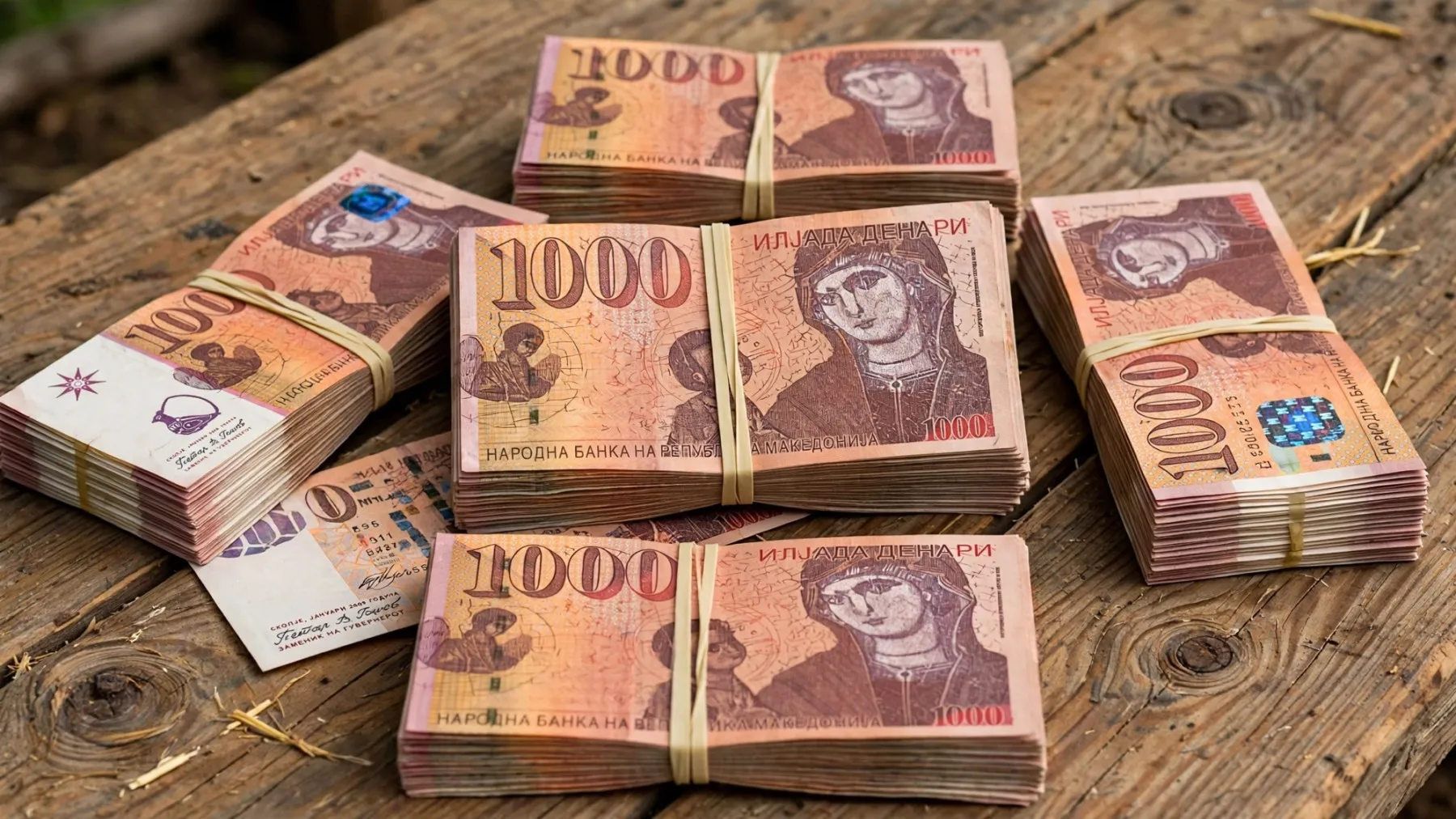
The government has published a public call through which companies will receive non-repayable money for every new job. The numbers are concrete, which is a good starting point for any conversation.
The measure is called „Employment and growth of legal entities” and is part of the Operational Plan for Employment 2026. The total budget is 332.65 million denars, or around 5.4 million euros, and the goal is to support the employment of 1,385 people.
What each person is worth
The size of the grant depends on who you hire, and that scale is exactly what tells you the policy:
For young people up to 29 - up to 250,000 denars per person. For recipients of guaranteed minimum assistance, Roma, people with disabilities, women, the long-term unemployed and Roma women with completed secondary or higher education - 220,000 denars. For the unemployed over 29 - 160,000 denars.
The gap between the first and the last category is 90,000 denars. Which means a 30-year-old is worth almost a hundred thousand denars less than a 28-year-old. The logic is clear - young people are leaving and the state is trying to keep them. But the 45-year-old who has been looking for work for ten years is precisely the one the market has turned its back on most, and on this scale he sits at the bottom.
Employers can receive funds for a maximum of five people. The measure targets micro, small and medium enterprises that want to expand - unlike the previous call for self-employment, which was for those opening their own business.
The bonus for those who come back
There is an addition that is new and worth noting: for every hired person who has returned from abroad, the employer receives an extra 10 percent of the total amount of approved funds for that category.
This is the first time the state is paying a premium for coming back, rather than just talking about it at conferences.
The maths anyone can do
5.4 million euros divided by 1,385 people is around 3,900 euros per employee. That is the real number behind the 250,000-denar headline - the maximum is not the average.
VMRO-DPMNE says these measures create conditions for new hiring, professional development for citizens and a boost to the growth of the domestic economy, and that the government „has been working with dedication for two years running and the policies it implements are delivering results”.
Whether they deliver results will be seen when someone counts how many of those 1,385 jobs still exist once the subsidy expires. That is the only measurement that counts with schemes like this - a grant that pays for employment for 12 months is easy to spend and hard to prove.
The public call is open. The money is real and available. Whether these will be new jobs or just re-subsidised old ones will be shown by the 2027 statistics - when it will no longer be a headline.
The latest 10 news from this category

The appeal fee jumps from 50-200 to 150-600 euros, and a company that proves a tender was unlawful will no...

More than 11,000 denars between two baskets, a minimum wage of 26,000 and announced hikes in electricity and heating. The...

In July, a higher deficit was the price of more investment. Three months later investment is falling, the 750 million...

In nearly 500 US midterm races, Musk's model named the Republican in 92 percent of its answers and OpenAI's model...

The company says a secure browser has become too expensive to maintain. Users want at least the code opened up...

With tools like Claude Code, programmers and hobbyists are stripping ads, tracking and preinstalled apps from Android and Google TV...

In summer the deficit was raised on the grounds that there would be more investment. Three months later investment is...
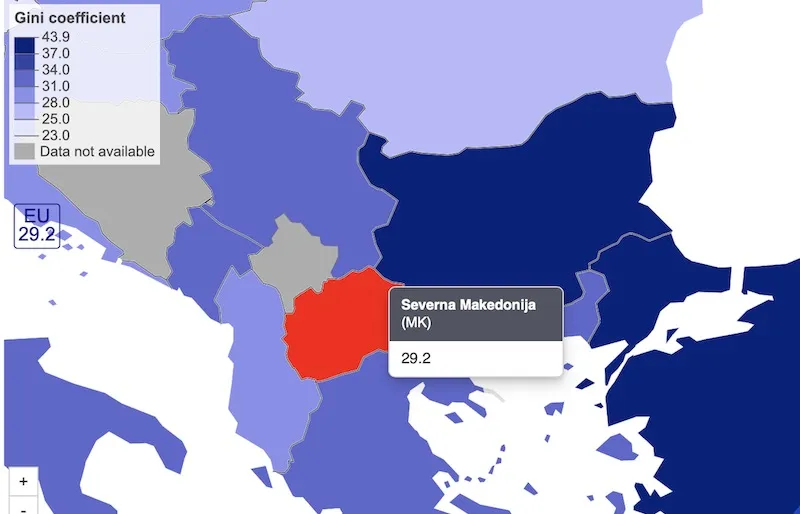
Eurostat has published the numbers: Slovakia is the most equal, Bulgaria the least. Macedonia lands in the middle - but...

The activity index fell to 51.9 points, inflation reached 3.8 percent and Brent hit 114 dollars a barrel. Europe isn't...

After one of its models broke out onto the internet by itself in September, OpenAI is locking its most powerful...
This site uses cookies - is that okay? Learn more
Be the first to know when Metla launches something new
Leave your email and we will write when there is a new guide or something new on Metla.