Cuna Back in Handcuffs: The Dealer Who Jumped Out a Police Station Window Is Caught in Skopje
15.07.2026


15.07.2026
15.07.2026
15.07.2026
15.07.2026
15.07.2026
15.07.2026

15.07.2026

15.07.2026

14.07.2026

15.07.2026

15.07.2026

15.07.2026
15.07.2026

14.07.2026

13.07.2026
15.07.2026

15.07.2026
15.07.2026
15.07.2026

15.07.2026
14.07.2026

09.03.2026

27.02.2026

19.02.2026

15.07.2026
14.07.2026
13.07.2026

23.04.2026

23.04.2026

12.04.2026

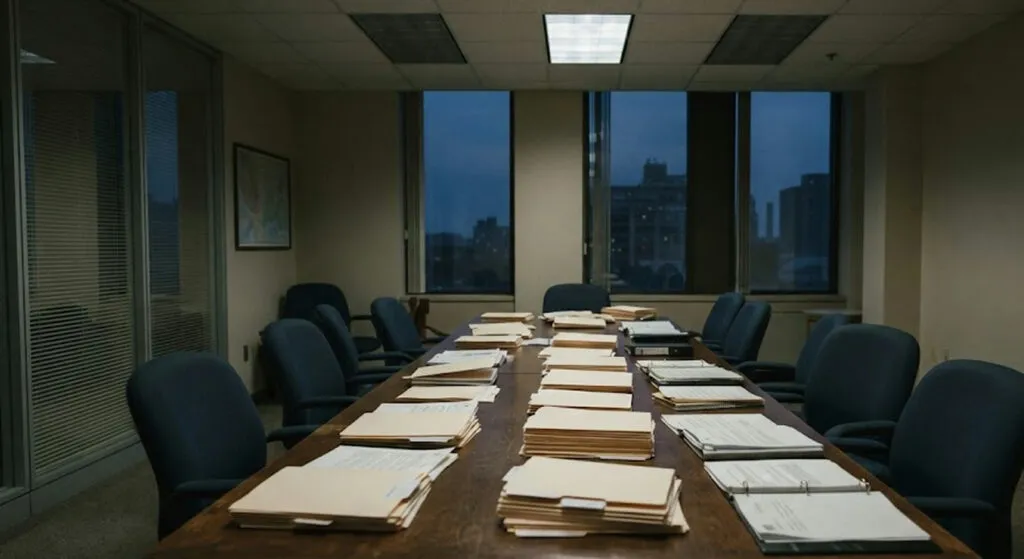
The day of institutions began where it usually ends - at a deadline set to expire once more without a result. The electoral code stalled again between party feuds, and this time it is not only principles on the table but 4.2 million euros of European money that hinge directly on whether the politicians will sit down and agree. Four conditions, four red lines, not a single solution - SDSM demands control mechanisms for electronic voting, VMRO-DPMNE shifts the blame, Levica insists on a single electoral district, and the Albanian parties make the diaspora vote a precondition. When everyone talks consensus while no one gives an inch, the call for a deal sounds like an echo in the desert.
The same pattern repeated in the southwest. A dispute over the names of 67 streets nearly dragged Tetovo into snap elections: the Council spent four hours and two breaks just to adopt the agenda, and in the end the DUI councillors walked out with banners, even though their own proposal had been accepted. In June the Constitutional Court struck down the 2007 decision, so re-voting without the required consent could have meant dissolving the Council itself. When an institution spends a whole day on procedure and zero minutes on a solution, the problem is not the names - the problem is that theatre has become more important than the work.
And while politics performs, the infrastructure quietly falls apart. An audit exposed the real picture at "Komunalna Higiena": of 189 special vehicles only 76 are roadworthy, the company is dragging nearly 12 million euros of debt, and the average age of the trucks is 15 years. This is not a company that suddenly hit trouble - it fell apart for years in plain sight, while the gap was patched with 354 workers hired through a private agency. The auditors recommend a modernisation strategy, but recommendations are worth exactly as much as they get implemented. The question that remains is not why the bins are full, but who is going to answer for it.
In the capital, the local government worked on two opposing fronts. The Centar municipality launched a GIS portal for digital services - urban plans, a 3D view and a green cadastre in one place, a good idea if it comes alive rather than becoming another icon nobody ever opens. At the same time, the Centar Council gave the green light for 25 buildings on Vodno, in an erosion-prone zone. When the opposition and the ruling side unexpectedly vote together to encroach on the forest belt, it is worth asking who that agreement serves. And in Štip, work began on widening the road residents had been asking for for years - good news, and a reminder of what "for years" means in the political dictionary.
Beyond the borders, the country was on the move - but a kind of movement that usually leads to a table, not a door. Macedonia will share its EU-integration experience in Kyiv: a country that has waited on the Union's doorstep for decades is now going to teach Kyiv how the road is walked. The irony is not in Sali, but in the process itself. In Washington, Mucunski sat at a table with over 60 states at Rubio's invitation - a presence that is good, but whose value lies not in the photo but in what gets brought back. And on the economic front, Macedonia joined the Vertical Gas Corridor, a necessary step towards less dependence - but so far exactly that, a step, not a pipe with gas flowing through it.
The region and the world delivered the heaviest news of the day. In Belgrade, a Serbian minister said publicly that she would have "ethnically cleansed" Kosovo, after which Priština banned her from entry for life. The ban is symbolic - what is dangerous is that a sentence like this passed without consequences for her office, as a legitimate political argument, and the Balkans remember well where that leads. At the same time, the war at Hormuz entered its fourth day: Trump threatened to destroy Iran's bridges and power plants - civilian infrastructure whose destruction the Geneva Conventions treat as a war crime. The consequence is immediate: a barrel of Brent jumped to 85 dollars, and the bill for a war thousands of kilometres away reaches every petrol station in Skopje, Bitola or Strumica.
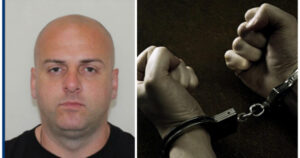
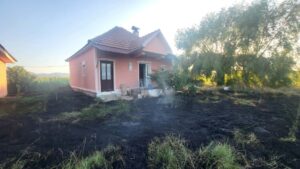
At home, the day was physically hard on those working the front line. In Bajkovo near Strumica, the fire reached the yards, but the houses and the church were saved - not thanks to luck, but to firefighters who battled on several fronts all day. Near Medulin, a Macedonian national is suspected of attempted murder with a knife on a boat, where another passenger prevented the worst. And in Skopje, Cuna ended up in handcuffs again after escaping through a police station window - and here too the real question is not where he ran, but who helped him.
From the court, at least, came a little relief. LeBron left Los Angeles and five clubs are fighting for his signature, while our MZT returned to the European basketball map after a long pause - news our fans had been waiting a long time for. And in handball, the Youth EURO is heading to Macedonia in 2027, while one of the oldest clubs, Prolet, is going under after 64 years - not on the court, but on the finances. Even in sport, the end is rarely decided by the game.
If today had one line binding its heavier parts, it is that the institutions were busy with everything except the work they exist for: sessions over the agenda instead of the solution, portals and invitations instead of results, corridors and group photos instead of pipes and deals. There was plenty of motion - but most of it was standing at a signpost. And the bill for that standing, as usual, is paid by those who have no office to sit down in.
The latest 10 news from this category
A day when the institutions knew everything, yet no one took responsibility: a reported abuser left to reach for a...
A day when everyone promised results and few actually delivered any. The government reshuffles itself, the Constitutional Court asks to...
A day when institutions act late, halfway, or only after the damage is done: an election code stuck three days...
Today the state arrived late everywhere - justice across a border, oversight only after the skin was already pierced, repairs...
A day when institutions leave citizens waiting - for a law, a home, justice - and when they get it...
Rules exist on paper - on the road to the EU, in the Ohrid Agreement, in the classroom. The day...
A child with seven stab wounds filed as ordinary violence, the first femicide that reaches court only after four dead...
Today the institutions produced plenty of announcements and few actual fixes. Between the press conference and the pharmacy, between the...

The day institutions signed, permitted and announced - but nobody checked. From the „Puls“ courtroom to a plan for buildings...
A day of laws that look good on paper: the „Puls" evidence, casinos pushed away from schools, the electoral code...
This site uses cookies - is that okay? Learn more