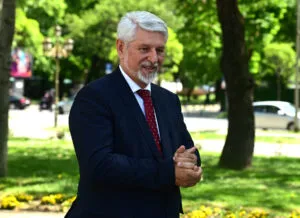
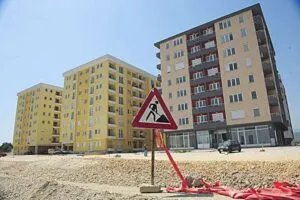
A New Criminal Complaint Against Jakimovski: A Building Permit Based on a Plan Struck Down Back in 2018
16.09.2026


16.09.2026
16.09.2026

16.09.2026
16.09.2026
16.09.2026
16.09.2026

16.09.2026

15.09.2026

14.09.2026
16.09.2026
16.09.2026

15.09.2026

16.09.2026

15.09.2026

14.09.2026

16.09.2026

16.09.2026

16.09.2026

16.09.2026

15.09.2026
15.09.2026

09.03.2026

27.02.2026

19.02.2026
16.09.2026

15.09.2026

14.09.2026

23.04.2026

23.04.2026

12.04.2026

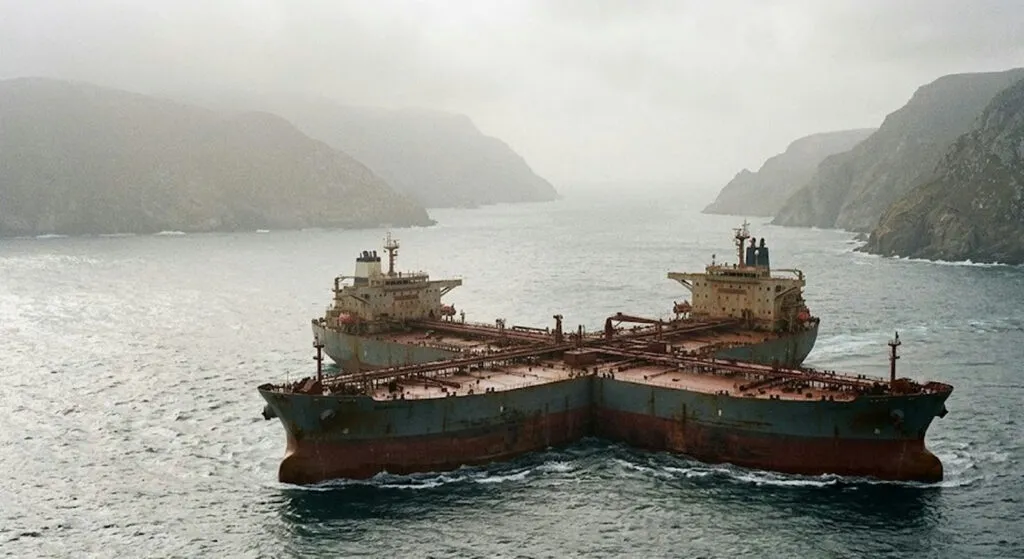
Iran has announced a new condition for ships passing through the Strait of Hormuz - payment will have to be in Iranian rials. Not in dollars. Not in euros. In a currency whose stability even Iranians themselves reassess every month.
The information was published by MP Ebrahim Azizi, who also mentioned "comprehensive restrictions for vessels with an Israeli connection". That is a standard Iranian formula: no ship linked to Israel will be allowed through - by ownership, by insurer, or by origin.
At the same time the Iranian foreign minister Abbas Araghchi met with Sergey Lavrov and Vladimir Putin in Moscow. "Recent events have shown the depth and the strength of our strategic partnership," Araghchi said. Lavrov responded with a dry "Moscow and Tehran know their path".
Reza Talai-Nik, spokesperson for the Iranian defence ministry, went further: "The US will, in the end, have to give up its illegal and unreasonable demands." And added what the West wants to avoid hearing - that Iran "has the capacity to share defence technology with Asian partners". A sentence which translates to one thing: we are thinking about nuclear-grade transfers to China or North Korea, if we need to.
The UN reaction was predictable. Vassily Nebenzia, the Russian ambassador, said Iran "has legitimate rights" to control passage through the strait. For anyone writing this down for their own use - that means Moscow will no longer vote against an Iranian blockade in the Security Council.
For the Balkans this is a signal. Energy markets are slowly moving into a regime where the rules are written not by those with the largest navy, but by those with the keys to the narrowest straits. Hormuz, the Bosphorus, Suez - three points that keep the world breathing. And all three are under the control of countries that are not EU members.
The latest 10 news from this category
Sanctions imposed over one war are being offered as currency in an entirely different dispute. Most member states are against...
El Nino in the Pacific shifts the currents that decide where snow falls. An area that usually gets a metre...
The easiest way to dismiss an uncomfortable argument is to point at who is making it. But that does not...

The appeals court ruled the entire trial must start over. The son of Norway's queen is waiting for it on...
Trump scaled back the military exercises to ease the tension, and Wonsan answered in the form of projectiles. What does...
The sanctions list got a seven-day extension instead of one measured in months, a move diplomats themselves call unprecedented. Two...

Switzerland offered a table for talks on Ukraine, Moscow replied that the table stopped being neutral once Bern adopted EU...
The will says one thing, a committee of twenty-one men decided another. The queen mother says the army pulled the...
A country that was Europe's byword for stability for decades now has a parliament split into two blocs by a...
Sixteen years in power, defeat at a regular election, five months of quiet - and now the election result is...
This site uses cookies - is that okay? Learn more
Be the first to know when Metla launches something new
Leave your email and we will write when there is a new guide or something new on Metla.