A New Criminal Complaint Against Jakimovski: A Building Permit Based on a Plan Struck Down Back in 2018
16.09.2026


16.09.2026
16.09.2026

16.09.2026
16.09.2026
16.09.2026

16.09.2026

16.09.2026

15.09.2026

14.09.2026
16.09.2026

16.09.2026

15.09.2026

16.09.2026

15.09.2026
14.09.2026

16.09.2026
16.09.2026

16.09.2026

16.09.2026

15.09.2026
15.09.2026

09.03.2026

27.02.2026

19.02.2026
16.09.2026

15.09.2026
14.09.2026

23.04.2026

23.04.2026

12.04.2026

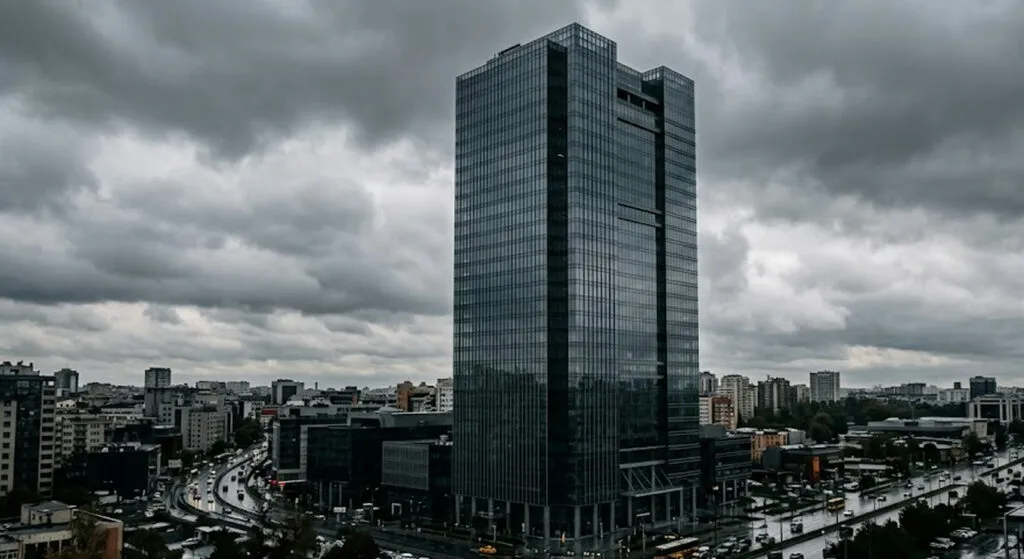
China has issued its most direct trade threat to the European Union in several decades. The reason - the proposed „Industrial Acceleration Act" (IAA), a new industrial law Brussels is pushing under the name „Made in Europe". Beijing called it „discriminatory" and warned that it would respond with countermeasures. Translation: Europe is quietly trying to push China out of its own market, and China is not playing along.
The law was tabled on 4 March 2026. It covers three strategic sectors - clean technology, the car industry and energy-intensive industries. The main provision - electric vehicles that receive state support must have at least 70% of their components (excluding batteries) made in the EU. The same goes for steel, aluminium and cement - a minimum content of low-carbon materials from domestic production.
There is a second layer - a mandatory review of foreign investments above 100 million euros in strategic sectors, if they come from countries that control more than 40% of global production in that industry. China is not named explicitly, but the description fits perfectly. This is the legal formula for pushing China out without saying „we are pushing China out".
The economic context for Europe is catastrophic. In the last two years (2024-2025) more than 100,000 jobs have been announced as lost in the European supply chain for cars. Chinese companies, according to the OECD, receive state support four to eight times higher relative to revenue than their Western competitors. The cost of producing battery cells is 20-35% lower in China. European industry simply cannot keep pace - and that is why Brussels is now reaching for the law.
At the same time, the EU is bringing in tariffs on small parcels from China (worth up to 150 euros) from 1 July 2026. More than 90% of the 4.6 billion parcels that entered the EU in 2024 came from China. That isn't small - that is a channel of trade exchange to which the Balkans is also connected.
The Chinese Ministry of Commerce stated that the law contains „numerous restrictive conditions" and potentially violates WTO principles. China sees it as discrimination, a request for intellectual property transfer, and a restriction on public procurement. Those three points form the basis for an official complaint, which could spill into a tariff war in autumn 2026.
The Balkans is watching this with particular attention. In Macedonia, Serbia, Albania - Chinese investments in infrastructure (bridges, roads, factories) are significant. If Brussels introduces a mechanism for blocking Chinese investments in the EU, that automatically blocks investments in the Balkans too - because candidate countries cannot have a different mechanism from the final EU structure. That means Skopje and Belgrade will soon have to choose - a Chinese factory or EU co-financing. Both at once - not possible. And that is the calculation not being discussed in public, but it is coming for every budget.
The latest 10 news from this category
Sanctions imposed over one war are being offered as currency in an entirely different dispute. Most member states are against...
El Nino in the Pacific shifts the currents that decide where snow falls. An area that usually gets a metre...
The easiest way to dismiss an uncomfortable argument is to point at who is making it. But that does not...

The appeals court ruled the entire trial must start over. The son of Norway's queen is waiting for it on...
Trump scaled back the military exercises to ease the tension, and Wonsan answered in the form of projectiles. What does...
The sanctions list got a seven-day extension instead of one measured in months, a move diplomats themselves call unprecedented. Two...
Switzerland offered a table for talks on Ukraine, Moscow replied that the table stopped being neutral once Bern adopted EU...
The will says one thing, a committee of twenty-one men decided another. The queen mother says the army pulled the...
A country that was Europe's byword for stability for decades now has a parliament split into two blocs by a...
Sixteen years in power, defeat at a regular election, five months of quiet - and now the election result is...
This site uses cookies - is that okay? Learn more
Be the first to know when Metla launches something new
Leave your email and we will write when there is a new guide or something new on Metla.