

Counter-terror raid in Skopje: an ISIS flag and weapons, while official details come "once it's over"
29.09.2026


29.09.2026

29.09.2026
29.09.2026

29.09.2026

29.09.2026

29.09.2026

29.09.2026

28.09.2026

27.09.2026

29.09.2026

29.09.2026

28.09.2026

29.09.2026

29.09.2026

29.09.2026

29.09.2026

28.09.2026

27.09.2026

29.09.2026

29.09.2026

29.09.2026

29.09.2026

29.09.2026

28.09.2026

09.03.2026

27.02.2026

19.02.2026

29.09.2026

28.09.2026

27.09.2026

23.04.2026

23.04.2026

12.04.2026

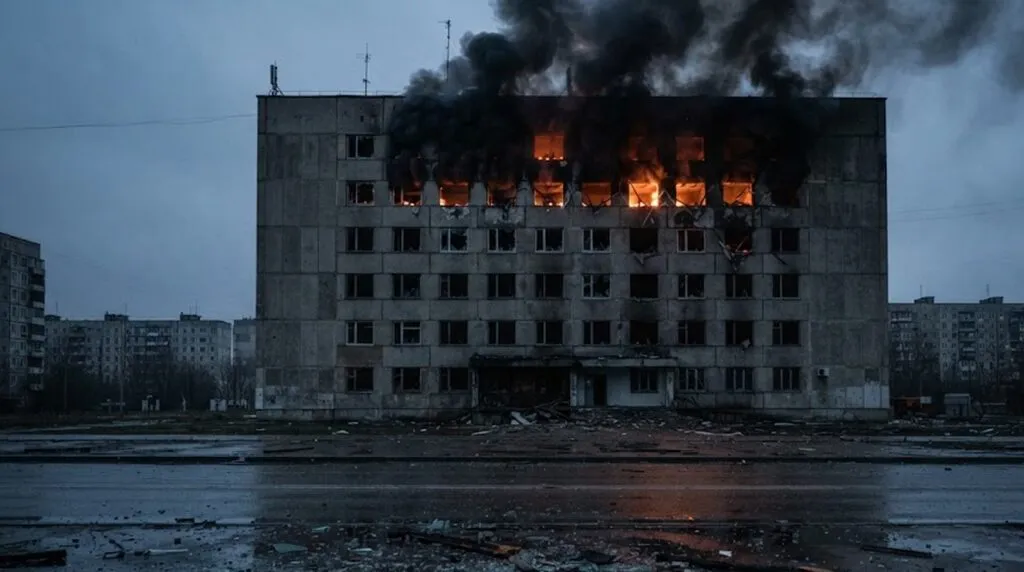
From Sunday evening into Monday, Kyiv barely left its shelters. According to President Volodymyr Zelensky, Russia launched 277 attack drones of various types in a single night, 155 of them jet-powered. Over the past 24 hours, the Ukrainian capital was under air raid alert for a total of about 18 hours - more than three quarters of the day.
Moscow has its version ready. The Russian Defence Ministry said the strikes targeted Ukraine's communications and logistics infrastructure, with targets in Kyiv and Odesa, as well as a cargo ship in the Black Sea. Ukrainian monitoring channels confirm half of that story: the DLine data centre and Ukrtelecom facilities were hit. The other half is told by the damage list - warehouses, petrol stations, car repair shops, and even the residence of Saudi Arabia's ambassador.
A medical centre across from the Constitutional Court
The most telling strike came in the very centre of the city. Mayor Vitali Klitschko said a drone hit a seven-storey office building at the level of the fourth floor. Ukrainian media then identified the building at 40 Antonovycha Street - home to the private medical centre Dobrobut, which treats both adults and children, a few steps from Olimpiiska metro station and opposite Ukraine's Constitutional Court. Ukrtelecom's city branch is at the same address. There is no confirmed information yet about casualties from this particular strike.
Somewhat earlier, a fire also broke out in the building of Ukraine's National Academy of Sciences, also in the centre. One person was killed there and several people were injured. By the afternoon, Ukrainian authorities had put the toll for Kyiv at one dead and 19 injured, three of them children. There were also strikes in the Odesa and Kirovohrad regions, in Balakliia and in Kharkiv.
When "connections" become the target
Data centres and telecoms are the nervous system of a city at war - without them there is no military coordination, no banking, no call to an ambulance. That is exactly why every side declares them legitimate targets, and it's civilians who sit in the buildings next to them. Belgrade learned this in April 1999, when the RTS building was hit on similar grounds. Twenty-seven years later, the rule hasn't changed: whoever targets "communications" rarely counts who was working on the floor above.
One warning about the headlines is also in order. Some media in the region wrote that Kyiv is "being wiped off the face of the earth". The numbers say something else - one dead, 19 injured, heavy material damage and a city that spent 18 of 24 hours under sirens. That is frightening enough without apocalyptic vocabulary. The real question is a different one: does anyone at the negotiating table even count those 18 hours?
The latest 10 news from this category

While Kyiv and Seoul argue over two prisoners, Pyongyang is picking thousands more soldiers for training and deployment to Russia....
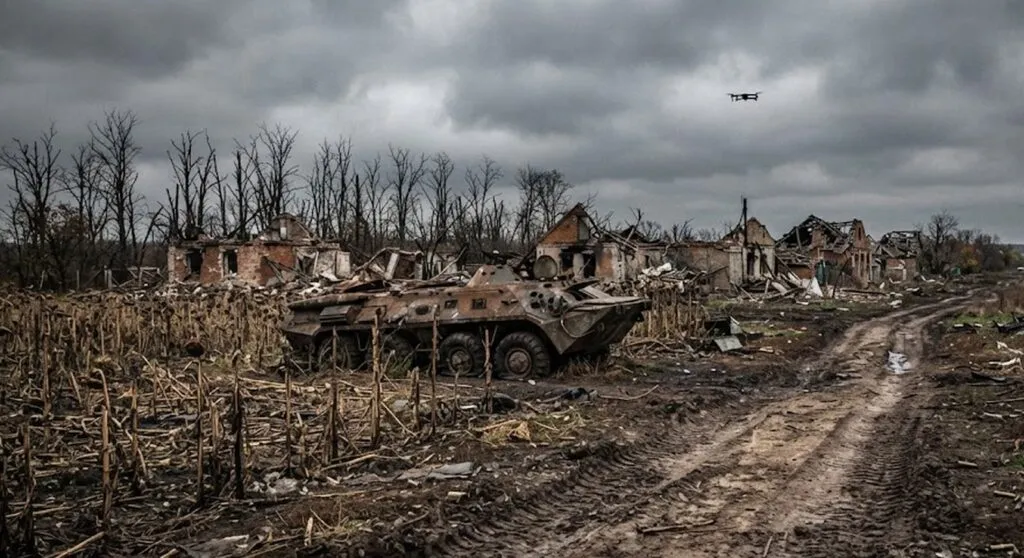
The offensive, fought almost entirely under an information blackout, has liberated three more villages and 51 square kilometres. The general...

Russian channels say the target was the logistics corridor to Europe; Ukrainian ones say a new jet-powered Geran was flying....

Washington is still silent, Tehran is expected to applaud, and the Kurdish prime minister calls the withdrawal "shameful". The Balkans...

More than half the drones were jet-powered, and the fastest thing in the sky was an unconfirmed report of a...

Tehran offers to open Hormuz within seven days, Washington answers with a photo and a plan for bombs after the...

Telegram channels claim Putin is considering a Defense Ministry proposal, and Moscow confirms nothing. "It's not on the agenda," the...
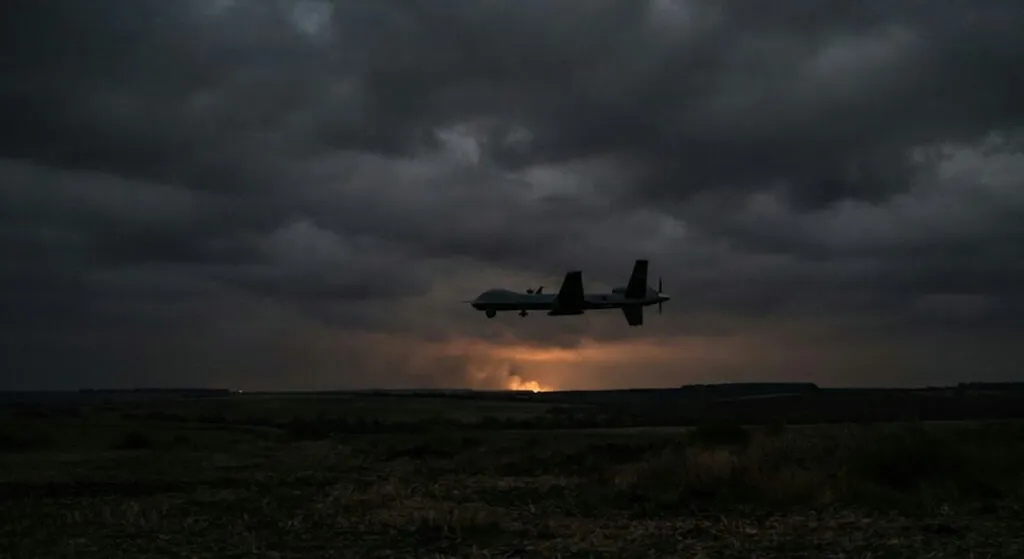
Ukrainian programmers and gamers are flying drones that strike up to 2,900 kilometres deep inside Russia. Moscow hits back with...

Saudi Arabia's highest religious authority has told soldiers to be ready to die in the war with the Houthis. When...

Ukrainian drones are hitting refineries hundreds of kilometres deep inside Russia, while Russia's jet-powered "Shaheds" are already breaking through Ukraine's...
This site uses cookies - is that okay? Learn more
Be the first to know when Metla launches something new
Leave your email and we will write when there is a new guide or something new on Metla.