They Fired Guns at a Party in Dobridol - and Police Only Moved Once the Video Went Viral
02.08.2026


02.08.2026

02.08.2026

02.08.2026

02.08.2026

02.08.2026

01.08.2026
02.08.2026
01.08.2026
31.07.2026

02.08.2026

02.08.2026

02.08.2026

02.08.2026

02.08.2026
01.08.2026

09.03.2026

27.02.2026

19.02.2026
02.08.2026

01.08.2026

31.07.2026

23.04.2026

23.04.2026

12.04.2026
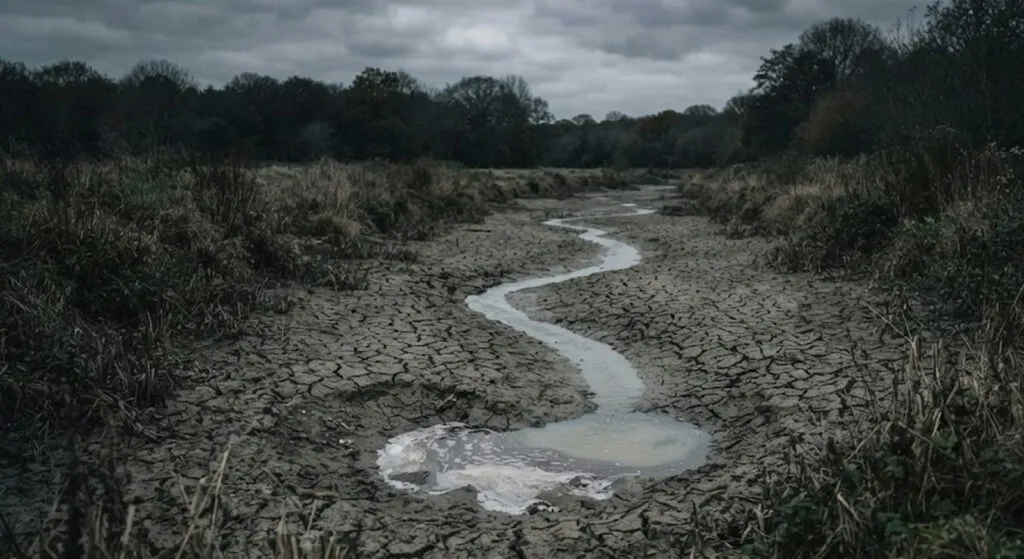
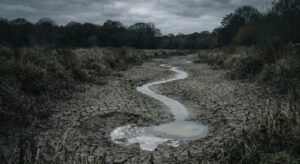
On 24 July the Lepenec at Karpoš, right where it joins the Vardar, was covered in thick white foam. A full week passed, and the question of who released it still has no answer with a name attached. The State Environmental Inspectorate carried out extraordinary checks at industrial facilities and found no irregularities. Every entity inspected was operating within the terms of its permits. The preliminary report says the physico-chemical parameters do not exceed limit values. The drinking water is safe, confirmed across eighty-one samples.
So: the river turned white in front of an entire city, nobody broke a single rule, and nobody is responsible. Final results from an accredited laboratory are expected on 4 August. If those also come back "within permitted limits", the question grows bigger than the Lepenec - what exactly has to happen to a river before someone is found to have breached a regulation.
Two days before giving birth she was walking around the house normally. Today nineteen-year-old Stanka Mihajlova from the village of Banica is in a wheelchair, and the discharge letter from the Štip hospital states she was released "in good general condition". About the paraplegia the document says nothing at all.
The law requires the hospital to convene a quality commission in a case like this. That did not happen for more than a month - and, judging by the reactions, the director learned of the case only after journalists asked him about it. This is the part worth pausing on: not the error during surgery, which experts have yet to establish, but the fact that the mechanism built precisely for such situations did not switch itself on. The woman had not vanished from the system - she passed through three medical institutions.
The main reservoir above Debar receives water for over 40 thousand people. The town has no more than 10 thousand residents. Even so, restrictions in four neighbourhoods run from four hours to five, and on upper floors there is no water for longer still. The utility company itself supplied the other half of the story: "Better planning, timely investment and more efficient management should have prevented or significantly reduced this." That is a sentence you rarely hear from a public utility in this country.
The same week, in the same town, 47 new social housing units are being announced. Debar is not a town in a desert - Debar is a town above a spring rated among the finest in Europe, where people count the hours until the next water.
In Gostivar meanwhile, the bacteria reports the two parties keep pulling out against each other go back to 2020. The analyses have existed for six years. Consequences have not.
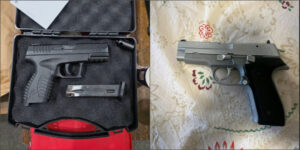
The footage landed on social media first, and only afterwards in the hands of the police. After searches in the Gostivar village of Dobridol six people were detained, with pistols, a hunting rifle and dozens of rounds found across several neighbouring houses. The question is not how the police found them within hours. The question is why it took a video to get them moving.
The same sequence shows up in the fake-profiles case: a Skopje family endured online harassment for six years, and after the report the police spoke to the suspect within 24 hours. The response is not slow - what is slow is everything standing in front of it.
Construction work on the underpass at Južen Bulevar begins on 5 August. Around 800 residents of the "Anton Popov 1" complex have to this day not been given access to the project documentation, and the excavation will go right down to the building's foundations. Their questions are entirely standard for digging beside an existing structure: whether a geomechanical study was produced, whether the building's condition will be officially recorded before work starts, who assumes liability if damage appears.
The strongest sentence in their statement is not emotional but engineering: "Verbal assurances that 'there won't be a problem' are not enough." A meeting was promised to them on 20 July. To date there has not even been an invitation.
Public debt fell by 0.1 percentage points, and industrial output is growing. The direction is confirmed - and so is its size. On the property market a square metre in Centar reached 3,360 euros while rents are falling: fewer flats rented but higher total rent, fewer contracts but market value up 27.3 percent.
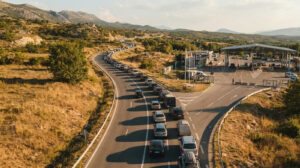
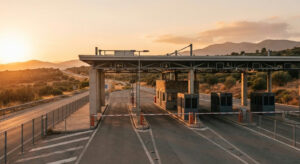
At the borders, the AMSM measures 30 minutes to an hour at Bogorodica and Tabanovce, while drivers talk about two to three hours. The difference is paid by whoever is sitting in the car.
Ohrid's cleaning crews start at six in the morning so the town looks clean by seven. What ends up in the lake nobody cleans, and Ohrid recently received time from UNESCO, not a rescue. In Butel, meanwhile, the municipality is announcing video surveillance at every playground - a good intention, but the rules on footage of children need to be known before the cameras go on, not after.
And in Trnovo the 55th All-Macedonian Gathering took place. Fifty-five years of returns also means fifty-five years of departures.
What ties all of this together is not misfortune but sequence. First the thing happens, then it reaches the public, and only then does the institution that existed all along begin to move. The commission convenes after journalists ask. The police move after the footage goes viral. The documents are demanded after the excavation is already scheduled. The measurements are always within permitted limits, and responsibility is spread so evenly that it lands on nobody.
The latest 10 news from this category

Everywhere there is an institution, a procedure and a document - it is just that each of them switches on...
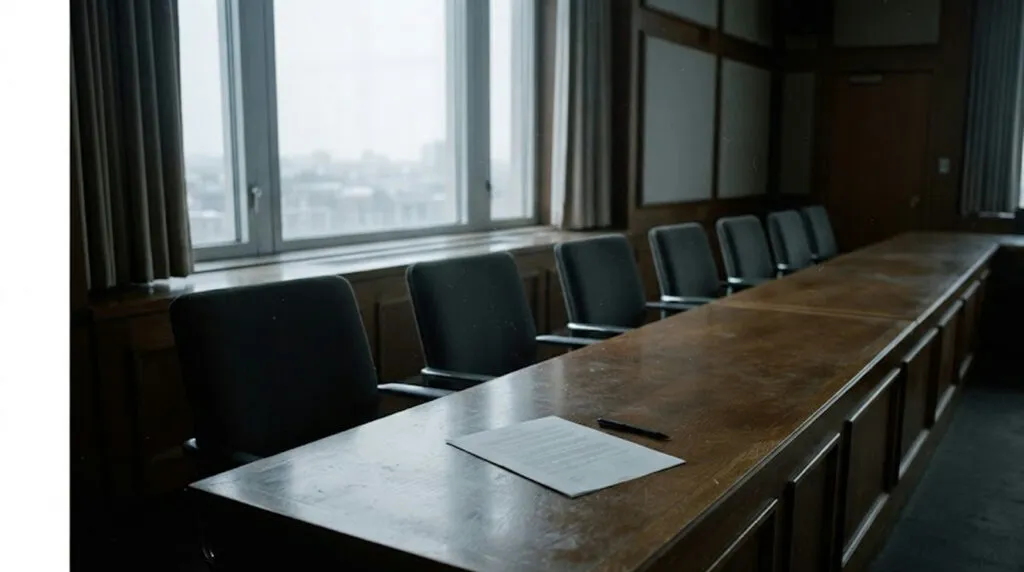
A judge returned the passport of a man accused over a 1.7 million euro tender, then retired three days later....
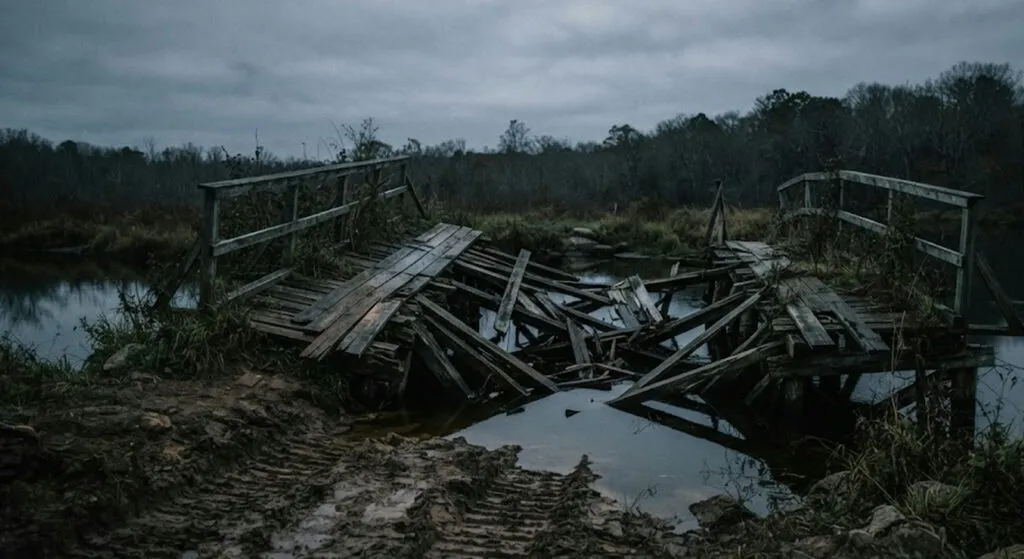
In almost every story today, the information existed before the damage: the excavator's plan was visible for two days, the...
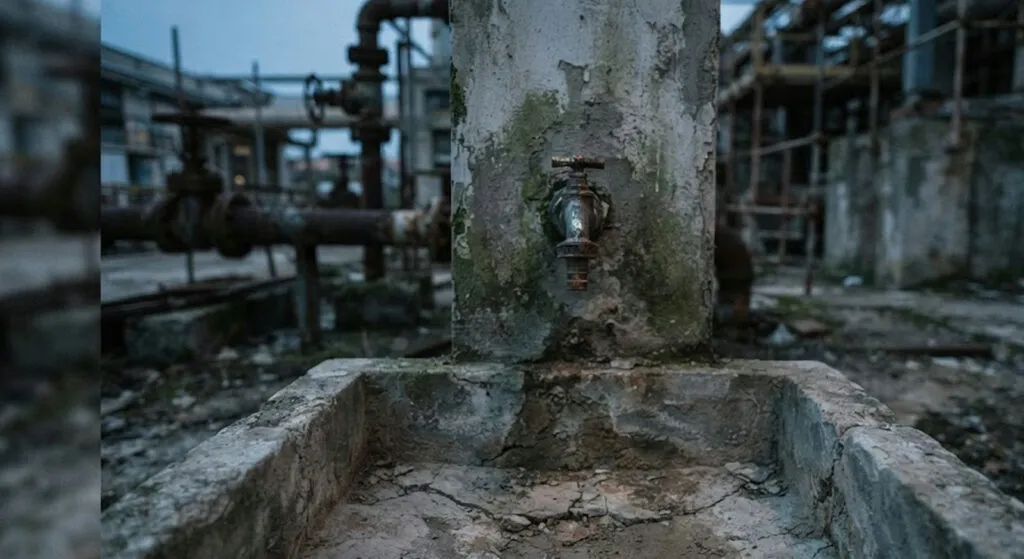
Twenty-two days of sewage in the water supply, and the health watch now shifts to hepatitis. A factory that promised...
The river cleaned itself, the tap water in Gostivar still is not drinkable, and the budget revision passed without a...
Today Macedonia's institutions were loudest when announcing things and commemorating things, and quietest when a number was required. „A larger...
Five million euros of damage at a substation nobody was guarding, 456 unenforced demolition orders in Ohrid, and water that...
A day of unfinished cleanup: the storm left speedboats on dry land and metal over people's heads, UNESCO gave us...

The day passed under the sign of institutions that announce, inspect and tender - but rarely carry through. From 456...
A day in which the state measures damage, announces inspections and collects selectively - but rarely answers the questions that...
This site uses cookies - is that okay? Learn more
Be the first to know when Metla launches something new
Leave your email and we will write when there is a new guide or something new on Metla.