

Filipče Calls for a New Opposition "Front for Freedom and Justice": A New Name for an Old Opposition?
31.05.2026


31.05.2026

31.05.2026

31.05.2026

31.05.2026

31.05.2026

31.05.2026

30.05.2026

28.05.2026

27.05.2026

31.05.2026

31.05.2026

30.05.2026

31.05.2026

31.05.2026

31.05.2026

31.05.2026

30.05.2026

29.05.2026

31.05.2026

31.05.2026

30.05.2026

09.03.2026

27.02.2026

19.02.2026

14.04.2026

07.11.2025
07.11.2025

23.04.2026

23.04.2026

12.04.2026


You wake up shaken, heart in your throat, scanning the dark - did someone really chase you, or did the person you trusted leave you? Nightmares have a bad reputation, and entirely illogically so - new psychological science is moving the other way. According to the Threat Simulation Theory, at night the brain trains for a day that may never come. And that is good, not bad.
The theory was put forward by Finnish neuroscientist Antti Revonsuo. The premise: sleep is not a shutdown. It is an active process in which the brain processes experience, fixes memories and - this is the new part - rehearses danger scenarios. When you dream you are falling from a building, your neurons do not distinguish dream from reality. They "pass through" the situation as if it were real, and in doing so they teach the body how to react to fear, panic, flight. Translation: the nightmare is a simulator.
Alfredo Rodríguez-Muñoz, professor of psychology at the Complutense University of Madrid and author of "Sleeping Well Is Living Better", says this function is adaptive - if nightmares are occasional. When the brain goes through a few days of stress or intense emotion, the night processes it through symbols. That is the reason we dream of being late for a meeting, forgotten exams, lost loved ones - those are hidden rehearsals for the real day that may yet come.
When do nightmares happen? Mostly in the REM phase of sleep, when the brain is at its most active and dreams at its strongest. The regions of emotion, memory and fear processing are mainly engaged. That is why the dream feels real, and why, when you wake up, the body still reacts as if you had been in danger. It is the same biochemical response as a real threat - but without the consequences. That is why it is safe.
Children dream nightmares especially often between the ages of 3 and 10. It is a period of enormous brain maturation and intense imagination. Their brain is learning to manage complex emotions - fear, insecurity, separation - and part of that work happens in sleep. It is not a sign of a problem; it is a sign that development is on track. Parents get anxious, but adult psychologists view it as a normal phase, not pathology.
When should you worry? When nightmares become frequent, recurring or intense. They show up several times a week, cause fear of sleep, generate constant wake-ups, or trigger overall emotional exhaustion in the morning. Then the brain is no longer using nightmares for regulation - they signal that regulation has slipped, usually around anxiety, post-traumatic stress or major life changes. That is when a specialist is needed.
To reduce nightmares, the expert lists the basic things that work: regular sleep hours, less alcohol and less screen time in the evening, avoiding intense series or news immediately before bed. The more the brain is active and stressed during the day, the harder it is for it to "switch off" at night. Nightmares are not a mistake - they are a signal. The question is whether we listen. And whether, the next night when you dream you are falling, you will remember that the brain is actually preparing you, not punishing you.
The latest 10 news from this category

A handful of ingredients, one pan, and a result that smells of Mediterranean summer. The anchovies don't dominate - they...

Being late more rarely means you don't care, and more often that the brain has no energy for one more...

Vegetables cooked for 40 minutes on the lowest flame. It is spectacular the next day, and the real service is...

Thinly sliced beef, an aromatic jus, pickled vegetables, and bread that has to be firm but absorbent. Dry, wet or...

Headaches for the first two days, waking up at 4 a.m., irritation for no reason - these are the classic...

No stem, darker, firmer, sweeter. From clafoutis to cherry gazpacho - and why Macedonian cherries from Veles do the job...

The brain switches from rest to alarm in seconds. The fix is boring but effective - 15 minutes without a...

It's not a modern recipe - it's a simpler version of baklava, but TikTok doesn't know that.

Social media celebrates the stopwatch. Training experts celebrate the technique.
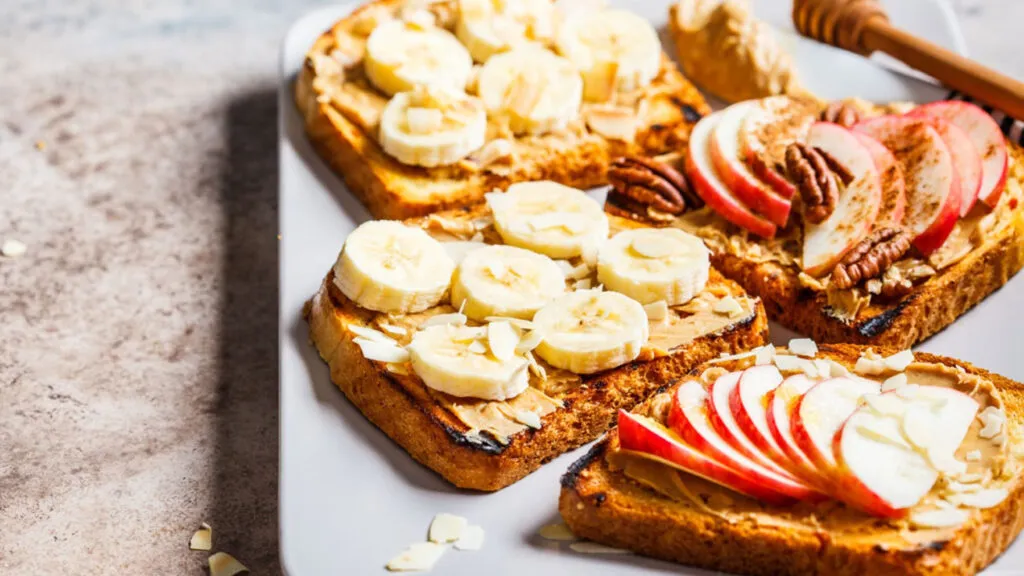
Peanut butter and natural peanut cream are not the same - the first has additives, the second is 100 percent...