


Kratovo man stabs police officer mid-intervention: prosecutors want the 40-year-old detained
15.09.2026


15.09.2026

15.09.2026
15.09.2026
15.09.2026
15.09.2026
15.09.2026

15.09.2026

14.09.2026

13.09.2026

15.09.2026

15.09.2026

14.09.2026
15.09.2026
15.09.2026

15.09.2026

15.09.2026

14.09.2026

13.09.2026
15.09.2026

15.09.2026

15.09.2026

15.09.2026

15.09.2026

14.09.2026

09.03.2026

27.02.2026

19.02.2026

15.09.2026

14.09.2026
14.09.2026

23.04.2026

23.04.2026

12.04.2026

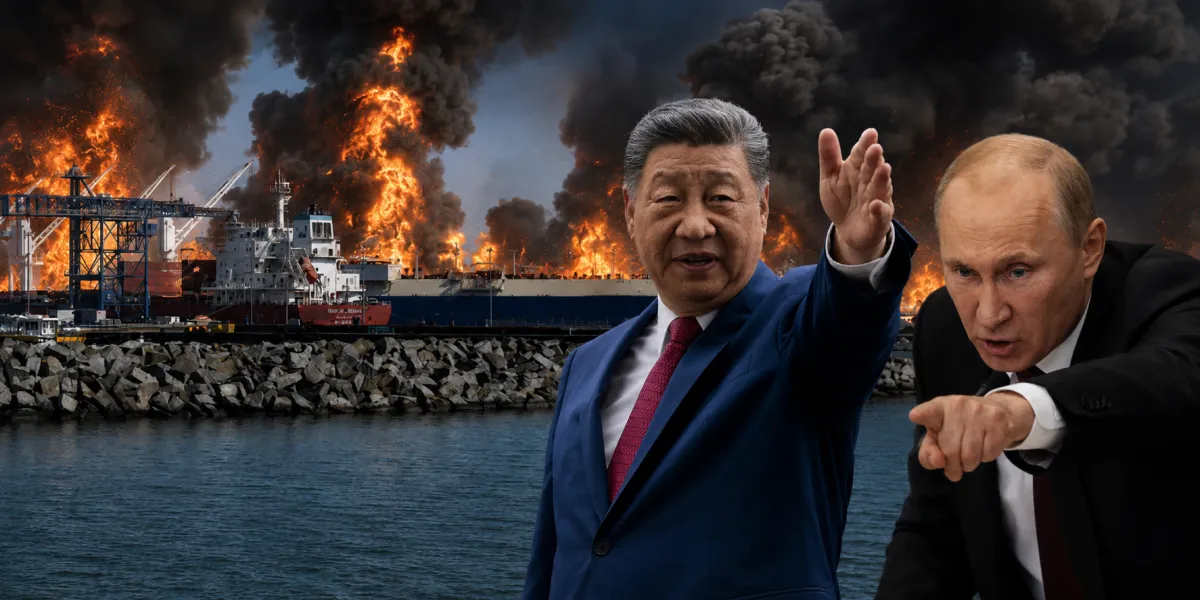
Putin went to Beijing full of hope and came back empty-handed. The deal for the "Power of Siberia 2" pipeline - the project meant to rescue Russian gas after Europe slammed the door - was left unsigned. And not over technical details, but because China simply isn't in a hurry. Why would it be, when every delay buys it better terms?
The heart of the dispute is price. Beijing wants gas at a rate close to what Russians themselves pay at home - around 50 dollars per thousand cubic metres. Moscow insists on a formula closer to the old European contracts, where the price used to hit 258 dollars. The gap is enormous, and the bargaining position even more so. Whoever has the buyer dictates the terms, and whoever has nowhere to sell his gas keeps quiet and gives in.
The project is no small thing. The pipeline would carry roughly 50 billion cubic metres a year, across 2,600 kilometres through Mongolia into China. On paper, that's a way out for the Russian economy. In practice, it's confirmation of how much Moscow depends on a single buyer - and how well that buyer knows it.
That's why this visit says more through what's missing than through what happened. Putin signed over 40 cooperation agreements - technology, finance, trade. An impressive number for the photo op. But the one deal he needed most, the one for gas, isn't there. And when the most important thing is missing, the rest of the signatures become decoration.
The relationship between the two powers stopped being a partnership of equals long ago. Russia leans ever more on the Chinese market, on Chinese technology, and on Chinese banking channels to dodge Western sanctions. Beijing sees this clearly and is in no rush to help for free. Every dependence gets billed - a rule as old as trade itself.
For a reader in the Balkans, this is no distant tale. When a country is left with no choice over whom to sell to or whom to buy from, the price is set by the other side. We know this from our own experience - with electricity, with gas, with dependencies that dress themselves up as alliances. Will the "brotherhood" between Moscow and Beijing hold up when the bill lands on the table? History says great friendships fall apart over numbers more often than over ideology.
The latest 10 news from this category
Trump scaled back the military exercises to ease the tension, and Wonsan answered in the form of projectiles. What does...

The sanctions list got a seven-day extension instead of one measured in months, a move diplomats themselves call unprecedented. Two...
Switzerland offered a table for talks on Ukraine, Moscow replied that the table stopped being neutral once Bern adopted EU...
The will says one thing, a committee of twenty-one men decided another. The queen mother says the army pulled the...
A country that was Europe's byword for stability for decades now has a parliament split into two blocs by a...
Sixteen years in power, defeat at a regular election, five months of quiet - and now the election result is...

When an institution with a legal department and a palace apparatus has to publish a list of its verified accounts,...
Nobody said they do not trust Washington. Everyone is behaving as though they do not - gold, weapons, the cloud...
The warning reached the president three years before 9/11. The problem was not a lack of information, but that nobody...

In 1976 tradition demanded the future king choose a bride with no past. Thirty years later that same king married...
This site uses cookies - is that okay? Learn more
Be the first to know when Metla launches something new
Leave your email and we will write when there is a new guide or something new on Metla.
