

Kratovo man stabs police officer mid-intervention: prosecutors want the 40-year-old detained
15.09.2026


15.09.2026

15.09.2026

15.09.2026
15.09.2026
15.09.2026

15.09.2026
15.09.2026

14.09.2026
13.09.2026

15.09.2026

15.09.2026

14.09.2026

15.09.2026

15.09.2026

15.09.2026

15.09.2026

14.09.2026

13.09.2026

15.09.2026

15.09.2026

15.09.2026

15.09.2026

15.09.2026

14.09.2026

09.03.2026

27.02.2026

19.02.2026

15.09.2026

14.09.2026

14.09.2026

23.04.2026

23.04.2026

12.04.2026

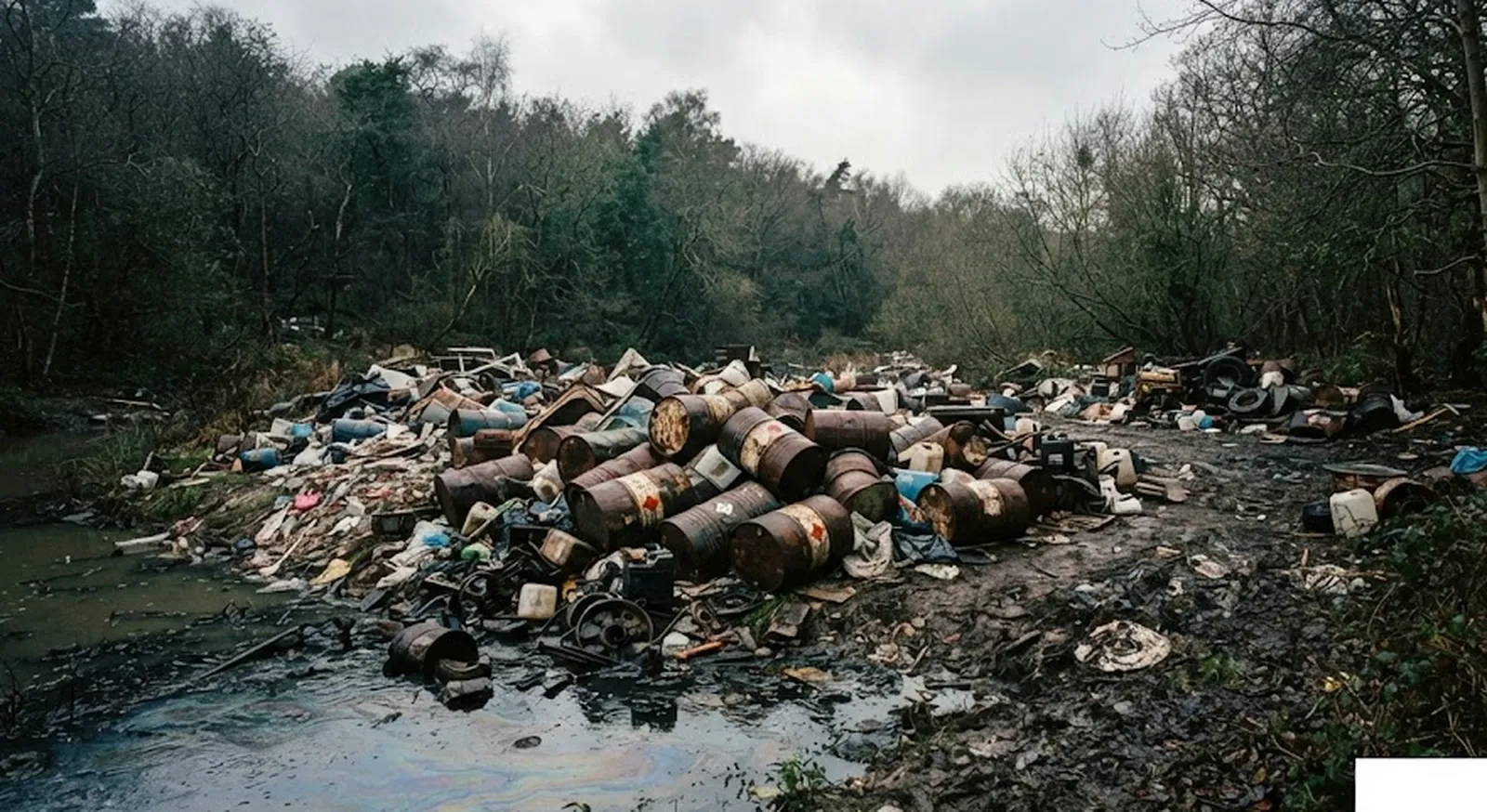
When we think of organized crime, we picture drugs, weapons, human trafficking. But according to Interpol, environmental crime is already the third most profitable form of organized crime in the world - right behind the drug trade and counterfeits.
The figures are staggering. Criminal networks earn hundreds of billions of dollars a year through illegal waste smuggling, unlawful logging, illegal fishing and mining, pollution and wildlife trafficking. Germany's environment minister Carsten Schneider warns that the damage exceeds one trillion dollars a year and that cross-border environmental crime „is no longer a marginal problem“.
What makes it so profitable is its invisibility. Drugs are hidden, weapons are hidden - but a factory quietly dumping toxic waste into a river or a boat fishing illegally operate out in the open, and the fines are laughable compared to the earnings. „Hundreds of billions of dollars“ end up with criminal networks every year, says the Interpol secretary general.
To counter it, the GAIA project was launched in 2024 - a collaboration between Interpol, the WWF and the German government, with an initial 5 million euros. In the first year alone, over 500 investigations and 262 criminal entities were identified. That sounds like a lot, but it's a drop in an ocean of hundreds of billions.
For the Balkans, this isn't an abstract topic. The region has for years struggled with illegal dumps, unregulated logging and river pollution - and now we know that behind much of it stands not just negligence, but organized crime that turns a profit. The question every citizen can ask is familiar: when the damage is this big and the profit this high, why do the fines stay so small?
The latest 10 news from this category
Trump scaled back the military exercises to ease the tension, and Wonsan answered in the form of projectiles. What does...

The sanctions list got a seven-day extension instead of one measured in months, a move diplomats themselves call unprecedented. Two...

Switzerland offered a table for talks on Ukraine, Moscow replied that the table stopped being neutral once Bern adopted EU...

The will says one thing, a committee of twenty-one men decided another. The queen mother says the army pulled the...

A country that was Europe's byword for stability for decades now has a parliament split into two blocs by a...
Sixteen years in power, defeat at a regular election, five months of quiet - and now the election result is...

When an institution with a legal department and a palace apparatus has to publish a list of its verified accounts,...

Nobody said they do not trust Washington. Everyone is behaving as though they do not - gold, weapons, the cloud...

The warning reached the president three years before 9/11. The problem was not a lack of information, but that nobody...

In 1976 tradition demanded the future king choose a bride with no past. Thirty years later that same king married...
This site uses cookies - is that okay? Learn more
Be the first to know when Metla launches something new
Leave your email and we will write when there is a new guide or something new on Metla.
