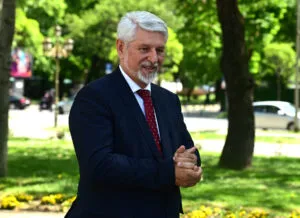
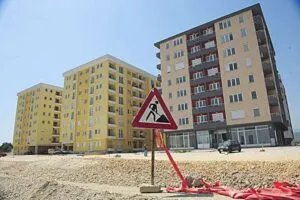
A New Criminal Complaint Against Jakimovski: A Building Permit Based on a Plan Struck Down Back in 2018
16.09.2026


16.09.2026

16.09.2026

16.09.2026
16.09.2026
16.09.2026

16.09.2026
16.09.2026

15.09.2026

14.09.2026

16.09.2026

16.09.2026

15.09.2026

16.09.2026

15.09.2026

14.09.2026

16.09.2026

16.09.2026

16.09.2026

16.09.2026

15.09.2026
15.09.2026

09.03.2026

27.02.2026

19.02.2026
16.09.2026

15.09.2026

14.09.2026

23.04.2026

23.04.2026

12.04.2026

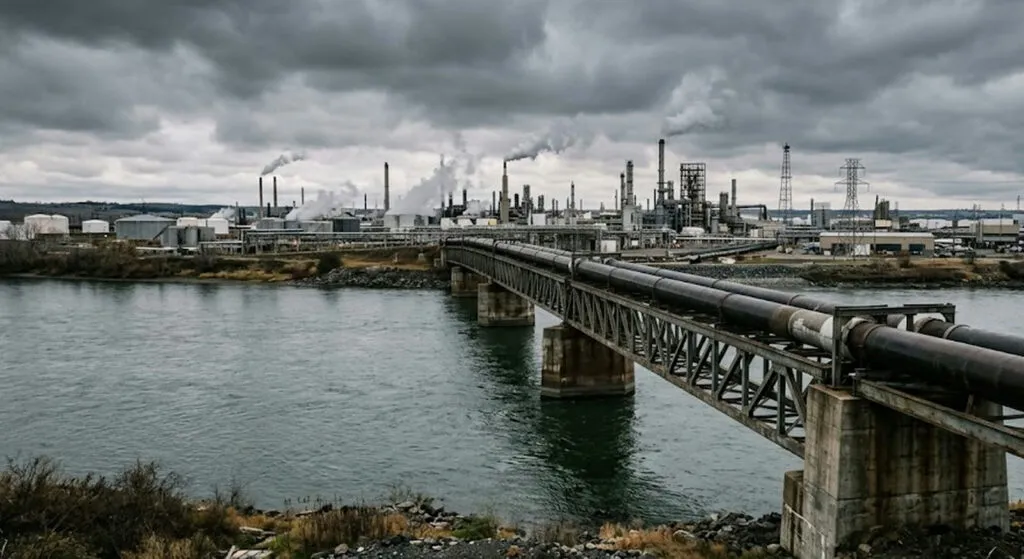
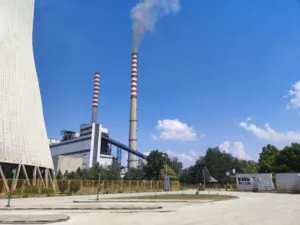
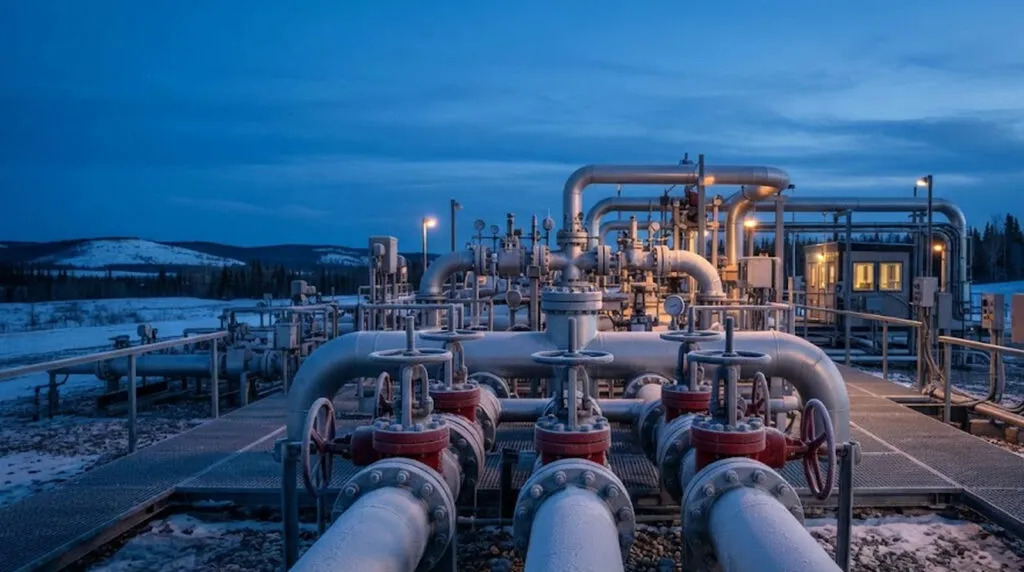
Turkey's Energy Minister Alparslan Bayraktar said what many in the Balkans know but few say out loud: if someone destroys Turkish Stream, the consequences will be comparable to a blockade of the Strait of Hormuz. Not a metaphor. Not hyperbole. A direct warning from the man whose country controls the pipeline.
"An attack on Turkish Stream would be equivalent, one way or another, to a blockade of the Strait of Hormuz. We already experienced this after the destruction of Nord Stream," Bayraktar said at the Antalya Diplomatic Forum.
For Serbia, Hungary, Bulgaria, North Macedonia, and partially Austria and Slovenia - Turkish Stream is the artery carrying cheaper Russian gas. Alternative? According to Bayraktar - none exists. "Turkish Stream supplies gas to Turkey and European countries. There is no alternative," the minister stressed.
Energy as a military target
Bayraktar warned that energy infrastructure must remain outside conflict zones. "When you start treating energy infrastructure as a primary military target, you open a new chapter. It becomes an endless list of potential targets - compressor stations, transformers, the pipeline itself, power plants." Does this sound like a theoretical warning - or like someone who knows something the public doesn't yet?
Simultaneously, Bayraktar announced that the first reactor of the Akkuyu nuclear plant, built with Russian participation, could begin producing electricity in October. "October is a fairly optimistic timeline. Additional months may be needed. Primary block construction is 99 percent complete," he added.
The Balkans sit on a pipeline whose destruction would cause chaos comparable to blocking the world's most important oil strait. How many Balkan governments have a backup plan?
The latest 10 news from this category

Sanctions imposed over one war are being offered as currency in an entirely different dispute. Most member states are against...
El Nino in the Pacific shifts the currents that decide where snow falls. An area that usually gets a metre...
The easiest way to dismiss an uncomfortable argument is to point at who is making it. But that does not...
The appeals court ruled the entire trial must start over. The son of Norway's queen is waiting for it on...
Trump scaled back the military exercises to ease the tension, and Wonsan answered in the form of projectiles. What does...

The sanctions list got a seven-day extension instead of one measured in months, a move diplomats themselves call unprecedented. Two...

Switzerland offered a table for talks on Ukraine, Moscow replied that the table stopped being neutral once Bern adopted EU...

The will says one thing, a committee of twenty-one men decided another. The queen mother says the army pulled the...
A country that was Europe's byword for stability for decades now has a parliament split into two blocs by a...
Sixteen years in power, defeat at a regular election, five months of quiet - and now the election result is...
This site uses cookies - is that okay? Learn more
Be the first to know when Metla launches something new
Leave your email and we will write when there is a new guide or something new on Metla.