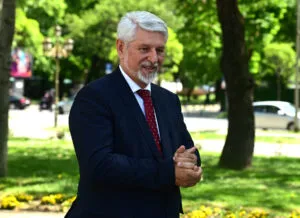
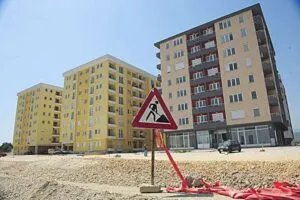
A New Criminal Complaint Against Jakimovski: A Building Permit Based on a Plan Struck Down Back in 2018
16.09.2026


16.09.2026
16.09.2026
16.09.2026
16.09.2026
16.09.2026
16.09.2026
16.09.2026
15.09.2026

14.09.2026
16.09.2026
16.09.2026

15.09.2026

16.09.2026
15.09.2026
14.09.2026

16.09.2026
16.09.2026
16.09.2026

16.09.2026

15.09.2026
15.09.2026

09.03.2026

27.02.2026

19.02.2026
16.09.2026
15.09.2026
14.09.2026

23.04.2026

23.04.2026

12.04.2026

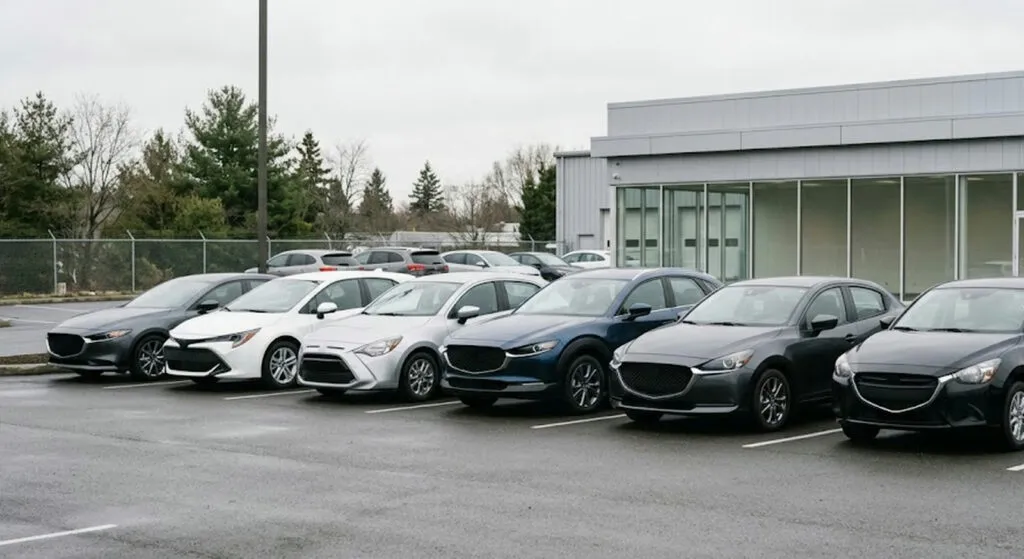
From February 2022 to today, the West has rolled out hundreds of individual sanctions packages against Russia. The aim: to cut Moscow off from global financial and technological flows. The result at the end of 2026: BMWs, Mercedes-Benzes and Volkswagens are driving around Moscow as if nothing had happened. Not one or two, not contraband, not a secret - 47,000 new vehicles of these three brands registered in Russia in the past year alone. That's the real efficacy of sanctions.
The numbers are staggering. Since the invasion began, more than 700,000 Western vehicles have been sold in Russia. In 2025 alone, roughly 130,000 cars from countries that imposed sanctions. These are not leftovers from 2021. Not foreign tourists. They are new or near-new vehicles, directly imported, registered, and sold on the Russian market.
How does the mechanism work? China plays the central role. Chinese intermediaries route Western cars through a third leg - in China they're classified as „new", on crossing the Russian border they're reclassified as „used" - and that way they reach Russian showrooms without any approval from the original manufacturer. A neat little scheme. A reclassification document in China costs a few hundred dollars. After that, the car travels as if it were an old machine.
Second channel - Kyrgyzstan. Shipments through Bishkek in the first two months of 2026 more than quadrupled compared with the same period last year. A small post-Soviet country with practically no domestic car market of its own - turning into the main route for Western cars heading to Moscow. That can't happen without the awareness of the top of the government.
But this is only the most visible point of the sanctions workaround. The same mechanism applies to microprocessors, industrial equipment, luxury goods, oil-and-gas equipment. China has cars and microchips. Turkey has financial channels and goods. Kyrgyzstan has a customs stamp. India pays for oil. The UAE - gold channels. Guinea - port services. Armenia - export addresses. Every link in the chain is legal. Every middleman is „unaware". Every ship sails under a foreign flag.
Analysts describe this not as a collapse of sanctions, but as their renting out. The sanctions system works - but it has a porous edge that simply can't be sealed, unless we prepare for a global economic shock. And no one wants that. China doesn't want it. Turkey doesn't want it. Even Brussels doesn't really want it - because European companies also profit from that grey zone.
For the Balkans this is a lesson. No sanctions regime is complete. When Brussels was telling Macedonia it had to introduce sanctions against Russia if it wanted into the EU, that was never a sincere demand. It was a loyalty test. Brussels itself can't enforce its own sanctions. But the question they don't want to answer - is there a sanctions regime in history that has stayed effective for more than three years? The answer is: no. And that means the West's real strategy against Russia has to be something else - but what exactly, none of the 27 EU prime ministers wants to say out loud.
The latest 10 news from this category
Sanctions imposed over one war are being offered as currency in an entirely different dispute. Most member states are against...
El Nino in the Pacific shifts the currents that decide where snow falls. An area that usually gets a metre...
The easiest way to dismiss an uncomfortable argument is to point at who is making it. But that does not...
The appeals court ruled the entire trial must start over. The son of Norway's queen is waiting for it on...
Trump scaled back the military exercises to ease the tension, and Wonsan answered in the form of projectiles. What does...
The sanctions list got a seven-day extension instead of one measured in months, a move diplomats themselves call unprecedented. Two...
Switzerland offered a table for talks on Ukraine, Moscow replied that the table stopped being neutral once Bern adopted EU...
The will says one thing, a committee of twenty-one men decided another. The queen mother says the army pulled the...
A country that was Europe's byword for stability for decades now has a parliament split into two blocs by a...
Sixteen years in power, defeat at a regular election, five months of quiet - and now the election result is...
This site uses cookies - is that okay? Learn more
Be the first to know when Metla launches something new
Leave your email and we will write when there is a new guide or something new on Metla.