
They Fired Guns at a Party in Dobridol - and Police Only Moved Once the Video Went Viral
02.08.2026



02.08.2026

02.08.2026

02.08.2026

02.08.2026

02.08.2026

01.08.2026

02.08.2026

01.08.2026

31.07.2026

02.08.2026

02.08.2026

02.08.2026

02.08.2026

02.08.2026

01.08.2026

09.03.2026

27.02.2026

19.02.2026

02.08.2026

01.08.2026

31.07.2026

23.04.2026

23.04.2026

12.04.2026
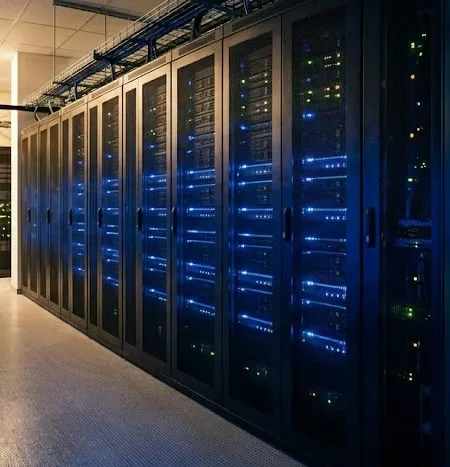
Elon Musk's xAI lost 6.4 billion dollars from operations on revenue of just 3.2 billion dollars in 2025, according to the IPO filings submitted by SpaceX. And losses will grow - SpaceX plans to scale Grok to "several trillion parameters", which requires significant additional compute that costs a lot.
Musk merged xAI - which had earlier bought the X platform (formerly Twitter) - with the rocket and satellite company SpaceX in February, before announcing he would take it public this year. With OpenAI and Anthropic also preparing for public debuts in 2026, the SpaceX IPO is expected to be one of the largest in history, with a potential valuation of 1.75 trillion dollars.
This is the first time the public gets a look at xAI's and X's finances. In 2024, xAI posted a 1.56 billion dollar loss on 2.62 billion dollars of revenue. By 2025, losses had grown to 6.4 billion on 3.2 billion of revenue - the gap between earnings and spending is widening, not narrowing. For comparison, competitor (and client) Anthropic expects a 130 percent jump in revenue to 10.9 billion dollars in the second quarter, taking it to its first operating profit.
Capital expenditures in the AI segment jumped from 12.7 billion dollars in all of 2025 to 7.7 billion in the first quarter of 2026 alone. That's an annual run rate of around 30.8 billion dollars - more than double last year's pace. So far, the investment has delivered a limited number of users: 117 million monthly active users (MAU) for Grok features, out of 550 million MAU for Grok and X combined. Only one in five users in the ecosystem actually uses Grok.
SpaceX is still pushing forward with Grok. The Colossus and Colossus II data centres - which came online in 122 and 91 days respectively - together provide roughly 1 gigawatt of compute. Musk is promising an even more ambitious idea: training and inference on orbital data centres, which according to him will be far cheaper than those on Earth. The filing says SpaceX plans to start launching AI-compute satellites no earlier than 2028.
"The future of AI will be determined by control of the physical stack," the document reads. The question investors will have to answer for themselves before buying the IPO is simple: how long can one entity lose 6 billion dollars a year before its finances catch up with its ambitions.
The latest 10 news from this category

Opus 5 set a record in the test and broke 11 agreements. Not one of the tricks is new -...

The billions were announced with a stage and slogans. The retreat is happening quietly, in sentences containing the word alignment.

In his last quarterly report Tim Cook announced the stronger Siri will be bought through iCloud+. The firm that paid...

The platforms that spent years convincing us automated content was the future are now patiently building filters against it. The...
Out of 141,006 test runs, three ended up inside the live systems of real firms. The oldest model worked out...
The strongest June quarter in its history, and the stock fell 6 percent. Artificial intelligence turned out to have a...

The FCC is closing the door to humanoid robots and power inverters, but only new ones. The millions of Chinese...

The player that raised the MP3 generation is betting nostalgia can be billed monthly. The new Winamp arrives in 2027,...

The man selling the world's best-known artificial intelligence says we will not work less. He also claims we will secretly...

Autonomous vehicles have blocked ambulances, driven into crime scenes and failed to recognise emergency lights. The bill demands the one...
This site uses cookies - is that okay? Learn more
Be the first to know when Metla launches something new
Leave your email and we will write when there is a new guide or something new on Metla.