

Expert witness at the Puls trial: the change-of-use application had to come from the owner, not the tenant
26.08.2026


26.08.2026

26.08.2026

26.08.2026

26.08.2026

26.08.2026

26.08.2026

26.08.2026

25.08.2026

24.08.2026

26.08.2026

26.08.2026

25.08.2026

26.08.2026

26.08.2026

26.08.2026

26.08.2026

25.08.2026

24.08.2026

26.08.2026

26.08.2026

26.08.2026

26.08.2026

26.08.2026

25.08.2026

09.03.2026

27.02.2026

19.02.2026

26.08.2026

25.08.2026

24.08.2026

23.04.2026

23.04.2026

12.04.2026
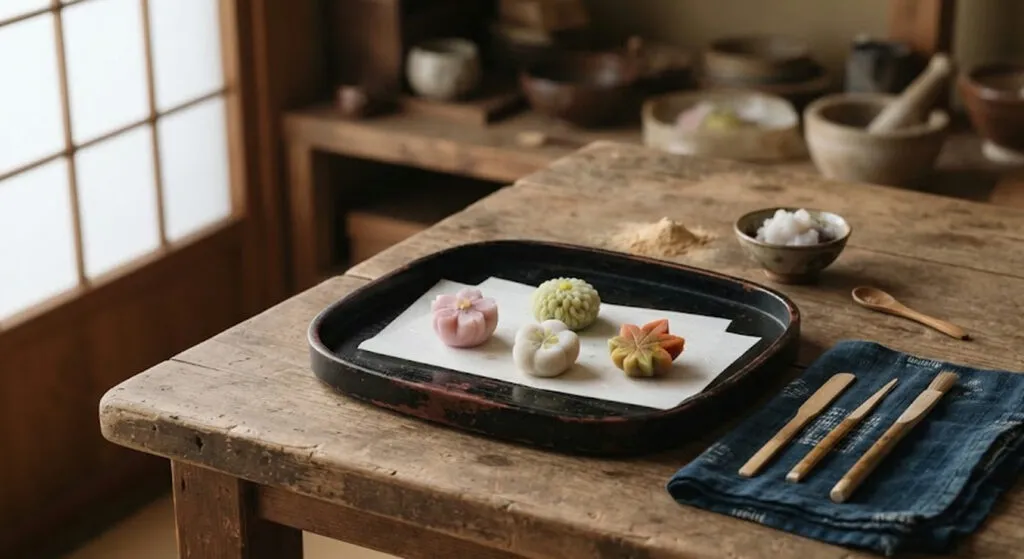
In Japan, princesses are raised from birth as a diplomatic asset, and then the institution strips them of all standing the moment they marry a man without a title. That is the system. Akiko of Mikasa, a cousin of Emperor Naruhito, found the way out nobody offered her: instead of waiting for the law to change, she started taking on duties that had not been hers.
Born on 20 December 1981, the year after her parents Prince Tomohito and Princess Nobuko married, Akiko entered the imperial family with full rights. She is neither married nor publicly engaged, and she turns 45 in December. By staying inside, she built a position nobody had counted on.
The year everyone saw her
The past twelve months changed her profile. In Bhutan she was received by King Jigme Khesar and Queen Jetsun Pema to mark 40 years of diplomatic relations, and she gave no speech there - she gave the queen a workshop in wagashi, Japanese confectionery. Culture as a tool, instead of a communiqué. Which other court would have thought of that?
She was also guest of honour at the Rose Ball in Monaco, where she met Albert and Charlene. Not by chance: Akiko is the loudest name in Japanese rugby, men's and women's, she does not miss a final and she is the one presenting the trophies. Charlene's foundation runs the Sainte Dévote rugby tournament, so the two met again two weeks after the ball. She also hosted Sweden's King Carl Gustaf at the Expo in Osaka, and on the Suzuka circuit she presented the trophy to the winner of the Japanese Formula 1 Grand Prix.
An Oxford doctorate and one death that changed everything
The road here was no shortcut. As soon as she came of age in 2001, Akiko began combining her first official duties with an academic career few courts anywhere can match. She studied at Merton College, Oxford, specialising in the history of Japanese art, then returned to the same university for a doctorate at the Faculty of Oriental Studies. She received her PhD in 2011 and became the second member of the imperial family with a doctorate.
Her institutional weight grew after the death of her father, Prince Tomohito, in 2012. As the elder of two daughters, she presided over his funeral and took on duties that had not fallen to her before. In December 2013 she fainted at an official event at Haneda airport - the Imperial Household Agency explained it was cerebral anaemia. She returned in 2014 with a trip to Turkey, for a concert dedicated to her father.
The first woman to head an imperial branch in two centuries
The biggest turn came in 2025. After the death of her great-grandmother, Princess Yuriko, Akiko took over as head of the Mikasa house and became the first woman to lead an imperial branch since the 19th century. Until then such positions were inherited only through widowhood, which is how Yuriko got hers. Akiko broke a two-hundred-year-old tradition.
It is worth being precise about what this is, so as not to overstate it: the Japanese imperial institution is purely symbolic, cultural and historical, unlike European monarchies with constitutional functions. But that is exactly what makes it interesting. While the Japanese parliament has spent a quarter of a century trying to pass a measure that would stop princesses losing their status on marriage, Akiko changed the system from the inside, without a single law. The question that remains is whether the institution will recognise it as a precedent or as an exception that will not be repeated.
The latest 10 news from this category

In an era when every summer has to be somewhere new to be worth posting, a family that returns to...
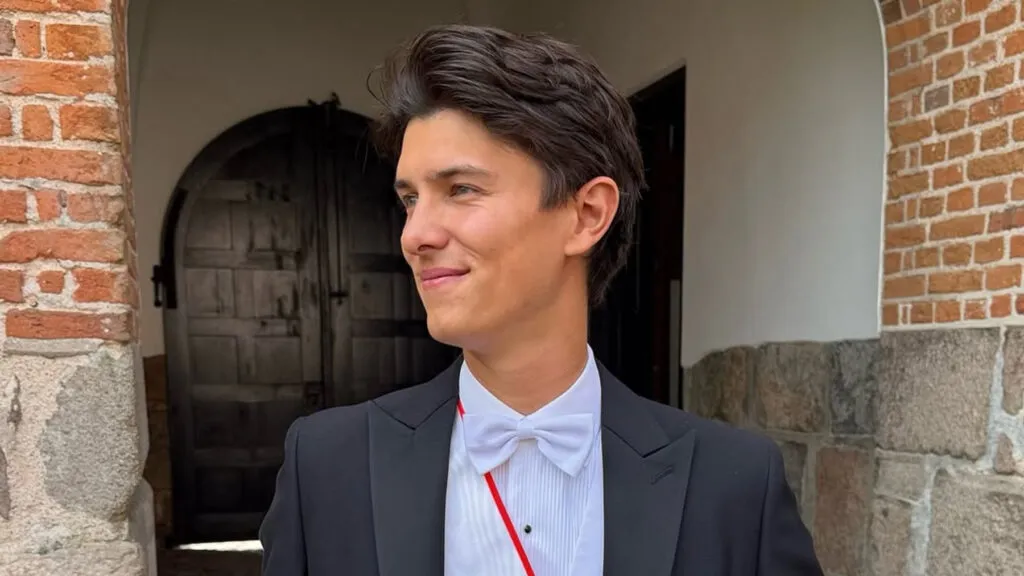
Three years after he stopped being a prince, he appeared in white tie wearing the Grand Cross of the Order...
Diana and Charles did what the British court had not done until then. Forty-five years later, the couple that does...

She was born in 1909, when the British throne was held by a king who died more than a century...

The Portuguese press calls it a secret adoption. The difference between I love them as my own and they are...
Daily horoscope - 22.08.2026
This site uses cookies - is that okay? Learn more
Be the first to know when Metla launches something new
Leave your email and we will write when there is a new guide or something new on Metla.
