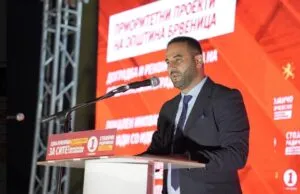
Mickoski celebrates a 4-to-1 win over SDSM in Brvenica, but his candidate got 445 fewer votes than a year ago
19.10.2026


19.10.2026

19.10.2026

19.10.2026

19.10.2026

19.10.2026
19.10.2026

19.10.2026

19.10.2026

18.10.2026

19.10.2026

19.10.2026

18.10.2026

19.10.2026

19.10.2026

19.10.2026

19.10.2026

18.10.2026

17.10.2026

19.10.2026

19.10.2026

19.10.2026

19.10.2026

19.10.2026

19.10.2026

19.10.2026

18.10.2026
18.10.2026
19.10.2026

17.10.2026

15.10.2026

23.04.2026

23.04.2026

12.04.2026

There is one kind of debt that appears in no public debt announcement, enters no deficit calculation and gets commented on at no press conference. It is the invoices the state has received, whose payment deadline has already passed, and which are simply not paid. As of the end of June they come to 42.7 billion denars - around 693 million euros.
The figure comes from the Electronic System for Reporting and Recording Liabilities, run by the Ministry of Finance. Over six months the debt grew by 26.4 million euros, of which 17.5 million in the second quarter alone. A total of 903 institutions have reported unpaid bills.
Who the state owes
To other public institutions - 344.5 million euros. To private companies, associations and NGOs - 315.2 million. That second figure is the one worth holding onto, because behind it stand companies that delivered goods or a service, paid their tax and their staff, and then waited.
When the state owes its suppliers over 300 million euros, that money is not lost - it is lent, interest-free and without a contract. A firm waiting to be paid has to find the cash somewhere else to cover its own obligations. That is a liquidity squeeze that travels down the chain, toward smaller firms with no bank line to absorb it.
The railways lead
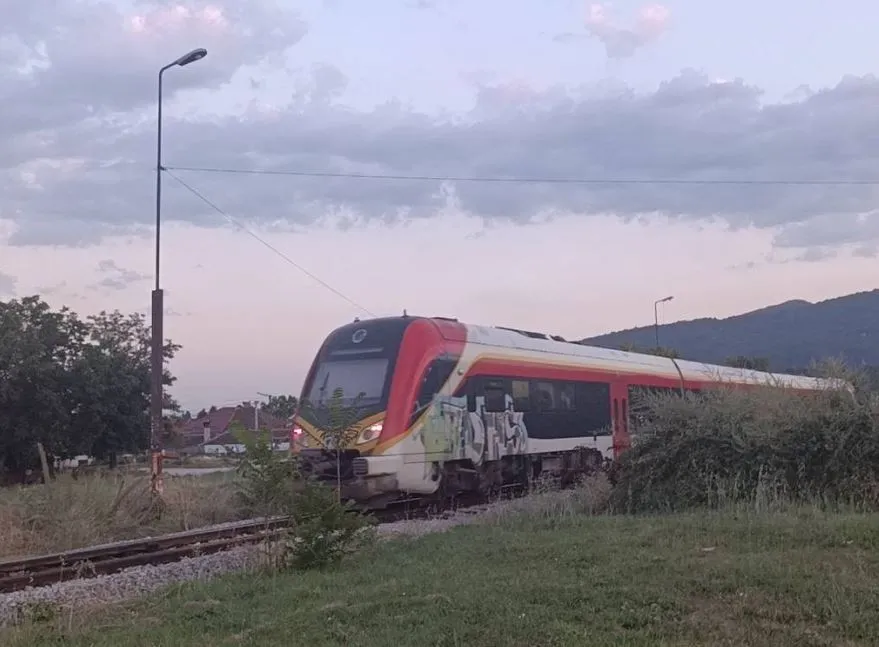
The outright record-holder is Macedonian Railways - Infrastructure, with matured liabilities of over 91.5 million euros. Right behind it is MŽ Transport with around 83.8 million. Together - over 175 million euros from the two railway companies.
Third is the health-sector body serving public health institutions, university clinics, the institute and the emergency centre, at 35 million euros. ESM owes nearly 34 million, and its district-heating subsidiary another 29.7 million. Public health institutions as a whole owe 134.2 million euros.
All told, state-owned public enterprises and companies owe 271.5 million euros. Skopje's Water Supply and Sewerage utility has 13.8 million in unpaid invoices.
The municipalities are growing fastest
Municipalities owe 93.2 million euros. In the same period last year it was 64.7 million - so 28.5 million euros more in a single year. That is the fastest-growing part of the whole picture.
The biggest debtors are Gostivar at 14.8 million euros and Tetovo at 14 million. The top five is rounded out by Saraj at 4.2 million, Karpoš at 4.1 million and Kisela Voda at 3.9 million euros.
And this is where the circle closes. Under the Economic Reform Programme 2025-2027, transfers from the state to the municipalities are planned to keep rising - 669 million euros this year, 716 million in 2027. Municipalities receive transfers, occasionally receive extraordinary injections that bring the debt down, and then fall into new debts again. Former Veles mayor Ace Kocevski points out that some of them do not even collect the revenues they are legally supposed to collect themselves.
What is not counted does not get solved
Finance Think assesses matured but unpaid liabilities as the weak link in fiscal discipline, and notes the level has barely changed since June last year. The institute proposes including them in the calculation of public debt and the deficit, and recording them the moment they arise.
That is a technical request with political weight. If 693 million euros of unpaid invoices enter the official public debt figure, the state of public finances looks different than it does now. The institute is also calling for strict sanctions on responsible officials in budget institutions who take on obligations outside approved projections or without secured funding.
The next snapshot comes at the end of September. The Ministry of Finance publishes the position every three months, which means the number is available, regular and public. The problem was never that nobody knows. The problem is that for someone still waiting on an invoice from 2024, the regularity of the report is no consolation.
The latest 10 news from this category
The opposition is counting: 4 billion euros of new debt in two years, a deficit above 900 million and interest...

On paper, Macedonia is doing better than Europe. But 2.7 percent is the speed at which prices rise, not the...
The EU average is 26.3, and young people in Croatia and Greece are the last to move out. There is...

The company that sells automation has published the numbers on its own staff: the beginners are disappearing, while the experienced...

Blood tests and ice baths will no longer be a privilege of the rich - or so the Hollywood actor...

The woman who fooled Silicon Valley with blood tests that didn't work is now filling cinemas. The Musk film, meanwhile,...

In August Macedonia had 131,076 foreign guests, while the Belgrade region alone had 154,267. Foreigners stay with us for about...
Only 19 percent of households with children receive child benefit, compared with 88 percent in the EU. The Platform Against...

One of Anthropic's five biggest customers turned its back on stage, then started softening the words. When the default choice...

From unicorn to bankruptcy in five years: Google took the founders back, Disney takes part of the assets, and the...
This site uses cookies - is that okay? Learn more
Be the first to know when Metla launches something new
Leave your email and we will write when there is a new guide or something new on Metla.