

Kratovo man stabs police officer mid-intervention: prosecutors want the 40-year-old detained
15.09.2026


15.09.2026

15.09.2026
15.09.2026
15.09.2026
15.09.2026
15.09.2026

15.09.2026

14.09.2026
13.09.2026

15.09.2026
15.09.2026

14.09.2026

15.09.2026
15.09.2026

15.09.2026

15.09.2026

14.09.2026

13.09.2026

15.09.2026

15.09.2026

15.09.2026

15.09.2026

15.09.2026

14.09.2026

09.03.2026

27.02.2026

19.02.2026

15.09.2026

14.09.2026
14.09.2026

23.04.2026

23.04.2026

12.04.2026

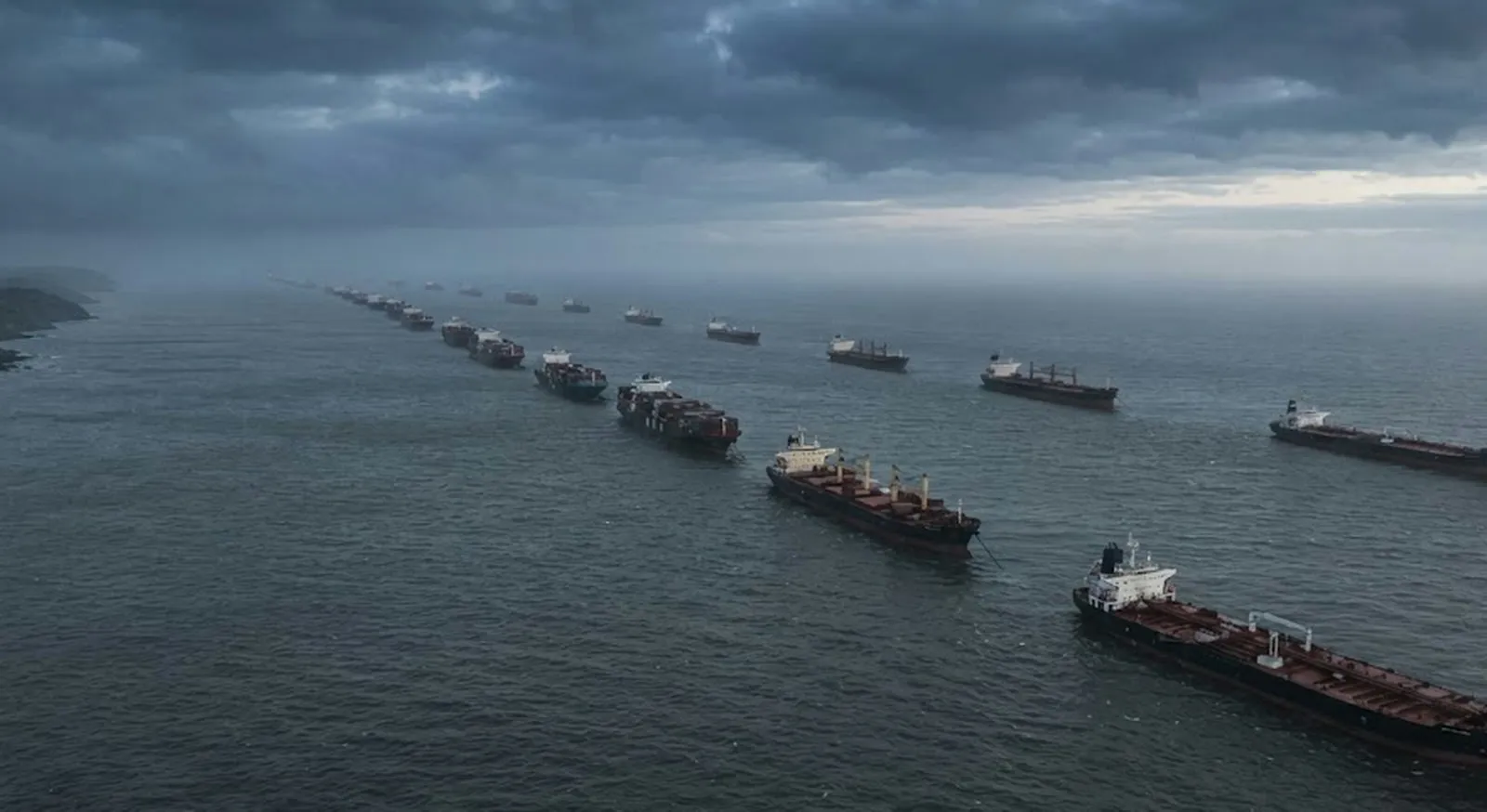
The Azov Sea, that shallow extension of the Black Sea that was Russia's back yard for centuries, this week became a place where Russia no longer gives the orders. Ukrainian drones hit Russian ships to the point where Moscow was forced to halt traffic across the sea - a blow that weakens Russian logistics, isolates Crimea, and threatens the export of key goods.
The commander of Ukraine's drone forces, Robert Brovdi, announced that in just nine days 116 Russian vessels were struck in the Azov Sea. Russia's answer was to close its two most important crossings - the Don-Azov canal and the Kerch Strait. Satellite images show long columns of ships waiting, stuck, with no way out.
From a military into an economic blockade
Ukraine is increasingly hitting tankers from Russia's „shadow fleet“ that carry fuel under sanctions. But the Azov blockade strikes far wider - wheat and sunflower-oil exports are under fire too. The Institute for the Study of War described the strikes as a „new phase“ that cuts off occupied Crimea and severs Russia's maritime routes for oil products and grain. Commander Yevhen Karas was blunt: severing the whole logistics chain has become „a problem the Russians cannot solve“, and the pressure, he says, will only build.
Here the story stops being just Russian-Ukrainian. Russia supplies around one-fifth of the world's wheat exports, and about 25 percent of that passes precisely through the Azov Sea. Agrarian analyst Andrei Sizov warns that a longer disruption could cost Russia billions. Wheat futures have already jumped on the crisis. And when wheat prices jump on the world exchanges, the bill eventually reaches the corner bakery too - including ours.
Moscow, of course, calls it terrorism. Russian diplomacy chief Sergei Lavrov declared that „even pirates keep their loot“, accusing Ukrainians of acting on the principle of „neither for us nor for others“ - just to cause damage and fear. Ukraine insists it hits only military targets.
The irony is heavy. The Azov Sea was a vital link that connected southern Russia to world markets through the Black Sea. After the collapse of the USSR, Moscow and Kyiv agreed in 2003 on a joint right of navigation - a deal Russia broke the moment it annexed Crimea in 2014. Twenty-two years later, that same sea comes back to Russia like a boomerang. Who said geopolitics has no memory?
The latest 10 news from this category
Between 2,300 and 3,000 North Korean soldiers have died in Kursk so far. Kim Jong Un has found an export...
A NATO fighter jet downed an unmanned aircraft over Lithuania minutes after midnight, and citizens got the warning on their...
The train was empty, the locomotive damaged, nobody hurt. But Boris Johnson and a group of European security advisers had...
453 drones in one night, 405 shot down - and the forty-eight that got through land somewhere. Poland's prime minister...

Trump's son-in-law told an audience in Kyiv the deal is done - if Ukraine withdraws. And added that the battlefield...
A barren volcanic rock in the middle of a strait 28 kilometres wide changed the oil market in a single...
Hostomel, Odesa, Kryvyi Rih - targets that are not the front line but the supply chain. A war against the...

We don't want war with Europe, but here is exactly how that war would start. He said both sentences in...

When an army recalls its special forces with a 12-hour deadline, that is not a rota but a signal. The...

Port infrastructure in Makhachkala and the theatre building caught fire, the governor said. Moscow claims it shot down 448 drones...
This site uses cookies - is that okay? Learn more
Be the first to know when Metla launches something new
Leave your email and we will write when there is a new guide or something new on Metla.
