
After 19 Months on the Run, Bajrami Handed Himself In at Blace at 5:35 AM: Same Crossing, Same Early Hour as Grubi
10.09.2026


10.09.2026

10.09.2026

10.09.2026

10.09.2026

10.09.2026

10.09.2026

10.09.2026

09.09.2026

08.09.2026

10.09.2026

10.09.2026

09.09.2026

10.09.2026

10.09.2026

10.09.2026

10.09.2026

08.09.2026

07.09.2026

10.09.2026

10.09.2026

10.09.2026

10.09.2026

10.09.2026

09.09.2026

09.03.2026

27.02.2026

19.02.2026

23.04.2026

23.04.2026

12.04.2026


There is one uncomfortable thing neuroscience has found out about people who complain constantly: they really do notice mistakes faster. A brain tuned to look for what is wrong finds what is wrong - and does so before anybody else in the room. The problem starts immediately afterwards.
Doctor and neuroscientist Elena Gallardo explains the mechanism without dressing it up. Constant worry consumes attention, and attention is a resource with a bottom. When all of it goes on listing the problem, what remains is, as she puts it, "less mental space to explore alternatives". In other words: you see the wall faster than everyone else, but you no longer have anything left to look for the door with.
Where in the head this happens
Three regions share the work. The prefrontal cortex handles control, persistence and judging whether the effort is worth it. The hippocampus remembers and embeds new knowledge. The limbic areas carry the emotions and the looping of a negative thought. When the prefrontal cortex switches on, the emotional part calms down - it works almost like a switch.
Hence the difference between two sentences that sound the same. "I can't do this" and "I haven't learned this yet" activate different networks in the brain - one tied to emotion, the other to motivation and behaviour. This is not positive thinking; it is about which network your own vocabulary switches on.
The mistake as information, not as threat
The brain constantly compares the expected state with the actual one and calls the gap a prediction error. Read that gap as a threat and stress and avoidance follow. Read it as data and adjustment follows. The same signal, two opposite consequences - and the whole difference lies in what the brain has been told it means.
A brief bout of worry in advance is useful: you anticipate difficulties, you prepare. Systematically expecting failure is something else - it builds a general fear that eats initiative before it is born.
And one number that matters more than all the theory. In an adult, a new habit needs around six months of constant repetition before it stops costing effort. Six months. Not three weeks, not one January. Anybody selling you change in thirty days either does not know this number, or knows it and sells it to you anyway.
Gallardo adds something worth keeping: complaining says nothing about a person's intelligence. It says only what conditions they are learning in. And conditions, unlike intelligence, can change.
The latest 10 news from this category

Love can be there and there can still be distance and loneliness. A psychologist names the three things that die...

This year the season started as early as August because of the heat. From breakfast to pizza - everywhere a...

When it is chaos outside, a person looks for a small space where they still get to decide. The problem...

Brazilian jiu-jitsu and surfing instead of a gym membership. Ivanka Trump trains at a school in Miami, and the same...

The recipe is not hard, the temperature is wrong. Ten cream cheese canapés and the two rules without which none...
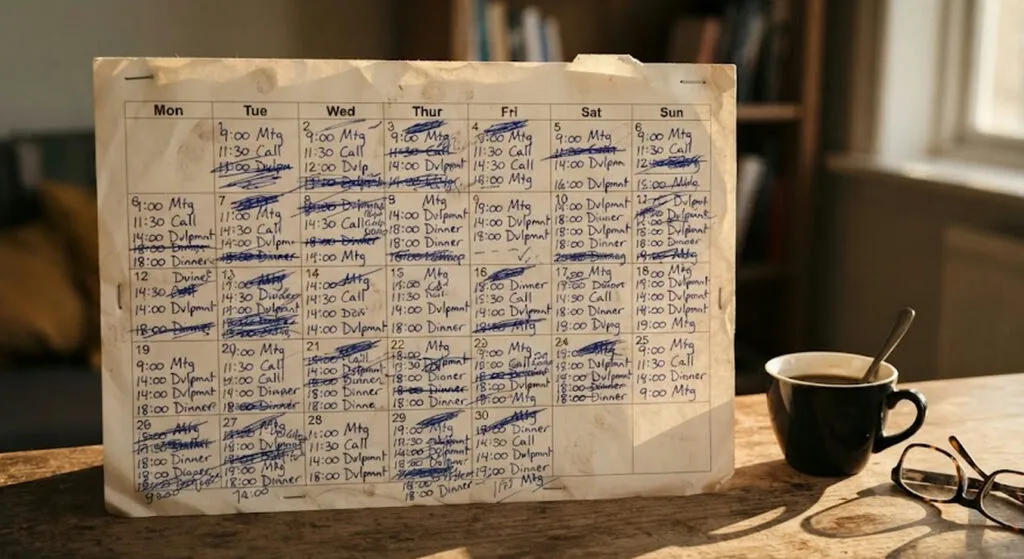
A packed schedule has become a social status. "I have no time" is no longer a complaint but a declaration...

The image of boiled chicken breast is wrong. The indulgence is planned, not broken.

For decades menopause was explained as a switch that flips at 50. Before it comes a phase lasting several years...

Starch is the natural binder, but only if the water comes out first. Nine versions from Swiss rösti to a...

Not one powder, not one supplement, not one name with an English label. Tomato, ham, coffee and an egg -...
This site uses cookies - is that okay? Learn more
Be the first to know when Metla launches something new
Leave your email and we will write when there is a new guide or something new on Metla.