After 19 Months on the Run, Bajrami Handed Himself In at Blace at 5:35 AM: Same Crossing, Same Early Hour as Grubi
10.09.2026


10.09.2026

10.09.2026
10.09.2026
10.09.2026

10.09.2026

10.09.2026

10.09.2026

09.09.2026

08.09.2026

10.09.2026

10.09.2026

09.09.2026

10.09.2026

10.09.2026

10.09.2026

10.09.2026

08.09.2026

07.09.2026

10.09.2026

10.09.2026

10.09.2026

10.09.2026

10.09.2026

09.09.2026

09.03.2026

27.02.2026

19.02.2026

23.04.2026

23.04.2026

12.04.2026


One twenty-four-hour period. Strumica, Bogdanci, Kumanovo, Veles, Vinica, Gostivar, Berovo. Seven towns, seven reports of violence in the home - and that is only what reached the police bulletin on a single working day.
In a village near Strumica, a 37-year-old woman was detained after physically attacking her 40-year-old husband. In Bogdanci, a 57-year-old man was taken in for behaving aggressively towards his 53-year-old wife while under the influence of alcohol. In Kumanovo, 44-year-old O.K. was detained after his wife reported threats. In Veles, E.B. (41) from Gorno Orizari attacked his 37-year-old partner in the flat where he was temporarily staying.
Those are just the detentions from that day. Police also filed criminal charges over cases documented earlier: against E.B. (33) from Vinica for "endangering safety", after aggressive behaviour and threats towards his wife. And against R.Dz. (57) from the Gostivar area for the offence of "stalking" - he repeatedly followed, harassed and threatened a 49-year-old woman from Gostivar.
The sentence that keeps repeating
In Berovo, a 30-year-old man from a village near Delcevo reported being physically attacked by his ex-wife E.D. (29) and her parents. Here too, as in every other case, the statement ends with the same line: "Once the case is fully documented, an appropriate filing will follow."
That sentence is the most common one in the Macedonian crime pages. The public prosecutor has been informed, the case is being documented, a filing will follow. The reader sees it on Monday, sees it on Tuesday, sees it on Wednesday. What happens to the filing after that - nobody reports. There is no figure for how many of these "appropriate filings" end in an indictment, let alone a verdict.
What does not get counted
The pattern is the same every day, and that is exactly the problem. When violence in the home appears in the media as a daily list of initials and ages, it stops being news and becomes background noise. Seven reports in twenty-four hours should be an alarm. Instead they are published like a weather forecast.
Police statistics capture only one part of the picture - the part somebody dared to report. How many cases never even reach a bulletin, nobody knows, and it is not a number the institutions are in a hurry to look for. Which is why, out of these seven detained people, the interesting figure is the one that is missing: how many women and men decided that same day not to call the police because they do not believe anything will change.
The institutions are working - detaining, documenting, filing. But a system that produces hundreds of such detentions a month, and publishes not one piece of data on what becomes of them afterwards, has changed nothing essential about the pattern. A report is a beginning, not a solution. And as long as the measure of success stays the number of people detained rather than the number of people who never go back to the same home with the same man, the next twenty-four hours will bring another list.
The latest 10 news from this category

The lead defendant in the 9.7-million-euro State Lottery case entered the country at the same border crossing as Grubi, half...
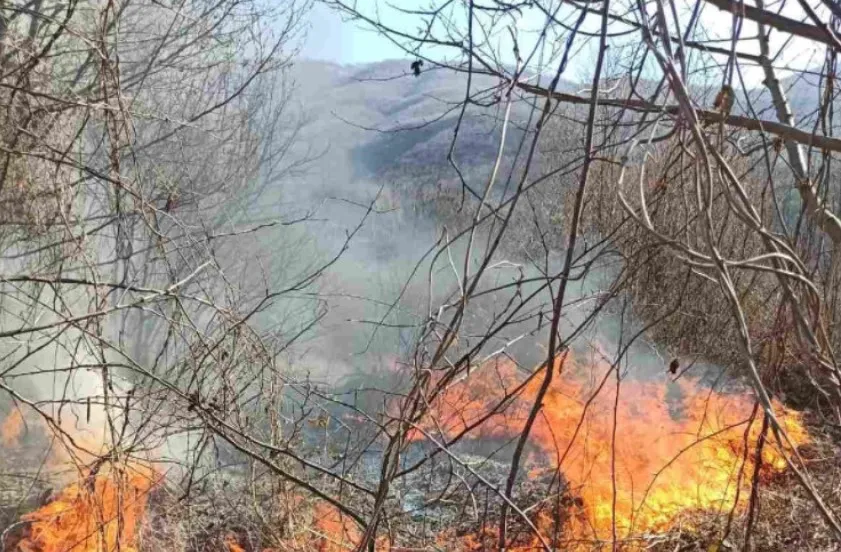
R.S. (55) from Gajre was burning dry grass on his own land. The fire got away from him, and criminal...

Heavy rainfall last season lifted the lake by 111 centimetres. That does not undo the fact that since 1984 Prespa...

The municipality says the agreement does not mean a merger, a takeover, a split or any change to the club's...

In maths, 32 percent reach the basic level; in science, 36. Not a single pupil in the country reached level...

The government tasked the Lottery on 28 April, two days later a call went out with a five-day deadline, and...
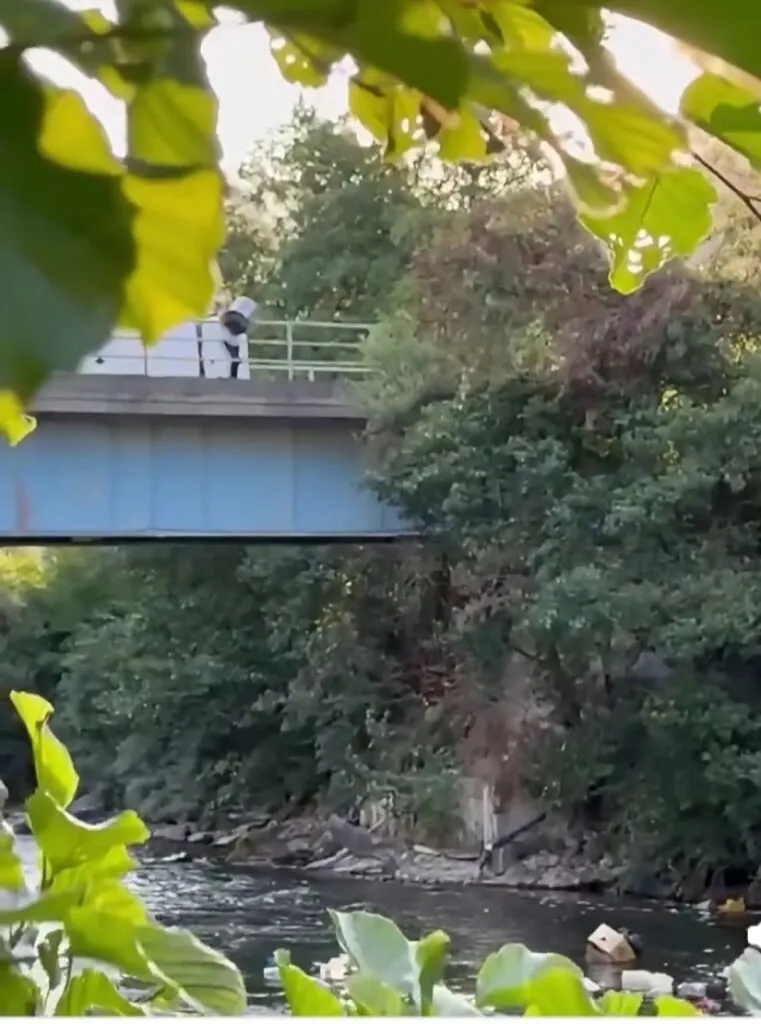
The footage was published by the Debar angling society Trofta, and the Interior Ministry then announced it was working to...
The inspectorate found serious violations, but what the report actually says the councillors never learned. The opposition claims the violations...
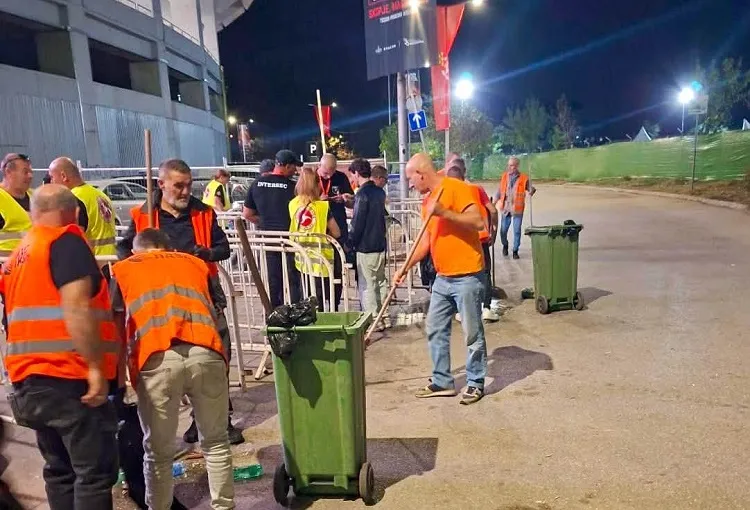
Mayor Gjorgjievski thanked the workers who spent the night on the ground. Their labour is the only item in the...

Every kilometre covered at No Finish Line Skopje goes towards helping the Kozle children's hospital. The format removes the barrier...
This site uses cookies - is that okay? Learn more
Be the first to know when Metla launches something new
Leave your email and we will write when there is a new guide or something new on Metla.