

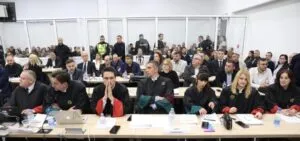
Experts on the Puls fire: the ceiling foam released cyanide as it burned, and the inspector could and should have shut the place down
02.09.2026


02.09.2026
02.09.2026
02.09.2026
02.09.2026
02.09.2026
02.09.2026

02.09.2026
01.09.2026
31.08.2026

02.09.2026

02.09.2026

01.09.2026

02.09.2026

02.09.2026

02.09.2026

02.09.2026
01.09.2026

31.08.2026

02.09.2026

02.09.2026

02.09.2026

02.09.2026
01.09.2026
31.08.2026

09.03.2026

27.02.2026

19.02.2026
02.09.2026
01.09.2026
01.09.2026

23.04.2026

23.04.2026

12.04.2026
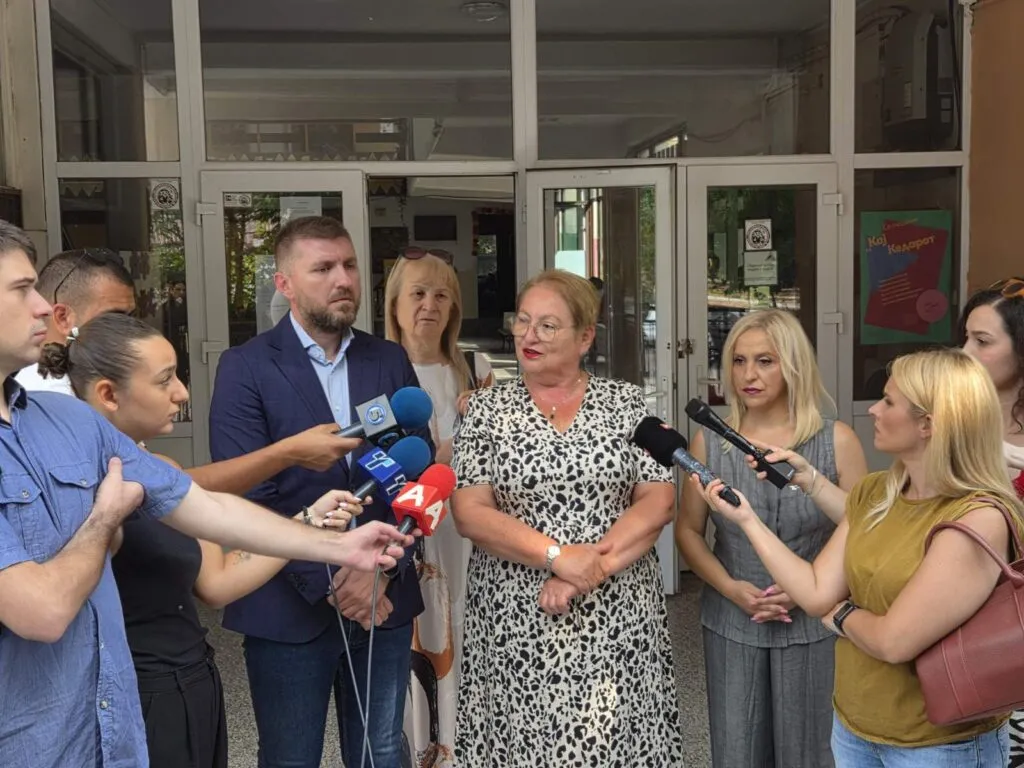
Education and Science Minister Vesna Janevska had two messages today. The first was addressed to teachers: "They are secure, they don't need to worry about their salaries, salaries will go up every year. Next year in March, teachers' salaries will be raised again."
The second was addressed to reality, and it sounded rather different.
The numbers are already here
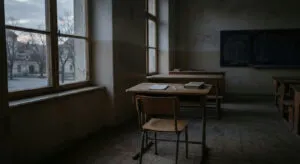
According to ministry data, there are around 3,000 fewer first-graders this year than last. Twenty-six satellite schools are being temporarily closed. A total of 148 school buildings have no pupils at all. In the 2026/2027 school year there will be 433 fewer classes - 222 in primary and 211 in secondary education.
These are not figures from a projection for 2035. This is the first day of school this week.
Janevska defends the consolidation with an argument that makes sense: it is not good for a small group of children aged five to nine to sit isolated in one school, because that way they do not socialise with other children. Larger groups bring better conditions - smart boards, tablets, more peers.
The argument is correct. It simply is not an answer to the question of why the children are gone.
The deal with the teachers' union is real, but the timeline is long
The rises are part of the agreement with the SONK union for 46 percent growth by 2028. They began with 5 percent in October 2024, continued with 7 percent in March 2025 and 7.5 percent this year. The next one is in March 2027.
So at the very moment the minister says teachers are secure, the next instalment of that promised growth is six months away, while the number of classes shrinks immediately. A teacher in a satellite school going on standby hears the sentence "salaries will grow" while looking at an empty desk.
The ministry says the reforms will produce results in five to six years at the earliest, and optimally in nine to ten.
What is not being said
Consolidation is a response to demographics, not a cause of them. Nobody at the ministry explains what the state is doing to keep the families who take those 3,000 first-graders with them when they leave.
Closing a school is an administrative decision. A family emigrating is a series of individual decisions about pay, healthcare and the future. Consolidation adjusts the desks to the number of children. The question left unanswered today is who is working on the number of children.
The latest 10 news from this category
The opposition wants a resignation. But there is an older question first: what did the anti-corruption commission establish in the...
The anti-corruption commission opened the question of how the budget splits money between parties on its own initiative. It is...
Dalibor Kitanovikj placed Ratko Mladic among "generals of the heavenly army". The Government wants him to withdraw the post. The...

Three institutions, three different speeds. The competition commission already said yes, the media regulator now says wait, and the financial...
When the party of a sitting minister publicly pays tribute to a convicted war criminal, asking whether that is the...
How many applied, how many turned up for testing, how many passed. The ministry has that data in the same...
Three weeks of hospital treatment, a return to Skopje Prison on 26 August, and already an emergency transfer back. The...
The party claims the Pehchevo initiative failed because an opposition figure was behind it. The council there voted unanimously.
Tetovo Clinical Hospital sits under the health ministry. The director says there is nothing political about it - and in...
The fire was out, there was not a trace of it for a full day - then it flared again....
This site uses cookies - is that okay? Learn more
Be the first to know when Metla launches something new
Leave your email and we will write when there is a new guide or something new on Metla.
