


They Rode In on Scooters, Torched the Shops and Left: The Fire in Shuto Orizari Burned for Three Hours, Setting It Took Fifty Seconds
13.09.2026


13.09.2026

13.09.2026

13.09.2026

13.09.2026

13.09.2026
13.09.2026

13.09.2026

12.09.2026

11.09.2026

13.09.2026

13.09.2026

12.09.2026

13.09.2026

13.09.2026

13.09.2026

13.09.2026

12.09.2026

11.09.2026

13.09.2026

13.09.2026

13.09.2026

13.09.2026

13.09.2026

12.09.2026

09.03.2026

27.02.2026

19.02.2026

13.09.2026

12.09.2026

11.09.2026

23.04.2026

23.04.2026

12.04.2026

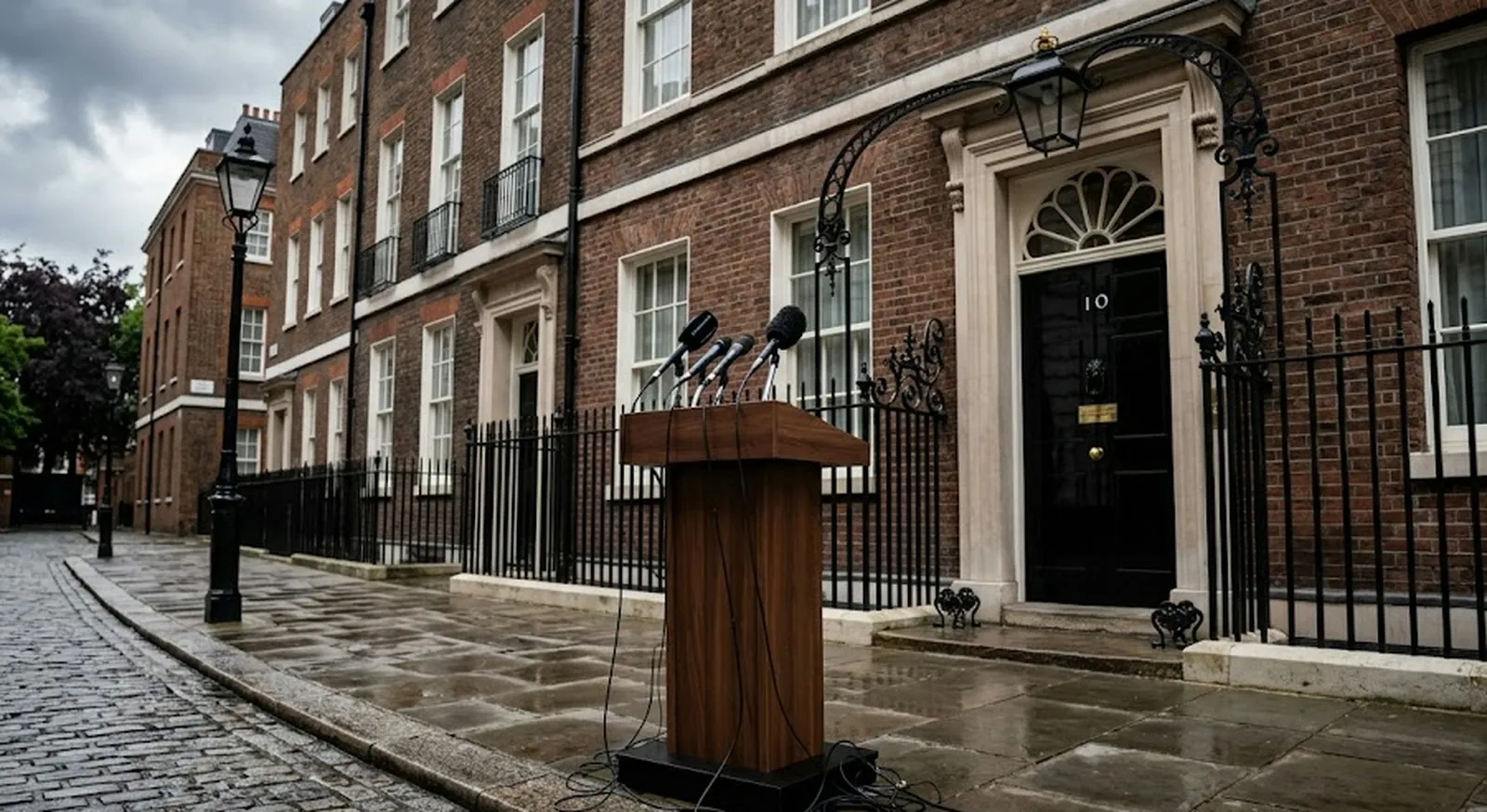
Yesterday's saviour became today's burden. British Prime Minister Keir Starmer has resigned, just over a year after he got the keys to Downing Street with a promise to calm the country after years of chaos. The chaos, it seems, didn't go anywhere - it just changed address.
The resignation comes after a string of catastrophic election defeats for Labour in local and by-elections through 2025 and 2026, in which Reform UK took significant ground. Dozens of MPs publicly demanded that Starmer go, or at least announce a date for his departure. When your own party starts counting the days out loud, the end is usually a matter of time.
"We opened a new page in the history of our country after years of disappointment," Starmer said on his way out, adding that he would do everything for an "orderly transfer of power". Nominations for a new leader open on 9 July, and the process is meant to wrap up before parliament's summer recess. Until then, Starmer stays on as a caretaker prime minister.
The favourite to succeed him is Andy Burnham, who recently won a by-election, while Wes Streeting and Angela Rayner are signalling they might enter the race. But a change of face is rarely a change of the problem. Britain went through a Conservative whirlwind of prime ministers, and now the Labour saviour too has fallen in a year and change.
For a Balkan viewer, used to governments falling faster than they form, this is a familiar film with British subtitles. When not even Europe's most stable democracy can keep a prime minister longer than a single season, the question isn't who is to blame - it's whether anyone today can govern at all, in an age when the patience of voters is shorter than the mandate.
The latest 10 news from this category
Nobody said they do not trust Washington. Everyone is behaving as though they do not - gold, weapons, the cloud...

The warning reached the president three years before 9/11. The problem was not a lack of information, but that nobody...

In 1976 tradition demanded the future king choose a bride with no past. Thirty years later that same king married...
Five institutions declined to comment on damaged infrastructure the global oil market depends on. When that many addresses have nothing...
One unidentified object on the tracks, 180 passengers on board, 140 firefighters on site. The difference between railways is not...
We are preparing for war so that it does not come, Lukashenko says. Put the neighbours' numbers side by side...
Three years ago the Polish army waited twenty days for satellite images, today it gets them in minutes. And one...

At 22 she had to become Norway's first lady because her mother had died. At 29 she married a divorced...

The tool lets you draw an area on a map and returns a list of everyone who posted to Instagram...

The Athens declaration of friendship lasted less than three years. Now the Aegean is being divided through ecological zones, while...
This site uses cookies - is that okay? Learn more
Be the first to know when Metla launches something new
Leave your email and we will write when there is a new guide or something new on Metla.
