Six reports in 24 hours: violence in the Macedonian family runs on a schedule, and the institutions arrive last
29.08.2026


29.08.2026

29.08.2026
29.08.2026

29.08.2026
29.08.2026

29.08.2026
29.08.2026
28.08.2026
27.08.2026

29.08.2026

29.08.2026

28.08.2026
29.08.2026

28.08.2026

27.08.2026

29.08.2026

29.08.2026
29.08.2026
29.08.2026

29.08.2026
28.08.2026

09.03.2026

27.02.2026

19.02.2026

28.08.2026

27.08.2026

26.08.2026

23.04.2026

23.04.2026

12.04.2026
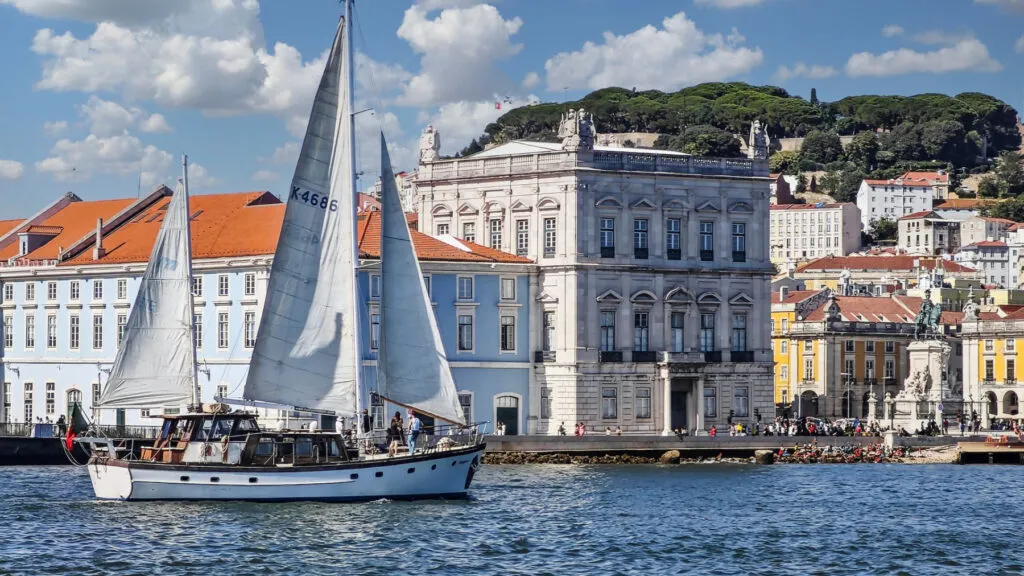
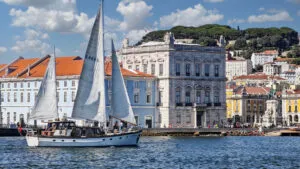
People look at Lisbon from above. From Alfama, from Bairro Alto, from every viewpoint tourists climb to photograph the same panorama of rooftops. The problem is that the city was not built to be seen from above - it was built to be seen from the water. That is where the ships came back to, where the voyages began, where the city explained itself.
The Tagus is not a river that happens to pass by Lisbon. It runs 1,007 kilometres, and its estuary is the largest in Western Europe, the most extensive wetland in Portugal, covering 340 square kilometres. That is bigger than the Ebro delta. Hence the old name "Sea of Straw" - ships used to throw off the straw they packed their cargo in, and the water was permanently covered in it.
The cheapest option lasts one hour and costs 25 euros. The boat leaves at eleven from Doca do Bom Sucesso, next to the Belem Tower, and heads for the Cristo Rei statue in Almada, 110 metres tall. On the way it passes the Belem lighthouse, the Monument to the Discoveries and the MAAT museum, then goes under the 25 de Abril bridge.
That bridge has numbers worth having: 2,277 metres long, 70 metres high, opened in 1966, and carrying 150,000 vehicles and 157 trains every day. If you are lucky you will see dolphins in the water. They are not an attraction you can book - either they are there that day or they are not.
The second option is sunset, two hours, departing at six in the evening from Doca de Belem. The group trip with a maximum of ten passengers costs 43 euros; a private one is 335 euros, drinks and snacks not included. Here the boat heels over at around thirty degrees and passengers are allowed to take the helm. That is not a symbolic gesture - you genuinely steer the boat.
Third, for those who want something that does not look like a tourist package. In Vila Franca de Xira, thirty kilometres upriver, an old varino cargo boat called Liberdade still sails - 18 metres, 40 tonnes, two sails, a flat bottom and a high curved bow. Thousands of boats like it once carried goods and people before the bridges were built. Today only around 70 are left in the whole of Europe.
The trip on it lasts three hours, down to Parque das Nacoes in Lisbon, past the Vasco da Gama bridge, over seventeen kilometres long and standing on 1,500 columns. The estuary has flamingos, herons and cormorants, and in winter 120,000 birds gather there.
The finest detail in the whole story is on the Belem Tower. There, carved into stone, stands a rhinoceros - the first one to reach Europe, brought from India in 1515 on Portuguese ships. Somebody carved it because at that moment it was the strangest thing the city had ever seen. Five centuries later it is still there, and every day boats full of people sail past it looking for the same thing: something they have not seen.
The latest 10 news from this category
Of the six, only two are inhabited year-round and two are practically empty. Next time you hear the Union was...
The pyramid raised in the dictator's honour is now an arts school. We are still arguing about whether to open...
Cousteau called the Sea of Cortez the world's aquarium - 900 marine species and 33 mammal species back the name...
Half an hour of reading before you pay for the ticket solves all ten. The question is why we never...
Rothenburg ob der Tauber kept the street layout of six hundred years ago, and the wall around it runs four...
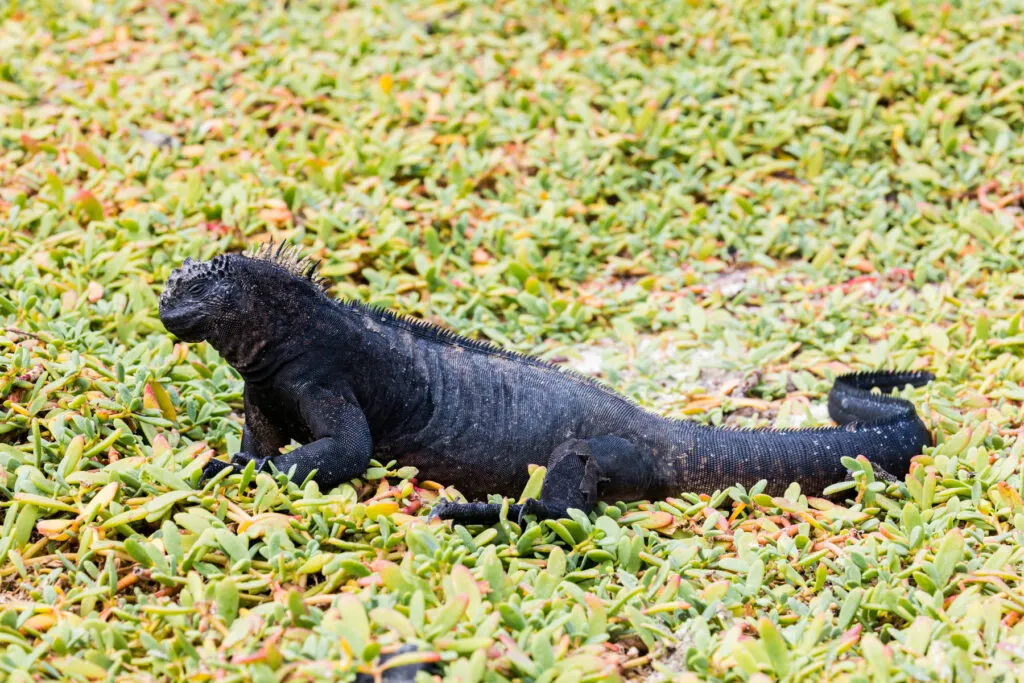
A thousand kilometres out into the Pacific, 13 large islands and species that exist nowhere else. The strict rules there...
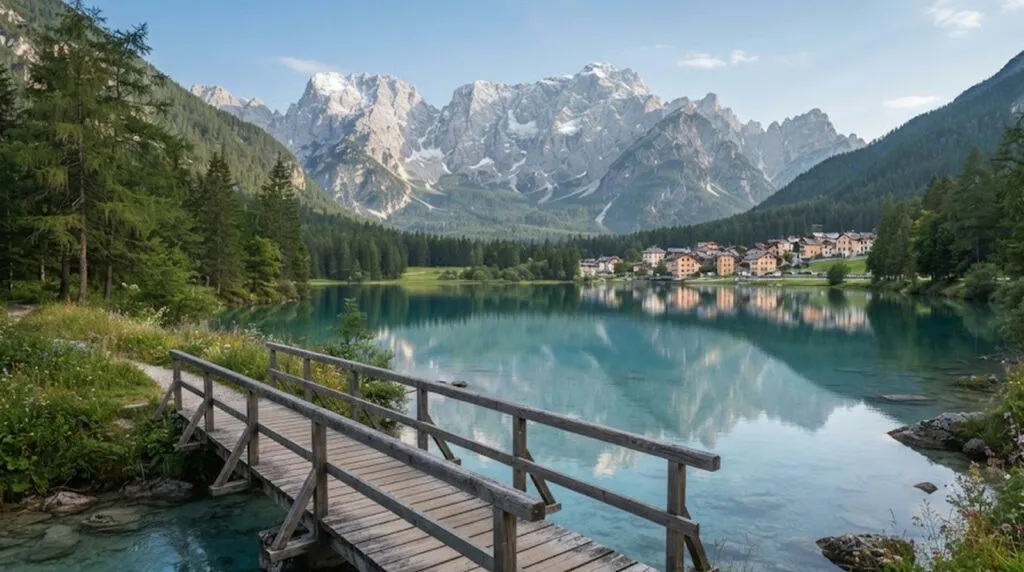
A 12th-century castle, a museum with 17,000 objects and surfers in the river in the middle of town. Thun is...
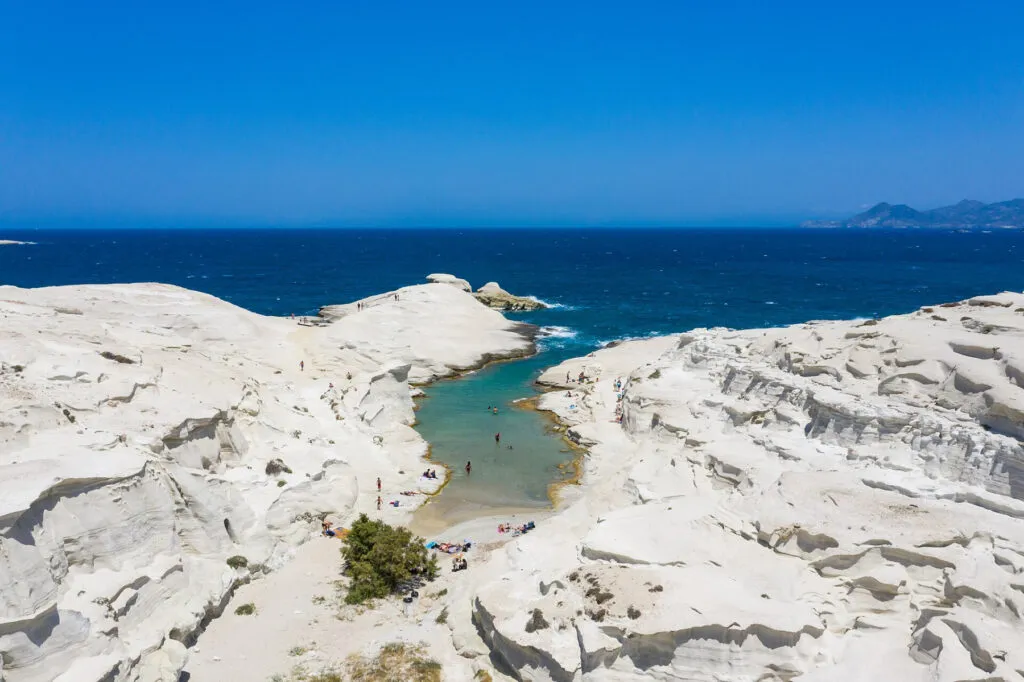
White rock polished as if it were poured, sea in a colour that looks overdone, and a statue the whole...
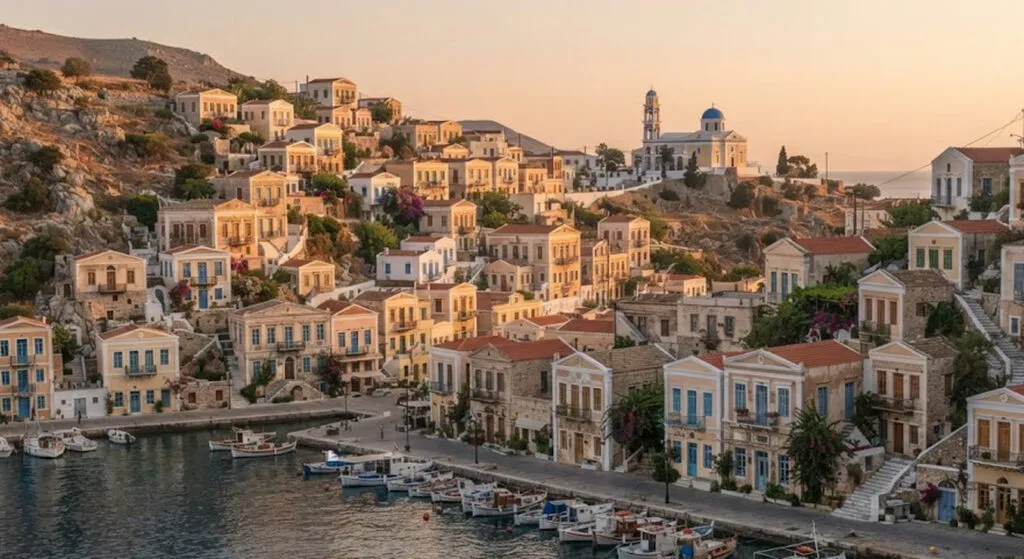
Syros has no windmills to photograph. It has neoclassical facades, a Venetian labyrinth built against pirates, and a life that...
The only waterfall in Europe that falls straight into the sea, a dune more than a kilometre long, and a...
This site uses cookies - is that okay? Learn more
Be the first to know when Metla launches something new
Leave your email and we will write when there is a new guide or something new on Metla.