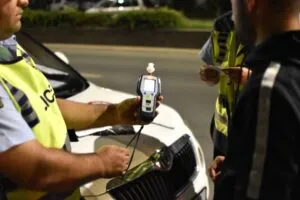
Released After 3.23 Per Mille, Back Behind the Wheel 29 Hours Later With 3.50: Only Then Did the Bitola Man End Up in Custody
11.11.2026


11.11.2026

11.11.2026

11.11.2026

11.11.2026

11.11.2026

11.11.2026

11.11.2026

06.11.2026

05.11.2026

11.11.2026

11.11.2026

06.11.2026

11.11.2026

11.11.2026

11.11.2026

11.11.2026

06.11.2026

05.11.2026

11.11.2026

11.11.2026

11.11.2026

11.11.2026

11.11.2026

11.11.2026

11.11.2026

10.11.2026

07.11.2026

23.04.2026

23.04.2026

12.04.2026


New York has opened a registration portal and given the biggest players in artificial intelligence a deadline: OpenAI, Anthropic and everyone like them must register by 1 January 2027. That is when the RAISE Act takes effect, one of the most serious AI safety laws in the US - and a law that asks the labs for more than goodwill.
The rules apply to so-called large frontier model developers, companies with more than 500 million dollars in annual revenue. They will have to publish their safety framework, report every critical safety incident within 72 hours and regularly publish transparency reports on their models. The half-billion threshold is no accident: small startups stay out, and the ones in the crosshairs are exactly those leading the race.
Oversight goes to the new Office of Digital Innovation, Governance, Integrity and Trust (DIGIT). Fines go up to 1 million dollars for a first violation and up to 3 million dollars for each subsequent one. The state can also go after companies that fail to register, but a spokesperson declined to say how. For firms that raise billions in a single funding round, three million dollars is pocket change. Will it be the fine that makes them careful - or the shame of a publicly reported incident?
Governor Kathy Hochul didn't mince words. "Tech titans tell us their vision for AI is inevitable," she said at a press conference. "They tell us: get on board or get left behind... That any collateral damage is worth it, as long as we win the race to the AI abyss." It is rare to hear a politician publicly call the AI race an abyss.
The same day, Hochul also opened the New York Center for AI Accountability and Research at Binghamton University. The centre will evaluate advanced systems independently and help DIGIT check companies' safety frameworks. It was announced back in January, with 55 million dollars in donations and capital. "We're building a national model for smart, sensible AI regulation, one that puts communities over corporations and people over powerful technology," Hochul said.
RAISE isn't New York's only law of this kind. Since last year a rule has required operators of AI companions to regularly remind users they are talking to a bot and to try to recognise signs of suicidal thoughts and self-harm. In October Hochul also signed a separate chatbot safety law for minors, which bans deceptively posing as a human, emotional manipulation and sycophancy, as well as encouraging suicide or eating disorders. It takes effect on 1 June 2027.
California, with its SB 53 law, has since January required safety frameworks, whistleblower protection and reporting of a critical incident within 15 days. Illinois, with SB 315, goes a step further from early 2027, with independent audits. The rules for the most powerful technology of the decade are being written by the states, one at a time, while the European Union has one law for all its members. Will America end up with fifty different versions? And are 72 hours short enough when the model is already in the hands of millions of people?
The latest 10 news from this category

The car that was supposed to drive better than a human long didn't know what a red light on a...

Купувачите на берзата ќе добијат парче од компанија што троши побрзо отколку што заработува - и речиси никаков глас, бидејќи...

Компанијата што се спрема за берза досега изнајмуваше компјутерска моќ, а сега купува турбини што друга фирма не можеше да...

Милион луѓе го резервираа, околу 71.000 го купија. Камионетот што требаше да ја смени индустријата заминува тивко, а ветувањата за...
Кругот ќе заврши на околу 20 милијарди долари, третина помалку од планираното. Истовремено, проценката на Anthropic пред берзата се топи...
Brockman boasted of 70 percent revenue growth in a single quarter. How much that is in money, he didn't say.

Meta isn't hiding why its AI agent has a sweet face and gestures: so people feel connected to it. The...

A company founded in 2024, with a product launched last summer and agents borrowed from Anthropic and OpenAI - now...
A web host with about 400,000 paying customers admits to an attack that lasted since August. How many were affected?...
Geoffrey Hinton isn't afraid of robots, he's afraid of the dark: power grids and banks down for days. And he...
This site uses cookies - is that okay? Learn more
Be the first to know when Metla launches something new
Leave your email and we'll write to you when there's a new guide or something new on Metla.