
Лихварска група во Куманово работела пет години – паднала дури кога еден граѓанин се охрабрил да пријави
06.11.2026


06.11.2026

06.11.2026

06.11.2026

06.11.2026

06.11.2026

06.11.2026

06.11.2026

05.11.2026

05.11.2026

06.11.2026

06.11.2026

05.11.2026

06.11.2026
06.11.2026

06.11.2026

06.11.2026

05.11.2026

04.11.2026

06.11.2026

06.11.2026

06.11.2026

06.11.2026

05.11.2026
05.11.2026

05.11.2026

04.11.2026

03.11.2026

23.04.2026

23.04.2026

12.04.2026

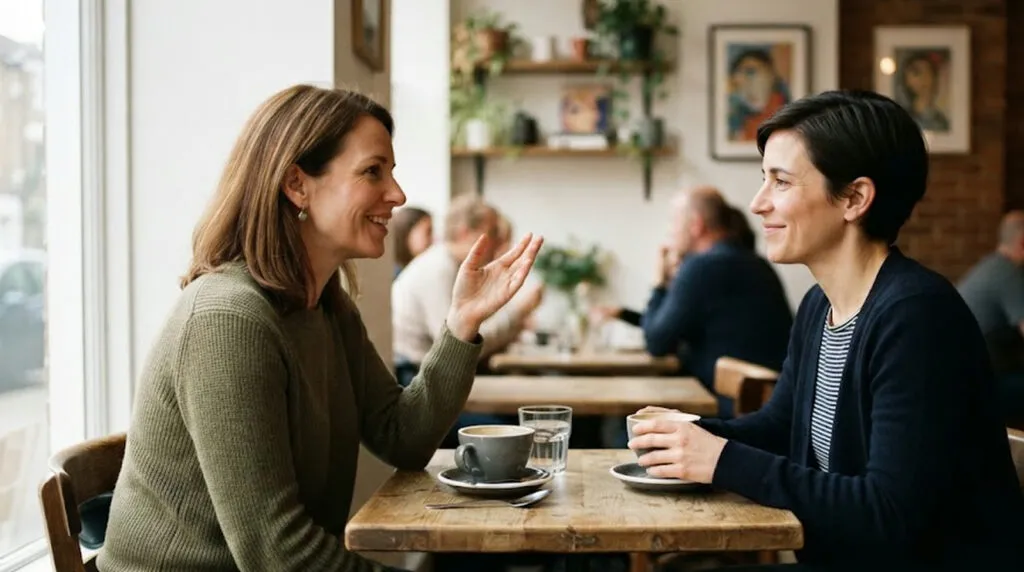
You're sitting in a meeting, someone's talking, you're nodding. They leave convinced you've reached an agreement. You leave thinking you don't agree at all. Psychology says this is a perfectly ordinary scene - a nod means "yes" far less often than we think.
Psychologist Violeta Acedo, a mental health specialist, explains that nodding can signal attention, politeness or a wish to be liked by the person you're talking to. "Nodding is a very simple way to take part in a conversation without interrupting it," she says. The reasons vary: interest in what's being said, encouraging the other person to go on, a habit learned as "polite listening", or pure autopilot.
The Japanese have a word for this - aizuchi, the short reactions and gestures you use to show you're following the speaker. They keep the conversation alive. But understanding an argument doesn't mean accepting it. You can listen closely to someone you completely disagree with and still nod.
The body, though, isn't entirely innocent. In 1980, psychologists Gary Wells and Richard Petty asked 72 participants to listen to a message while moving their heads either vertically or horizontally. Those whose movements resembled nodding later showed greater agreement with the content. That doesn't mean opinions change automatically, but it does show that gesture and attitude aren't as separate as we like to think.
Sometimes people nod for a completely different reason: to build closeness, avoid awkwardness or keep a conflict from opening up. At work, at a family lunch, in a meeting with the boss - nodding is the cheapest way to get through unscathed. How many times have you nodded at something you didn't agree with, just to get the conversation over with?
That's why the number of nods says nothing about someone's personality or empathy. Trust, culture and context all play a part. If you want to know whether someone was really listening, look for something else: did they remember a detail of what you said, did they ask a question about it, did they come back later to something you mentioned? Nodding is easy. Remembering is the real proof.
The latest 10 news from this category

Bittor Arginzoniz is self-taught and cooks over embers, with a different wood for every ingredient. In an age of tweezers...

He goes to bed around 2 am, gets up around 10 and walks up to 12 kilometres a day. This...

"This is the dish I repeat most during the week," says the Spanish designer. The recipe is simple, and the...

Three longevity doctors say more pills don't mean better results. The best "supplements" aren't sold in pharmacies: sleep, movement and...

The latest viral breakfast from Gwyneth Paltrow's kitchen is an egg, panko and a frying pan. The trick is in...
The harder you try to fall asleep, the longer you lie awake. The solution sounds counterintuitive: another room, dim light,...

Almond flour instead of wheat, chocolate melted over steam and a glaze you spread the moment the cake comes out...
Hate your job and work twelve hours, and you get worried questions. Love it and work fourteen, and you get...

Legend has it the first ones were hurled red-hot from the walls of besieged Almogía. Today they're filled with cream,...

A book with "revolution" in the title and advice every grandmother knows: dinner earlier, beans on the table, vegetables before...
This site uses cookies - is that okay? Learn more
Be the first to know when Metla launches something new
Leave your email and we'll write to you when there's a new guide or something new on Metla.