


Over 20 shops burned down in Suto Orizari: 15 firefighters and three and a half hours fighting the blaze at 3am
12.09.2026


12.09.2026

12.09.2026

12.09.2026

12.09.2026

12.09.2026

12.09.2026

12.09.2026

11.09.2026

10.09.2026

12.09.2026

12.09.2026

11.09.2026

12.09.2026

12.09.2026

12.09.2026

12.09.2026

11.09.2026

10.09.2026

12.09.2026

12.09.2026

12.09.2026

12.09.2026

12.09.2026

11.09.2026

09.03.2026

27.02.2026

19.02.2026

12.09.2026

11.09.2026
10.09.2026

23.04.2026

23.04.2026

12.04.2026

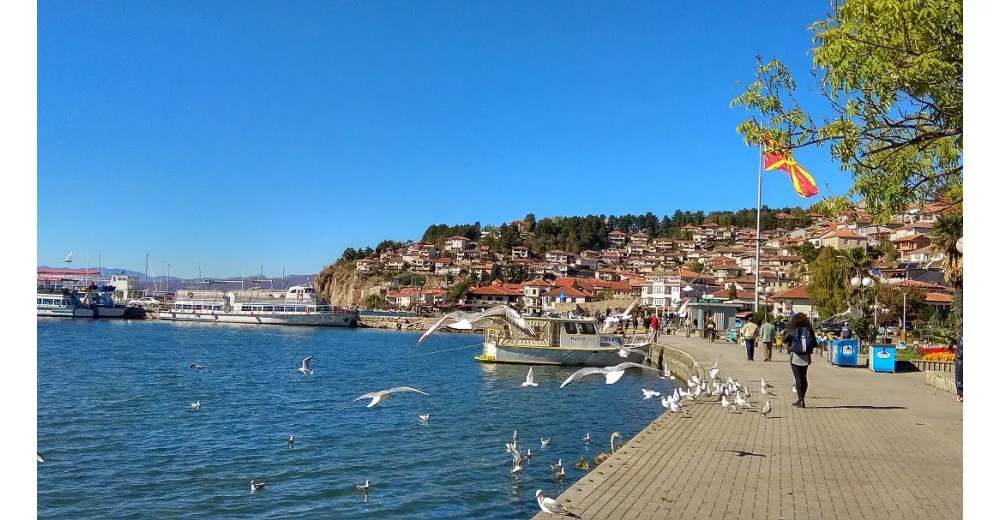
Ohrid did not end up on the blacklist. At the 48th session of the World Heritage Committee in Busan, UNESCO decided that the Ohrid Region would not, for now, be inscribed on the List of World Heritage in Danger - and instead left Macedonia and Albania another five years to implement the protection recommendations. At first glance, good news. But good news it is not.
Because five years are not a victory. They are a postponement of the most serious measure UNESCO applies - and probably the last warning before it. The working documents prepared ahead of the debate were clear: the conditions for inscription on the in-danger list are still met, and the draft decision proposed exactly that. The outcome turned only after an amendment was tabled during the session itself, and a majority of members decided to grant the state one more deadline.
The number that says it all
In the Ohrid Region today the talk is of 4,847 illegal buildings. That is not a figure that fell from the sky - it is the result of years in which the institutions looked away while thousands of illegal structures sprang up beside the most protected lake in the country. And the proof that the state is not doing its job is not abstract: between 2019 and 2024, 456 final and enforceable demolition orders were issued. Carried out - not one.
So we have the law, we have the orders, we have the stamps and the signatures. We lack only one thing - the will to carry it out. Statements that illegal buildings „should be demolished in a lawful manner“ sound reasonable, but they come too late. The real question is not how to demolish, but why building was ever allowed in the first place. The rule of law does not begin with a bulldozer - it begins with no one daring to build where they must not.
The problems Ohrid carries have long been known, and UNESCO has repeated them for more than a decade: uncontrolled urbanisation, pressure from tourism, wastewater, pollution, insufficient coordination between the two states that share the lake. The shoreline, Studenčiško Blato and the old town core remain especially sensitive. Every session - the same notes. Every session - a new deadline.
World heritage status is not eternal and is not a given. It is earned through management, and management is exactly what is plainly missing. If these five years too end up in committees, administrative procedures and ceremonial speeches like the ones before them, then there will be no one to blame but ourselves. Ohrid does not need new strategies. It needs someone to finally carry out those 456 orders that have been gathering dust in a drawer for years.
The latest 10 news from this category

Eighty children do not simply appear out of nowhere. The question no ceremony answers is whether there are enough instruments...
When you buy honey from the man who tells you which village it came from, you bypass the entire trade...
Any citizen can submit a nomination. That is exactly where these competitions either come alive or become an internal affair...
The minister answered that pupils are not a risk group because the youngest patient was 25. The MP had asked...
For five years after the promise, the dump stayed a dump. The two neighbouring parks tell the story that comes...
The most visited historic space in Skopje waited fifty years for someone to replace the pipe under the cobblestones. The...

There is a route, there is a presentation and there is agreement that the road is needed. There is no...

The awards are not handed out by institutions alone - associations and ordinary citizens can nominate too. If nobody writes...

The children at "Gjorgji Sugarev" got better conditions and that counts. But when inclusion depends on a foreign fund, the...

The village kept the stone slabs above the altar and lit candles there for decades, even though not a single...
This site uses cookies - is that okay? Learn more
Be the first to know when Metla launches something new
Leave your email and we will write when there is a new guide or something new on Metla.
