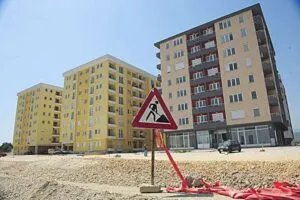
A New Criminal Complaint Against Jakimovski: A Building Permit Based on a Plan Struck Down Back in 2018
16.09.2026


16.09.2026
16.09.2026

16.09.2026
16.09.2026
16.09.2026
16.09.2026
16.09.2026
15.09.2026

14.09.2026

16.09.2026

16.09.2026

15.09.2026

16.09.2026
15.09.2026
14.09.2026

16.09.2026

16.09.2026

16.09.2026

16.09.2026

15.09.2026
15.09.2026

09.03.2026

27.02.2026

19.02.2026
16.09.2026

15.09.2026
14.09.2026

23.04.2026

23.04.2026

12.04.2026

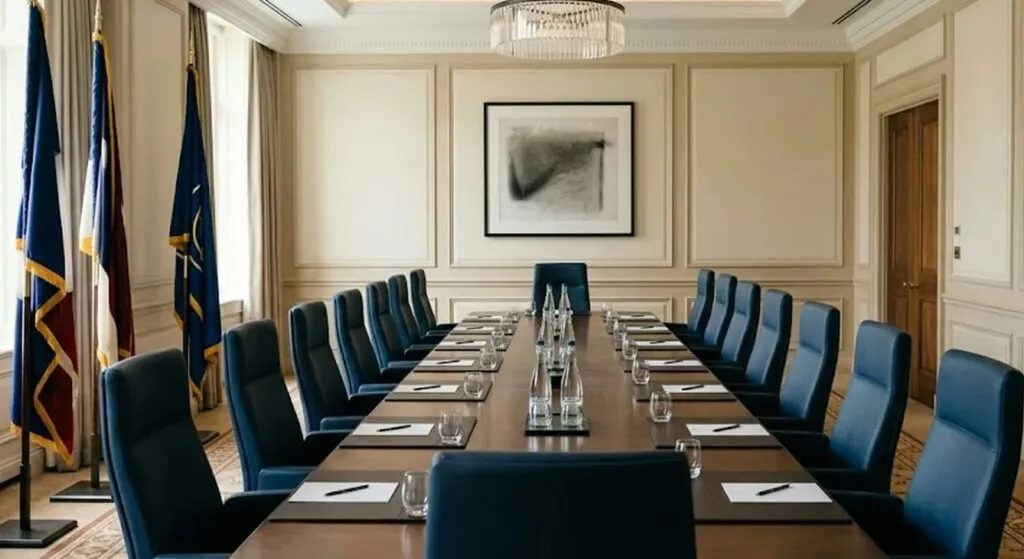
German politicians did not say no. That is the first thing to put on the record. Vladimir Putin proposed former chancellor Gerhard Schröder - his personal friend with a decades-long link to the Kremlin - as a mediator in the talks between Moscow and the European Union. And in Berlin the debate started immediately.
The dispute is not technical. The dispute is moral and political. When „Nord Stream 2" was being investigated for sabotage in 2024, Schröder's name was never far from the headlines. After leaving the chancellorship he worked at Russian energy companies. He opposed Western sanctions after 2022. He is, in short, everything Brussels avoids today. Which is exactly why Putin proposes him.
Social Democrat Ralf Stegner says it would be „rash" to reject such an option. In his view, if Schröder can open a channel to Moscow, Europe must not let it slip. Former parliamentary group leader Rolf Mützenich says something similar - with reservations, but without rejection.
Fabio De Masi from the Sahra Wagenknecht Alliance goes even further - saying Berlin made a major mistake by not using Schröder's ties to Moscow earlier. „A communications channel could have been opened years ago."
From the German government, scepticism. From the European Commission - a precise and sharp response. Kaja Kallas, the EU's foreign policy chief, is more than clear - Putin's proposal is „cynical". Brussels does not want to legitimise Schröder. But the fact alone that the debate reached the Bundestag means something - and Moscow knew it before submitting the proposal.
What is Putin's play? Simple. He does not expect Schröder to be accepted. He expects the proposal itself to split Berlin. To test the red lines. To open the question of how far Germany is willing to go to avoid a negotiating table. And - clearly - it is working.
For the Balkans this is an old lesson. When a dictator proposes a friend as a negotiator, he is not making a proposal. He is laying down a marker to test who covers for whom. Balkan history knows too many of these markers - they always end the same way, with someone who says „we chose peace", and history then writes about what they actually accepted.
The latest 10 news from this category
Sanctions imposed over one war are being offered as currency in an entirely different dispute. Most member states are against...
El Nino in the Pacific shifts the currents that decide where snow falls. An area that usually gets a metre...

The easiest way to dismiss an uncomfortable argument is to point at who is making it. But that does not...
The appeals court ruled the entire trial must start over. The son of Norway's queen is waiting for it on...
Trump scaled back the military exercises to ease the tension, and Wonsan answered in the form of projectiles. What does...
The sanctions list got a seven-day extension instead of one measured in months, a move diplomats themselves call unprecedented. Two...
Switzerland offered a table for talks on Ukraine, Moscow replied that the table stopped being neutral once Bern adopted EU...
The will says one thing, a committee of twenty-one men decided another. The queen mother says the army pulled the...
A country that was Europe's byword for stability for decades now has a parliament split into two blocs by a...
Sixteen years in power, defeat at a regular election, five months of quiet - and now the election result is...
This site uses cookies - is that okay? Learn more
Be the first to know when Metla launches something new
Leave your email and we will write when there is a new guide or something new on Metla.