Four Families, One Morning: Domestic Violence Has Become a Daily Number
21.07.2026



21.07.2026

21.07.2026

21.07.2026
21.07.2026

21.07.2026
20.07.2026

21.07.2026

20.07.2026

19.07.2026

21.07.2026

21.07.2026

20.07.2026

09.03.2026

27.02.2026

19.02.2026

21.07.2026
20.07.2026
20.07.2026

23.04.2026

23.04.2026

12.04.2026


You open a book before bed and it feels like you are just killing time. But in fact, in those minutes your brain works in an entirely different way than when you swipe across a screen. „Learning to read was the most important thing that happened to me in life", said Mario Vargas Llosa before he took the Nobel Prize. Science today proves him right - and not as a slogan, but with concrete mechanisms.
Reading wakes up the whole brain
Unlike more passive activities, reading forces the brain to coordinate a dozen things at once. While you follow a story, you interpret symbols, process language, awaken memories, picture scenes, predict what comes next and connect emotionally with the characters. Francisco Lara, head of clinical psychology at a Spanish hospital, calls reading „one of the most complete activities for the brain", because it engages complex neural networks that boost plasticity - the brain's ability to reorganise itself and build new connections.
A shield against the ageing of the mind
The benefits do not stop when you close the book. According to neurologist Ernesto Orozco, numerous studies have shown that people who engage in intellectually stimulating activities - reading, writing - have slower memory decline. The reason is something experts call cognitive reserve: a network of neural connections that helps the brain better withstand the changes the years bring. Reading on its own will not prevent Alzheimer's, but it is one of those habits that build a more resilient mind.
The best antidote to digital overload
The paradox of our time: we have never read this much, and it has never been harder to hold our attention. We jump from notification to notification, swallow shattered fragments of information and let screens dictate our rhythm. Psychologist Pilar Conde says that reading, precisely, becomes a tool for restoring balance - it slows the brain's rhythm, lets you detach and calm down, right down to literally lowering your heart rate. It is no accident that so many people return to a book before bed: it is not just a replacement for the screen, but a ritual that helps you switch off.
Reading feeds empathy too
When you follow a character's story, you don't just know what they do - you understand how they think, why they decide the way they do, what they feel at loss or joy. That continuous practice strengthens empathy. Unlike the passive swallowing of digital content, active reading wakes up the brain circuits tied to imagination, critical thinking and understanding other people's points of view.
How to bring the habit back
You don't have to sit for hours. Experts advise starting with realistic goals - a few minutes a day, a quiet place with no notifications, a book that genuinely draws you in. Pilar Conde puts it most simply: „With just a few minutes a day, a person already notices certain effects on their well-being." It is not the quantity, but the consistency.
The latest 10 news from this category
„Thank you” isn't just good manners, it's a chemical command to your own brain - it releases dopamine and lowers...

A cold almond soup, yesterday's bread and a splash of vinegar - food born of scarcity, not abundance. The Balkans...
The feel-good industry sells you peace through apps and quotes. Psychology says satisfaction comes from work - from facing the...

The best recipes are born of scarcity, not abundance. One trick with the bread separates a crunchy salad from a...

Weights three times a week, dinner before 6:30 p.m. and no shortcuts. Plus one dose of healthy scepticism - the...

Over 90 percent water, a little feta or prosciutto, a few basil leaves - and you get something that looks...

Crusty bread, quality tuna, roasted peppers and homemade mayo made with the oil from the can. A summer meal with...
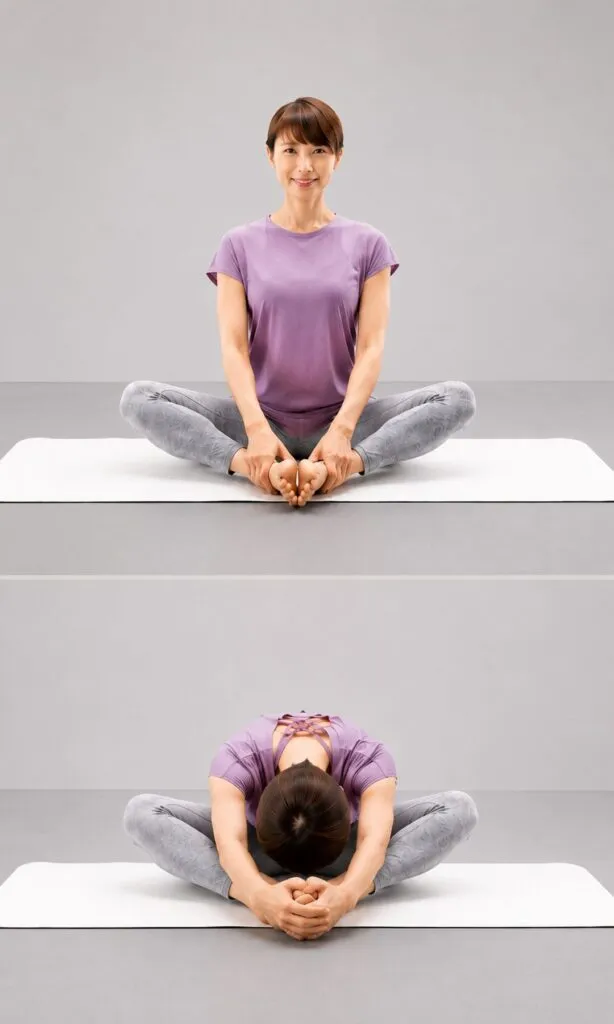
The turtle pose, the half-knot and the body scan calm the body down. But if your head is running because...

British settlers had no proper tins, so they threw the dough over the peaches. Two hundred years later that is...

Whole generations bought skimmed believing it was healthier. Science is now quietly flipping the record - and revealing everything you...
This site uses cookies - is that okay? Learn more