
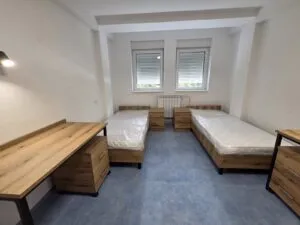
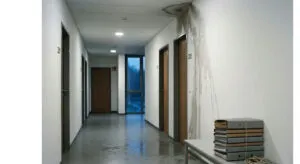
Stiv Naumov dorm renovated for around 10 million euros: a month later water runs through the walls and the ministry counts wet wipes
24.10.2026


24.10.2026
24.10.2026
24.10.2026

24.10.2026
24.10.2026
24.10.2026
24.10.2026

23.10.2026
22.10.2026
24.10.2026
24.10.2026

23.10.2026
24.10.2026

24.10.2026

24.10.2026

24.10.2026

23.10.2026

22.10.2026
24.10.2026
24.10.2026
24.10.2026

24.10.2026
23.10.2026
23.10.2026
24.10.2026
23.10.2026
23.10.2026
24.10.2026
22.10.2026
20.10.2026

23.04.2026

23.04.2026

12.04.2026


On Sunday, 25 October, Serbia elects 250 MPs, and the election silence has already begun - it lasts until 8 pm on election day itself. Eighteen lists are competing for seats in parliament. But one of the last topics the pro-government media pushed before the silence wasn't a programme, but a non-governmental organisation and the American money it had received.
The organisation is called the Centre for Research, Transparency and Accountability, known by its acronym CRTA. According to data from USASpending.gov, the official US portal for federal spending, cited by the right-wing portal Breitbart, CRTA received 832,432.47 dollars from the US agency USAID, with a total of 2.8 million dollars earmarked for it. The project is called "Election Integrity Activities" - it was awarded in 2023 and extended on 17 January 2025, three days before Donald Trump took the oath for his second term.
In Belgrade this is being sold as a bombshell: CRTA, according to this story, "stands behind" the student protests that have been shaking Serbia for months. And what does CRTA actually do? It monitors elections, the media and public opinion, and it has also published a list of the students' demands to the government. So an organisation that monitors elections received money to monitor elections. A scandal - or a job description?
None of this falls from the sky. At the end of September, Aleksandar Vučić resigned as president in order to run for prime minister - a seat he already held from 2014 to 2017. He has repeatedly and publicly accused foreign actors of destabilising Serbia through NGOs, including CRTA. The Higher Public Prosecutor in Belgrade, Nenad Stefanović, said earlier that the special anti-corruption department had asked the US Justice Department for information on possible misuse of USAID money, money laundering and improper spending.
The irony is that the pro-government story, to show how dangerous the student movement is, quotes a Western agency. Reuters recently reported that the movement has grown into one of the most powerful political forces in the country and the biggest threat so far to Vučić, who has dominated Serbian politics since 2014 - first as prime minister, then as president.
On 16 October, the US Embassy in Belgrade issued a security alert to its citizens: follow local media, avoid crowds and be aware of their surroundings, because marches may be accompanied by a heavy police presence, and some protest walks in the past have turned violent. That is the atmosphere in which Serbia goes to vote.
The ballot will have a bit of everything: Vučić's "United Serbia", the student list "Students Win", Ivica Dačić's list, Marinika Tepić and Zdravko Ponoš's "European Serbia" - but also two lists that put Russia right in their name, "Russian Party - Serbia in BRICS" and "Russians and Serbs Brothers Forever", as well as an "Albanian Coalition". If an election-monitoring grant is proof of foreign interference, how should one read a list that promises "Serbia in BRICS" on the ballot?
The Balkans know this scene by heart: when the ground starts slipping from under the government's feet, the "foreign agents" come out of the drawer. Voters will have their say on Sunday. Will any court then check the claims about CRTA - or will they disappear along with the election posters?
The latest 10 news from this category

Ipsos gives Vučić's list 47.4 percent and the students 40 percent, while the NSPM poll puts the students in front....
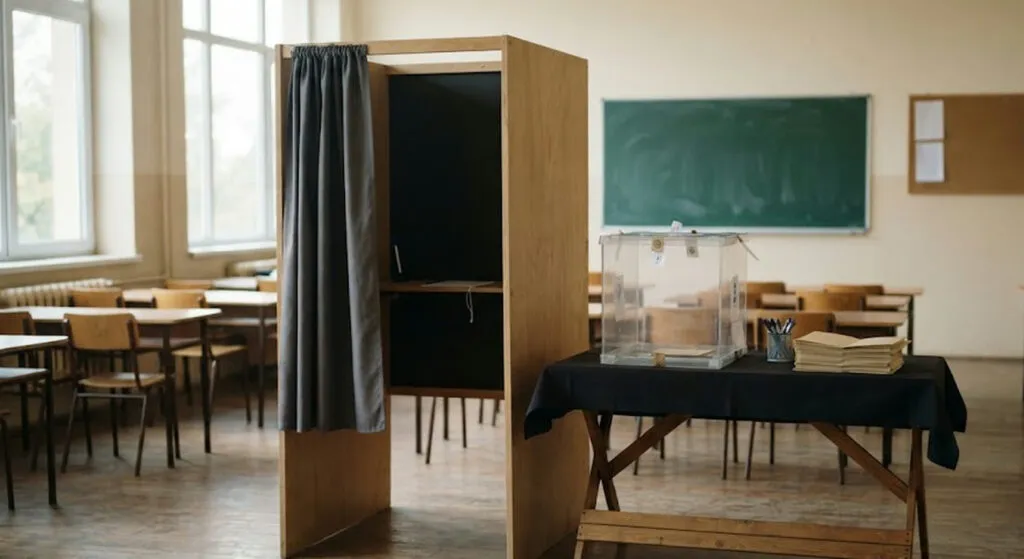
Over 6.4 million voters decide in a snap parliamentary election, and the last 48 hours are being spent on complaints,...

The last student rally before Serbia's election filled Slavija and the surrounding streets. The regime media looked the other way,...
Four days before a vote that could seriously threaten Vučić's grip on power, special forces are breaking down doors, and...
Eight days of stones and Molotovs in Tirana, and the Albanian prime minister sees a hand from outside. The Balkans...
Serbia's candidate for prime minister claims he warned the West several times. And when the question got specific, his answer...
Last year Bulgaria paid while Hungary, Czechia and Slovakia opted out. Now Sofia says "no" too - and Skopje gets...
Seven MEPs are coming to monitor Serbia's election, and Brnabić knows they're biased before they've even landed. If the government...
Thirty-four people travelled via Zagreb to a hall with no daylight, where they worked 12-hour shifts without pay. The only...
Six days before the snap election, the candidate for prime minister already knows both the turnout and the margin -...
This site uses cookies - is that okay? Learn more
Be the first to know when Metla launches something new
Leave your email and we will write when there is a new guide or something new on Metla.


