Cancer Drug in a First Aid Kit at Bogorodica: Why Was the Driver Also Carrying 30 Labels?
22.10.2026


22.10.2026
22.10.2026
22.10.2026
22.10.2026
22.10.2026
22.10.2026
22.10.2026

22.10.2026
21.10.2026
22.10.2026

22.10.2026

21.10.2026
22.10.2026
22.10.2026
22.10.2026
22.10.2026
21.10.2026
20.10.2026
22.10.2026

22.10.2026
21.10.2026
22.10.2026
21.10.2026
20.10.2026
22.10.2026
20.10.2026
19.10.2026

23.04.2026

23.04.2026

12.04.2026

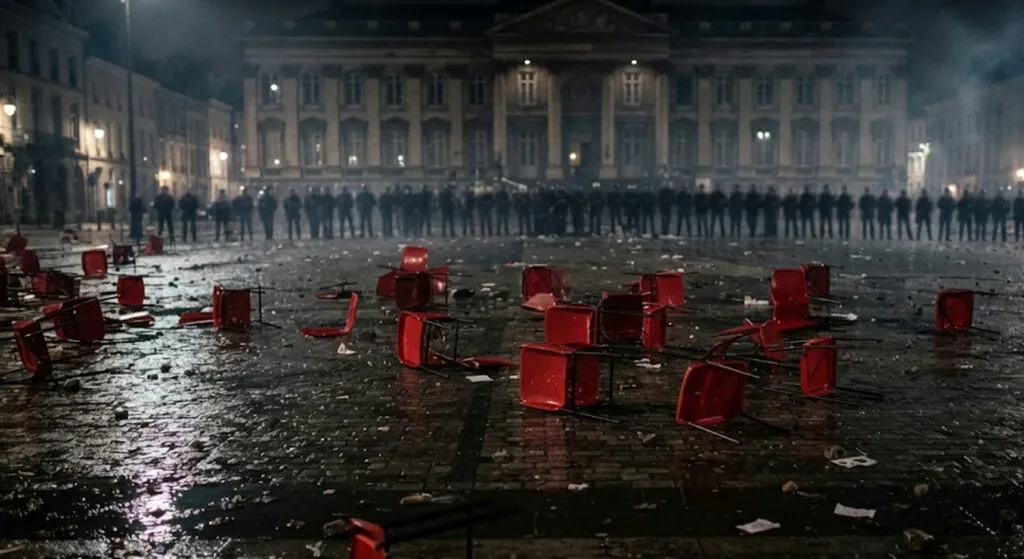
Eight days of protests in Albania, a ministry building set on fire, a Molotov cocktail thrown at the prime minister's office - and Prime Minister Edi Rama has finally offered his explanation. The violence, he says, isn't spontaneous but "orchestrated" by internal and external elements, with the aim of destabilising Albania and other European countries too. He made the statement before the heads of the banking system, and linked the violence with stones and fire to what, according to him, is also happening across Europe.
The picture from Tirana in recent days is not a small one. Demonstrators, many of them students, set fire to the building of the Ministry of Infrastructure and Energy, stormed the Court of Appeal and threw a Molotov cocktail at the building housing Rama's office. The red chairs labelled "Dialogue" that the prime minister set up in front of the government ended up scattered across the square.
A register, hoods and a bill for the family
"Everyone who raised a hand against the state will have the shadow of the state behind them until they compensate for the damage. We will hunt down those in hoods," Rama said. He announced a package of measures: publicly naming profiles that incite violence, tracking masked individuals, a special register of violent people who won't be able to enter hotels or airports. For damage caused by a minor, the family pays. "Italy and France did it, and we'll do it too," he said. The government, according to him, is already working with EU countries to deny the rioters travel.
Setting a ministry on fire isn't peaceful protest - that much is clear. But a register that decides who may sleep in a hotel or board a plane is a tool with a very wide reach. Who will decide who is a "rioter" and who was just standing in the wrong place? Rama himself urged citizens protesting peacefully not to stand close to the violent groups. How long will such a register stay limited to the people it's meant for?
The shadow of January 21
Rama claims the violent groups' goal was to provoke the police and repeat January 21 - an allusion to the 2011 protests in which four people were killed. He added that a drone attack with explosives aimed at his office had been neutralised. He offered no details about that attack in his statement.
For the masked demonstrators there was a different tone too: "blind, manipulated, abandoned, perhaps some even by their own families" - but still "children of this country." He rejected criticism of excessive police force with a comparison to France and Italy and with figures - "one to 2.5" and "one to 2" - without explaining what exactly they measure. And from Moscow, Russian Foreign Ministry spokeswoman Maria Zakharova had already told him not to shift the responsibility for the student protests onto foreign actors.
The scenario is familiar in the Balkans: when the street rises, the government first looks for a finger from outside. In Rama's entire statement there isn't a single word about why the students took to the streets in the first place. Will anyone in Tirana answer that question - or will the register be the whole answer?
The latest 10 news from this category
Four days before a vote that could seriously threaten Vučić's grip on power, special forces are breaking down doors, and...
Serbia's candidate for prime minister claims he warned the West several times. And when the question got specific, his answer...
Last year Bulgaria paid while Hungary, Czechia and Slovakia opted out. Now Sofia says "no" too - and Skopje gets...
Seven MEPs are coming to monitor Serbia's election, and Brnabić knows they're biased before they've even landed. If the government...
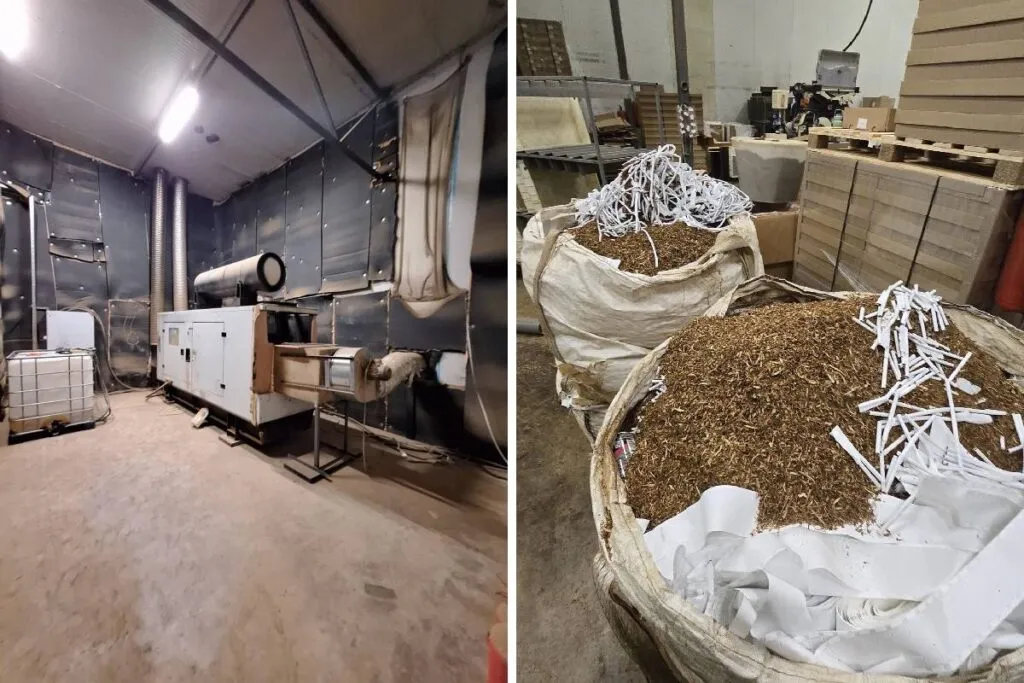
Thirty-four people travelled via Zagreb to a hall with no daylight, where they worked 12-hour shifts without pay. The only...
Six days before the snap election, the candidate for prime minister already knows both the turnout and the margin -...
Less than a week before the vote, the Slovak prime minister climbed onto Vučić's stage, while N1's journalists are packing...
Zagreb had the deadlines struck out and set eight demands, including one about a training ship. Macedonia knows first-hand what...
Eight Croatian conditions, 2.7 billion euros for military property from the former Yugoslavia and the name of a swimming pool...
A Russian military blogger, his wife and three others expelled from Montenegro - and Moscow is already talking about a...
This site uses cookies - is that okay? Learn more
Be the first to know when Metla launches something new
Leave your email and we will write when there is a new guide or something new on Metla.