


State Lottery: Two Arrests Over an 80-Million-Denar Embezzlement, While the Star Witness in Court Changed His Story
06.10.2026


06.10.2026

06.10.2026

06.10.2026
06.10.2026
06.10.2026

06.10.2026

06.10.2026

06.10.2026

05.10.2026

06.10.2026

06.10.2026

05.10.2026

06.10.2026

06.10.2026

06.10.2026

06.10.2026

05.10.2026

04.10.2026

06.10.2026

06.10.2026

06.10.2026

06.10.2026

06.10.2026

05.10.2026

09.03.2026

27.02.2026

19.02.2026

06.10.2026

05.10.2026

04.10.2026
06.10.2026
05.10.2026

04.10.2026

23.04.2026

23.04.2026

12.04.2026

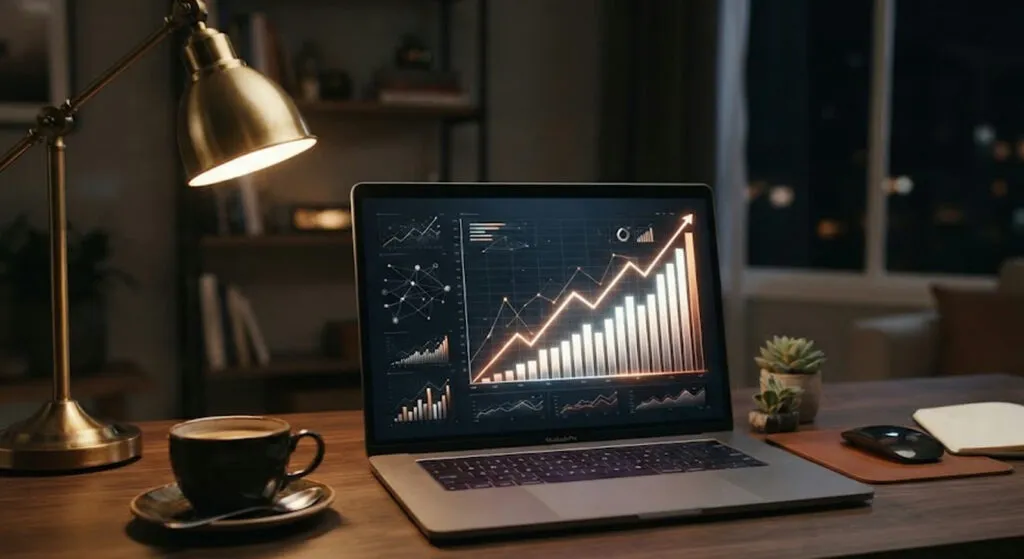
On 4 August Grant De Swardt, an independent AI consultant from East Sussex in Britain, noticed something strange on his paid account. He had not worked at all that day, yet his token usage was climbing by itself. The next day he shut down everything attached to the account and again did no work. The number went up again.
"In the cleanest controlled interval, it went from 45 to 55 percent while I did no work at all," De Swardt says. Tasks were paused or finished, cloud execution was off, not a single active local task was running. Somebody else was spending his subscription.
He asked for a list. There wasn't one.
Here the story gets more interesting than plain theft. De Swardt contacted Anthropic and asked for an itemised bill - what exactly was consuming his tokens. The company did not give him such a list, but agreed something was wrong. It suspended the paid account, revoked all sessions and all server tokens, and refunded him 44.49 pounds for the remaining time on a subscription of 200 dollars a month.
The suspension stopped his business. De Swardt makes a living setting up agents for small and medium firms - for instance, automatically moving order data into accounting software. He works through the same tools himself: admin, website design, coding. "Basically everything I do today goes through AI," he says. His account was returned after about two weeks.
When Anthropic finally identified the culprit, the explanation was that a compromised session key had been used to create unauthorised tokens. The company told him the account "appeared to be used by some suspicious third-party service processing activity for other people", but they could not establish how it got access. In other words: somebody got in and could quietly siphon off another person's plan for months, because support tracks total usage - but not what is using it.
That is the hole, and it is not a technical one.
De Swardt posted the case on Reddit and after 80 comments realised he was not alone. One user claims their account "was automatically upgraded without my consent, my card was charged, and usage jumped from 0 to 100 percent without me touching it at all". Another watched the percentage go from zero to 49 in twelve minutes after asking only a few questions and running one search. A third says his account burned through its entire daily quota three days running without him opening it - and filed a report on GitHub, where again people with the same problem turned up.
Two of them published emails in which Anthropic itself warned them. "We recently learned of an attacker using common information-stealing malware to take logged-in sessions from people's computers, then using them to access accounts and consume their quota," the message reads. The company logged users out, revoked authorisations, refunded part of the money and warned them they probably have an infection on their computer - which, it stressed, does not come from the platform itself but from everything downloaded and clicked online.
De Swardt received no such email. He says he found no evidence at all that his computer was compromised and that he still does not know how they got in. He cancelled the subscription and moved to a competitor's tool with cheaper models. "It's not that different or better," he says, adding that he cannot see himself returning until the problem is fixed. Asked how users are supposed to spot abuse, the company declined to comment.
What remains from all of this is one sentence worth more than the whole story: "I don't think these people have any way of protecting themselves." You pay 200 dollars a month for a service that measures your usage down to the percentage point but cannot - or will not - tell you what was using it. Every electricity, water or mobile internet provider in this region has to print you a line-by-line bill. Here that is still something you request as a favour rather than receive as a right.
The latest 10 news from this category

Brussels forced OpenAI to release a watermark the company had ready back in 2024. Macedonia isn't in the EU, so...

54 million Americans say they bought something after seeing a TikTok video. Now the platform wants zero pause for thought...

By executive order, artificial intelligence became "superintelligence", and the safety pledge tech companies signed at the White House binds no...

A nine-metre catamaran, a motor the company builds itself and off-the-shelf batteries. Hydrofoils have been around for more than a...
An Oklahoma deputy searched the database only because the car had California plates. The ruling isn't binding precedent, but it's...
The head of AWS claims data centres don't use much water, don't push up electricity prices and barely pollute. One...

The pope isn't talking about style but about substance: the machine calculates on top of other people's images. The industry...

A setting created for backups now hands AI agents the keys to the whole computer - messages, mail, browsing history....

The cheaper SUV lifted deliveries by around 45 percent. Since June it has had two recalls, the latest over battery...
Some MyChart settings reportedly allowed outsiders to access records without leaving a single trace in the logs. Few companies stop...
This site uses cookies - is that okay? Learn more
Be the first to know when Metla launches something new
Leave your email and we will write when there is a new guide or something new on Metla.