
Glasses and a Wristwatch for a Tip-Off: Nine Charged Over Tax Inspections at the "Pulse" Nightclub
28.10.2026


28.10.2026
28.10.2026
28.10.2026
28.10.2026
28.10.2026
28.10.2026
28.10.2026

27.10.2026
27.10.2026
28.10.2026
28.10.2026
27.10.2026
28.10.2026
28.10.2026
28.10.2026

28.10.2026
27.10.2026
26.10.2026
28.10.2026
28.10.2026
28.10.2026
28.10.2026

28.10.2026
27.10.2026
28.10.2026
27.10.2026
27.10.2026
27.10.2026
26.10.2026
24.10.2026

23.04.2026

23.04.2026

12.04.2026

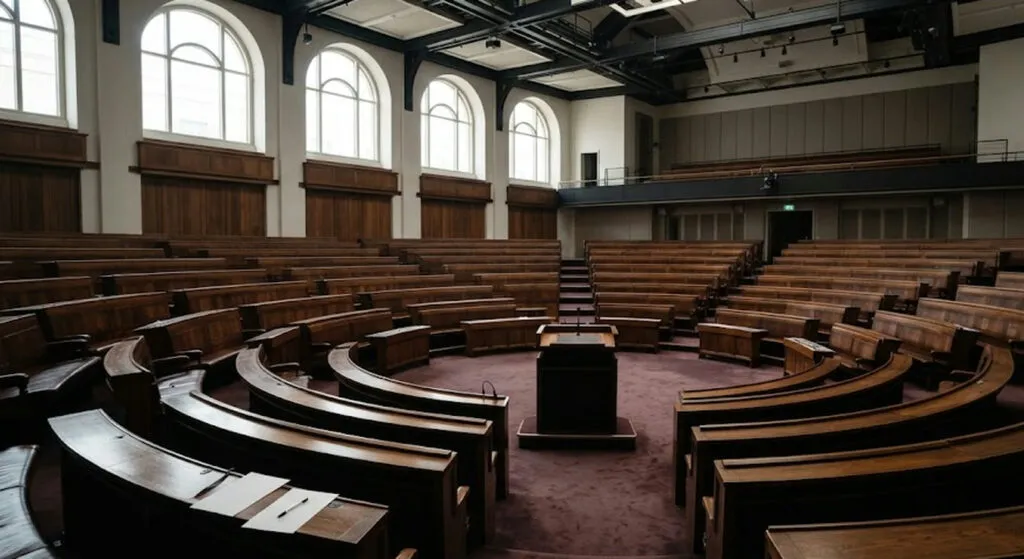
The Student List won Sunday's parliamentary elections in Serbia with 140 MPs, against 104 for Aleksandar Vučić's coalition. Another six seats belong to national minorities, while the opposition parties that ran on their own were left without a single MP. That's a majority in parliament - won without a single student on the list.
Yes, you read that right. The students who organised the protests and faculty blockades after the canopy collapse at Novi Sad railway station in November 2024, which killed 16 people, didn't run. They chose all 250 names at their plenums - professors, experts, intellectuals and public figures. Partly because they felt they lacked the knowledge and experience for high office, and partly so as not to hand Vučić leaders he could attack.
That's where the problem starts. The plenums could only withdraw support from candidates up to election day. Now the MPs own their mandates, with no legal obligation to the students - only a political and moral one. "Under the Constitution and the law, an MP owns their mandate. We committed to respecting the Student List's programme," said lawyer and musician Feđa Dimović, number 48 on the list.
Srebrenica, Kosovo, Jasenovac - where the list splits
How varied the list is shows best in its most prominent names. Sociologist Jovo Bakić, number 76, said publicly 20 years ago that genocide took place in Srebrenica - a ruling confirmed by the International Criminal Tribunal for the former Yugoslavia in The Hague, but one Serbia has never officially accepted. "Serbia has an obligation to call things by their real name. Genocide happened in Srebrenica, a massacre of Bosniaks carried out in the name of Serbs," Bakić said. He has also said that Serbia can manage without Kosovo, over which it has had no control for a long time.
On the other side stands Dimović. A few years ago he declared that Kosovo must "never, at any price" become a member of the United Nations, that both recognising its independence and a possible partition would be "a great shame for the Serbian people", and he called former Kosovo leaders Hashim Thaçi and Ramush Haradinaj terrorists.
Dimović isn't alone. Radomir Saičić, a university professor, member of the Serbian Academy of Sciences and Arts and a possible student candidate for president of Serbia, said at a pre-election event: "Kosovo and Metohija are, under the Constitution, an inalienable part of our territory. That is a fact and it will stay that way. For me it is temporarily occupied territory." At the same event he said the future of Republika Srpska is part of the future of the Serbian people and that Serbia is separated from Republika Srpska by "a fictitious and geometric border".
A completely different tone comes from psychologist Aleksandar Baucal, a professor at the Faculty of Philosophy in Belgrade, who entered parliament as number 87: "As a state, we have recognised Bosnia and Herzegovina, and that obliges us to respect it as our neighbour and as a country with its own rights and interests."
In Croatia, the loudest echo came from views on the Second World War. In a 2008 opinion piece about Jasenovac, Dimović wrote that Croatia had never been tried for genocide, and he called singer Marko Perković Thompson "a complex-ridden clown" and "unfortunately, the most popular Croatian singer".
What will hold them together?
Until now, the Student List had no need to take a position on questions like these. It came out, rather contradictorily, both for moving closer to the European Union and against sanctions on Russia. It didn't need ideological unity to win. It needed a common opponent.
Now come the everyday votes. "For the first time we'll have something called real democracy. The people who enter parliament will negotiate, there will be proposals and votes on them. However the majority decides, that's how we'll act," said actor Tihomir Stanić, number eight on the list. It sounds nice. But who will decide when MPs have to vote on Kosovo - the student plenums, the parliamentary group or the future government?
The Student List did what Serbia's opposition failed to do for years: it gathered almost all of Vučić's opponents around a single electoral option. How many coalitions like that in the Balkans have survived the first real vote after election night? For Serbia's neighbours, including Macedonia, what matters is which of these voices becomes the voice of the state.
The latest 10 news from this category
Serbia is on red terror alert after the overnight attack. Minister Dačić says the attacker was an Islamic State supporter...
The mother of Stefan Hrka, killed under the collapsed canopy in Novi Sad, came for an apology, while the editor...
Nikolić has lived in a state villa for nine years after his term ended, Brnabić in Jovanka Broz's former home....
Vučić conceded on election night itself, and his people are already writing the winner's agenda: Russia, NIS, devaluation. How many...
The winner of Serbia's election says the undiplomatic outbursts towards the region were born in Vučić's head. His first conversation...
Germany's far right mourns Vučić's defeat with the words "we've lost" - as if Serbia were its property. Moscow, meanwhile,...
Doctors, professors, actors and one engineer who warned before the canopy fell. A list without a leader has toppled the...
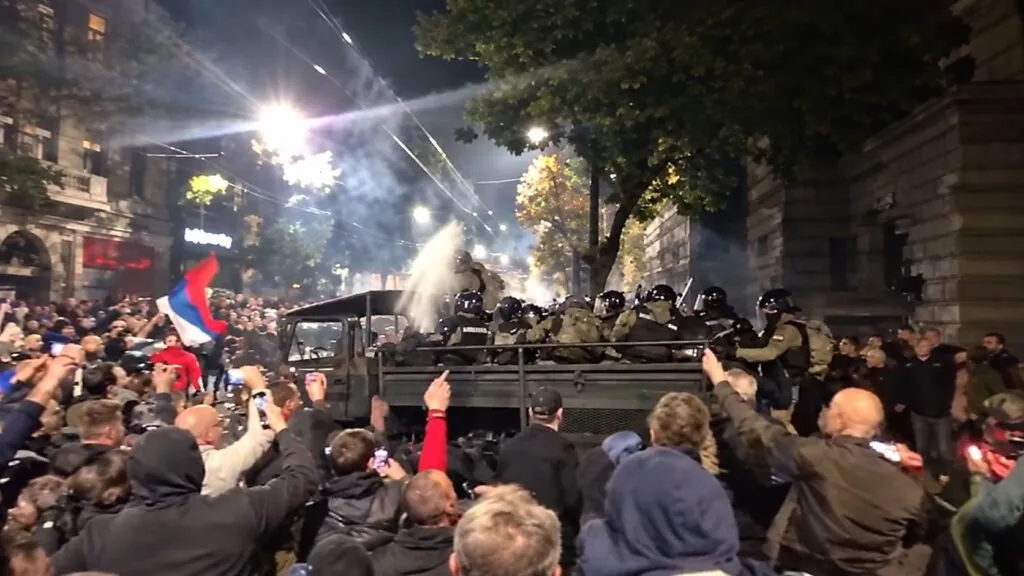
The police that spent two years breaking up protests left to whistles and jeers, and the park of Vučić's supporters...

The man who ran Serbia for more than a decade read out the numbers himself: around 1.72 million votes for...

He lost the election, and one of his first messages was about Moscow. Serbia has so far refused sanctions on...
This site uses cookies - is that okay? Learn more
Be the first to know when Metla launches something new
Leave your email and we will write when there is a new guide or something new on Metla.


