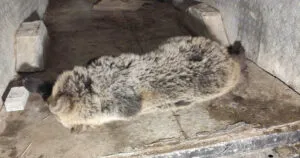
Мече загина на автопатот Скопје-Тетово: оградата е законска обврска, а тимот за спасување постои само во вибер-група
25.10.2026


25.10.2026
25.10.2026
25.10.2026
25.10.2026
25.10.2026
25.10.2026
25.10.2026
25.10.2026
25.10.2026

25.10.2026
25.10.2026
24.10.2026

25.10.2026

25.10.2026

25.10.2026
25.10.2026

24.10.2026

23.10.2026

25.10.2026

25.10.2026
25.10.2026
25.10.2026
25.10.2026

25.10.2026
25.10.2026
25.10.2026
24.10.2026
24.10.2026
22.10.2026
20.10.2026

23.04.2026

23.04.2026

12.04.2026

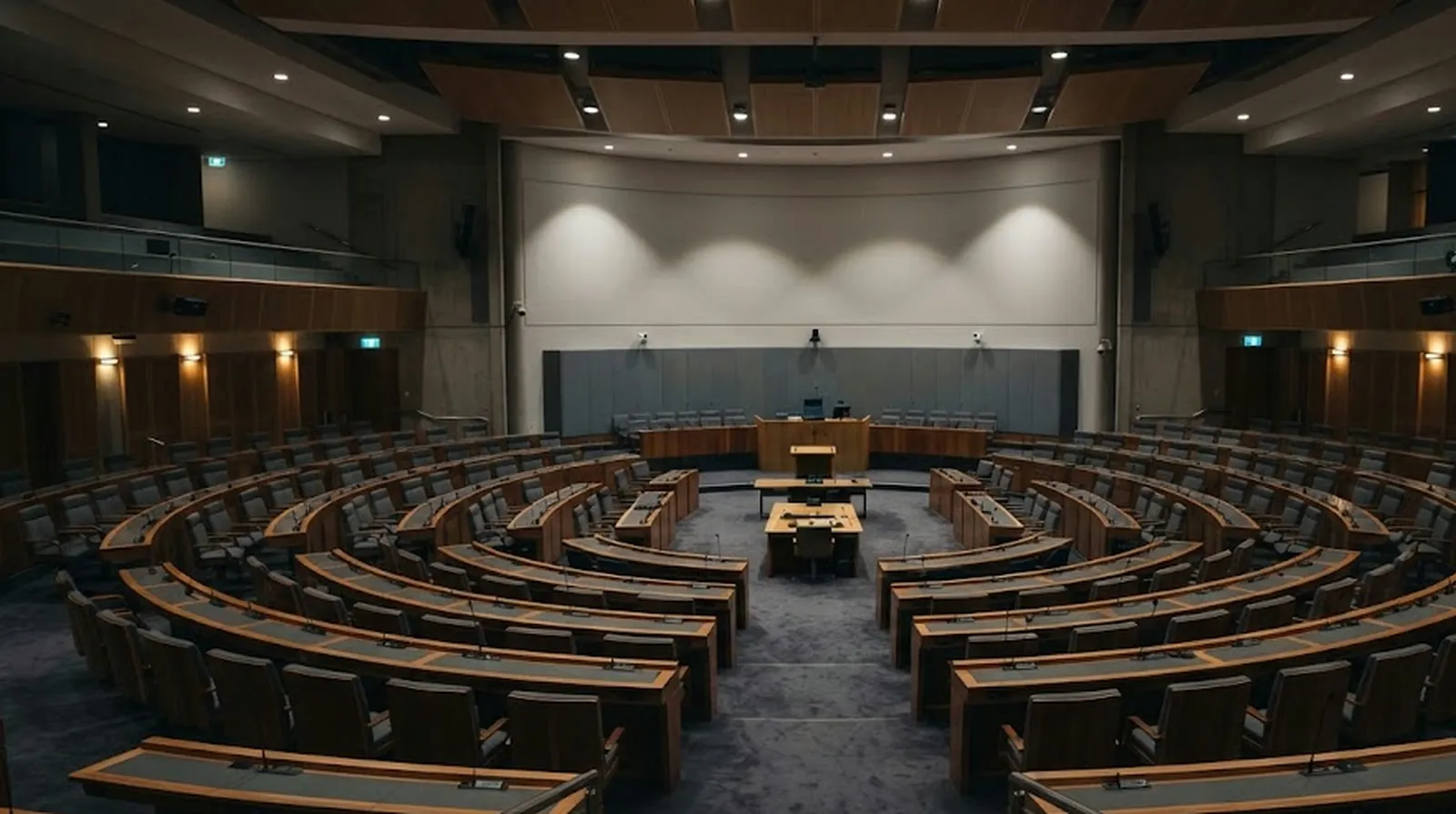
43.8 per cent. That is what Alternative for Germany won in the Saxony-Anhalt election, making it by far the strongest political force in that state. Five years ago the same party had 20.8 per cent. So in a single electoral cycle - plus 23 percentage points.
The other number is even more interesting. Chancellor Friedrich Merz's CDU fell to 17.2 per cent. In 2021 it had 37.1 per cent. The party that for decades was seen as the natural home of German conservatism in this state halved, and then halved again. The SPD finished on 9.3 per cent, the Greens on 8.9, the Left on 8.6, and Sahra Wagenknecht's alliance on 5.3 per cent. Turnout was a record 77.8 per cent - people did not stay home, they went out and decided.
The first message was not for Berlin but for Moscow
Only hours after the results, AfD co-chair Tino Chrupalla appeared on German broadcaster ARD's morning programme and said what the priority is. "We want good relations with Russia again," he said. And then he got more concrete: "Sanctions policy has to change. The AfD will above all have to deal with that through the Bundesrat, applying pressure on the federal government."
That is not rhetoric for a domestic audience. It is a description of a mechanism. The Bundesrat is the chamber where the representatives of the state governments sit, and Saxony-Anhalt has four votes there. All of a state's votes have to be cast as a bloc - you cannot split them. A government led by the AfD would gain an institutional channel through which it can block, slow down or politically contest part of Berlin's decisions.
What it can realistically do, and what it cannot
This is worth being precise about, because the difference is large. A single state cannot unilaterally lift European sanctions against Russia - that is not decided in Magdeburg. But it can make life harder for the federal government, slow down every decision that passes through the Bundesrat, and turn the relationship with Moscow into a permanent domestic political fight rather than a settled matter.
Relations with Russia were in fact one of the big themes of the campaign. In eastern Germany a substantial share of the population does not share the federal government's hard line towards Moscow - a divide that has existed for years and that these elections have reopened. The AfD advocates restoring economic and political relations with Russia and opposes continued German military support for Ukraine.
The winner has already extended a hand - and is watching who refuses it
Chrupalla made clear the party does not want to remain a winner without power. "We will extend offers of talks to all parties. Then we will see who refuses our outstretched hand," he said. The phrasing is not accidental - it prepares the next narrative in advance: we are not the isolated ones, they are the ones who will not talk.
He addressed the CDU in particular: "I think the CDU has to ask itself what conclusions it should draw from this catastrophic election result." Talks, in his words, should begin this week, and he expects Ulrich Siegmund to be elected head of the Saxony-Anhalt government.
For years Germany was the country the whole continent looked to as a stable centre - predictable, boring in the best possible way. When one state with record turnout gives 43.8 per cent to a party demanding an end to sanctions on Moscow, that is not local news. The question is how long something stays a "regional case" before it becomes the rule.
The latest 10 news from this category
Една шега за позлатата, па сериозната порака: додека моќниците се гледаат во огледало, цената ја плаќаат гласачите. Охајо одлучува на...
Над 400.000 луѓе на улиците во Франција, молотовски коктели во Тирана, водени топови во Рим, солзавец во Брисел. Европа која...

One dead, five wounded, among them a 12-year-old girl. The attack came just days after parts of the far right...

France is shutting the metro and museums, Italy is counting arrests, and the government in Tirana is considering a blacklist...

Eight convicted, four who "brought the honours system into disrepute" and three with professional sanctions. The medal goes back, and...
Европа денес се соочува со една опасна историска паралела. Сликите од протестите низ европските градови сè повеќе потсетуваат на работничкото...

Russian and American bases in Berlin and Paris, the energy market for Moscow, Greenland for Washington. The Balkans knows all...

More than 100 police officers injured in Milan, curfews in Paris, Lyon and Marseille. The Europe that has spent years...
She was due to lead a Belgian trade mission from 21 to 26 October. The palace, the ministry and the...
Washington is proposing that Europe buy Russian gas again as part of peace for Ukraine, and Moscow already says "the...
This site uses cookies - is that okay? Learn more
Be the first to know when Metla launches something new
Leave your email and we will write when there is a new guide or something new on Metla.