

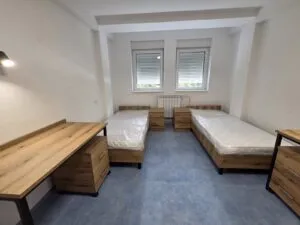
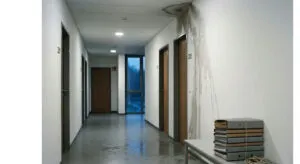
Stiv Naumov dorm renovated for around 10 million euros: a month later water runs through the walls and the ministry counts wet wipes
24.10.2026


24.10.2026
24.10.2026
24.10.2026

24.10.2026
24.10.2026
24.10.2026

23.10.2026
22.10.2026

22.10.2026
24.10.2026
24.10.2026

23.10.2026
24.10.2026

24.10.2026

24.10.2026

24.10.2026

23.10.2026
22.10.2026
24.10.2026

24.10.2026

24.10.2026

24.10.2026
23.10.2026
23.10.2026
24.10.2026
23.10.2026
23.10.2026
22.10.2026
20.10.2026
19.10.2026

23.04.2026

23.04.2026

12.04.2026


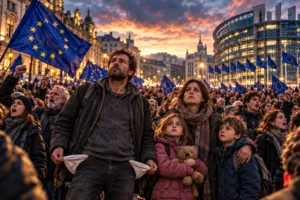
Saturday, October 24, is a day Europe is bracing for like a storm. A wave of protests has swept France, Albania, Italy, Austria, Poland, Spain, Portugal, Greece and Belgium, and tension is highest in France and Italy, where mass demonstrations have been called in the big cities today.
France: 70,000 uniforms and a closed Louvre
French Interior Minister Laurent Nuñez announced 70,000 police and gendarmes across the country, with special units, helicopters and drones. "We will be uncompromising towards looters and rioters," he said. The security services expect between 400,000 and 500,000 protesters and warn of attacks on public buildings and "opportunistic looting."
Paris is closing 24 metro stations, from the Champs-Élysées to the Latin Quarter. The Louvre, the Musée d'Orsay and the Picasso Museum are shut, as are the Cartier and Louis Vuitton foundations, the Paris Opera and the Cirque d'Hiver. Police have authorised only one large march - the unions', from Place de la Bastille to Place de la Nation - while the route filed by students and the "yellow vests" has been banned. In Lyon and Marseille protests are banned outright.
The reason for these measures is last weekend. After violent protests on October 17 and 18, 2,700 people were detained and 217 ended up in prison, said Justice Minister Gérald Darmanin. As many as 68 percent of those jailed are 25 or younger, and more than half had no criminal record at all. In Limoges the historic town hall burned down - a curfew from 10 pm to 5 am and a ban on gatherings of more than ten people are now in force there. French insurers estimate losses of up to 1.2 billion euros, with around 3,000 businesses damaged.
And what do the protesters actually want? That's the part that gets lost under the pictures of burning buildings. The protests began out of anger over the state of education and the high cost of living. Secondary school students, whom Macron has invited to a meeting at the Élysée Palace, are demanding more money for education, renovated schools, new teachers and reform of university admissions. Macron blames radical left-wing groups and criminals for the violence, while Trump was quick to say France had lost control of migration. Everyone sees in the protests what they want to see.
Italy: "We won't pay for your war"
In Italy, the "October 17" movement has called for regular Saturday protests in at least eight major cities - Milan, Rome, Turin, Bologna, Florence, Padua, Bari and Genoa. The demands are higher wages, a lower cost of living, affordable housing and more money for public services. In Turin people are protesting against higher military spending under the slogan "We won't pay for your war," and in Rome the "Italy out of the war" march expects around 10,000 people. Milan still remembers last weekend: 271 arrests, many of them minors, and 14 members of the security forces injured. Shopkeepers on the luxury Via Monte Napoleone are already boarding up their windows.
Albania: a blacklist next door
For us, the closest scene is in Tirana, where anti-government protests are in their eleventh day. On Friday, medical students and university professors in white coats and surgical masks stood in front of the government building and rejected Prime Minister Edi Rama's latest offer of talks. "We came out to demand a resignation and nothing else," one of them said. The declaration they read out was, according to the organisers, backed by 120 health workers: Rama's resignation and a transitional technical government.
Rama responded in a way everyone in the region should be watching. He published photos of 45 people he claims have criminal records and took part in the violence, and accused organised crime, "foreign structures" and the opposition Democratic Party of being behind them. One of those named immediately spoke out: he says he is a medical student with a perfect ten grade average and that the accusations of links to drug trafficking are unfounded. On Friday, a court in Tirana released all 16 arrested protesters, ordering them to report regularly to police.
The government is also considering a special blacklist in the state TIMS system, and data on protesters accused of violence could be passed on to European partners - which could end in a ban on entering some EU countries. Rama has also floated making the parents of underage participants financially liable for the damage, and there is talk of stripping scholarships from pupils who attack police officers and firing teachers who incite violence. The damage in Tirana, according to the Albanian tax administration, comes to 2.15 million euros across 127 business premises.
The Molotov cocktails and burned shops are real, and police responded with tear gas, water cannon and rubber bullets. But when the prime minister of an EU candidate country publicly posts citizens' faces and considers sending their data around Europe, the question is no longer just who threw the bottles. The question is who keeps the list, and who decides who is a "thug" and who is a straight-A medical student. Rama still refuses to resign, and leaves his offer of dialogue - literally - on the concrete benches outside his office.
The first reflex of the government in Tirana was to look for whoever is paying the students. Will anyone get around to what they are actually asking for?
The latest 10 news from this category

One dead, five wounded, among them a 12-year-old girl. The attack came just days after parts of the far right...

Eight convicted, four who "brought the honours system into disrepute" and three with professional sanctions. The medal goes back, and...
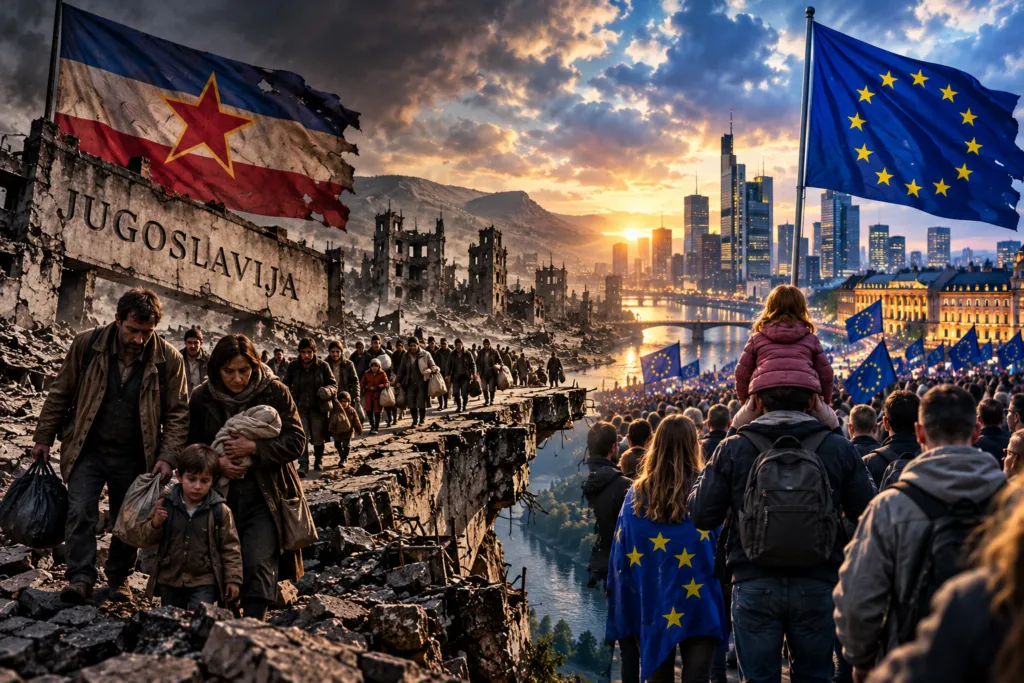
Европа денес се соочува со една опасна историска паралела. Сликите од протестите низ европските градови сè повеќе потсетуваат на работничкото...

Russian and American bases in Berlin and Paris, the energy market for Moscow, Greenland for Washington. The Balkans knows all...

More than 100 police officers injured in Milan, curfews in Paris, Lyon and Marseille. The Europe that has spent years...
She was due to lead a Belgian trade mission from 21 to 26 October. The palace, the ministry and the...
Washington is proposing that Europe buy Russian gas again as part of peace for Ukraine, and Moscow already says "the...
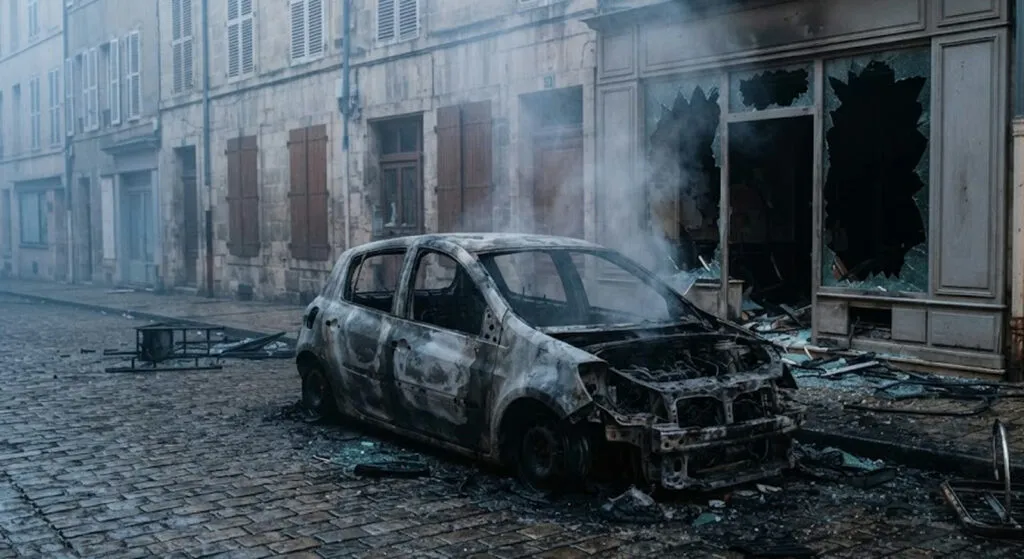
More than half a million people on the streets, 1,500 shops wrecked or looted and seven police officers seriously injured...
The man whose country gave Gruevski asylum is now in opposition and talking about "resistance", while Hungary's new prime minister...
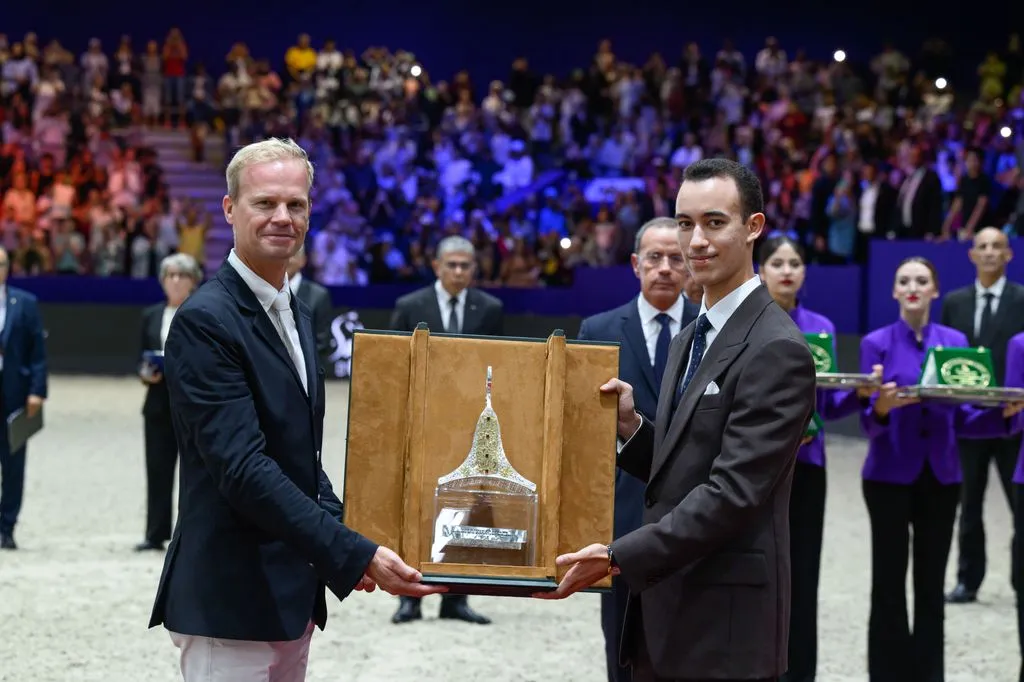
European crown princes cut ribbons. Morocco's is already a coordinator at the General Staff and sits in on the meetings...
This site uses cookies - is that okay? Learn more
Be the first to know when Metla launches something new
Leave your email and we will write when there is a new guide or something new on Metla.


