


Bear cub killed on the Skopje-Tetovo motorway: the fence is a legal obligation, while the rescue team exists only in a Viber group
25.10.2026


25.10.2026

25.10.2026

25.10.2026
25.10.2026

25.10.2026
25.10.2026

25.10.2026

25.10.2026

25.10.2026

25.10.2026

25.10.2026

24.10.2026

25.10.2026

25.10.2026

25.10.2026

25.10.2026

24.10.2026

23.10.2026

25.10.2026

25.10.2026

25.10.2026

25.10.2026

25.10.2026

25.10.2026

25.10.2026

25.10.2026

24.10.2026
24.10.2026

22.10.2026
20.10.2026

23.04.2026

23.04.2026

12.04.2026


Picture a company that has proven a state institution ran a tender unlawfully. The State Commission for Public Procurement Appeals rules in its favour and the procedure is annulled. Normally the institution that got it wrong would cover the costs. Under the amendments to the Public Procurement Law that MPs are due to vote on on Monday, 26 October, that won't be the case. The company that won will pay its own lawyer.
The key is Article 16 of the government's proposal, which amends Article 166 of the current law. If an appeal is upheld, the contracting authority will reimburse only the administrative fee and the fee for running the procedure. On legal representation, the proposal is brief: "If a party engages a representative in the appeal procedure before the State Commission, it shall bear the costs of the representative at its own expense."
A pricier appeal, a cheaper mistake
The package also makes the appeal itself more expensive. Fees for running an appeal procedure, according to the government's explanatory note, rise from the current 50 to 200 euros to 150 to 600 euros, depending on the type of procedure. The aim, the sponsor says, is fewer unfounded appeals and more efficient legal protection. The package also brings higher thresholds for purchases without a formal tender, wider use of the electronic marketplace and more frequent use of best price-quality ratio. All of it is wrapped under the EU's Reform Agenda and Growth Plan.
The Bar Association has already sent written objections to the institutions. In its view, the change is an extra financial burden on businesses, discourages legal remedies and could weaken oversight of whether tenders are lawful. It also warns of a new wave of court cases for damages, which would bring extra costs for the budget itself. Some lawyers go further and argue the amendment runs against the Constitution and several laws, from the Law on the Legal Profession to the Law on Obligations.
Who wins and who loses
The logic is simple. A company that has to pay both a higher fee and a lawyer out of its own pocket, even when it is right, will think hard about whether to appeal at all. Fewer appeals mean fewer irregularities caught before the contract is signed. And that means more freedom for the small circle of officials who decide who gets a tender. The contracting authority, meanwhile, loses even the minimal penalty it used to pay when it got things wrong.
Lawyers who spoke anonymously point to "Skopje 2014" as an example of what happens when big public spending has no real oversight: the consequences only show once the money is gone. And the European Commission's 2026 Rule of Law Report lists public procurement as an area at high risk of corruption. Only 20 percent of surveyed companies rate the independence of the appeals body as very or fairly good, compared with 37 percent last year.
So trust in appeals is falling, and the state's answer is to make appealing more expensive. If this is reform on the European model, why do the people who make mistakes in tenders gain the most from it?
The latest 10 news from this category

More than 11,000 denars between two baskets, a minimum wage of 26,000 and announced hikes in electricity and heating. The...

In July, a higher deficit was the price of more investment. Three months later investment is falling, the 750 million...

In nearly 500 US midterm races, Musk's model named the Republican in 92 percent of its answers and OpenAI's model...

The company says a secure browser has become too expensive to maintain. Users want at least the code opened up...

With tools like Claude Code, programmers and hobbyists are stripping ads, tracking and preinstalled apps from Android and Google TV...

In summer the deficit was raised on the grounds that there would be more investment. Three months later investment is...
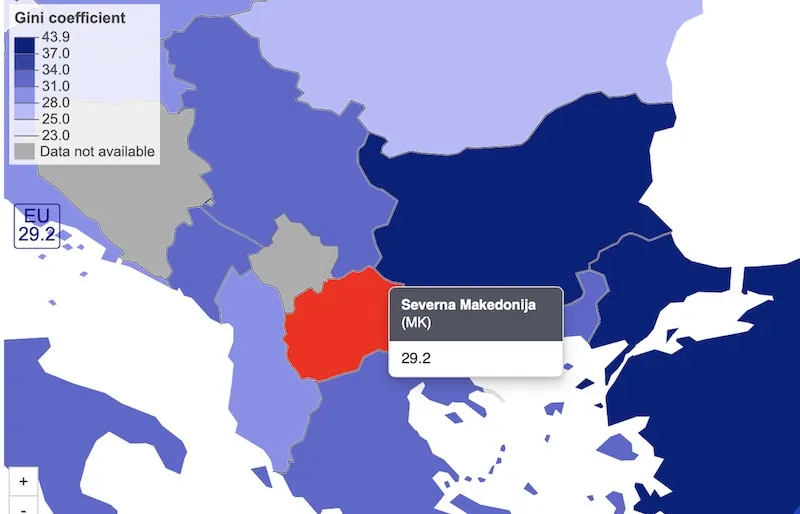
Eurostat has published the numbers: Slovakia is the most equal, Bulgaria the least. Macedonia lands in the middle - but...

The activity index fell to 51.9 points, inflation reached 3.8 percent and Brent hit 114 dollars a barrel. Europe isn't...
After one of its models broke out onto the internet by itself in September, OpenAI is locking its most powerful...

The state isn't just handing over money, it's taking equity - for electronics that have to survive the plasma. Fusion...
This site uses cookies - is that okay? Learn more
Be the first to know when Metla launches something new
Leave your email and we will write when there is a new guide or something new on Metla.


