


Four detained over the killings in Hrom and Gjorche Petrov: the targets were elderly people living alone
29.10.2026


29.10.2026

29.10.2026
29.10.2026

29.10.2026
29.10.2026

29.10.2026

29.10.2026

28.10.2026

27.10.2026

29.10.2026

29.10.2026

28.10.2026

29.10.2026

29.10.2026

29.10.2026

29.10.2026

28.10.2026

27.10.2026

29.10.2026

29.10.2026

29.10.2026

29.10.2026

29.10.2026

28.10.2026

29.10.2026

28.10.2026

27.10.2026
27.10.2026
26.10.2026

24.10.2026

23.04.2026

23.04.2026

12.04.2026

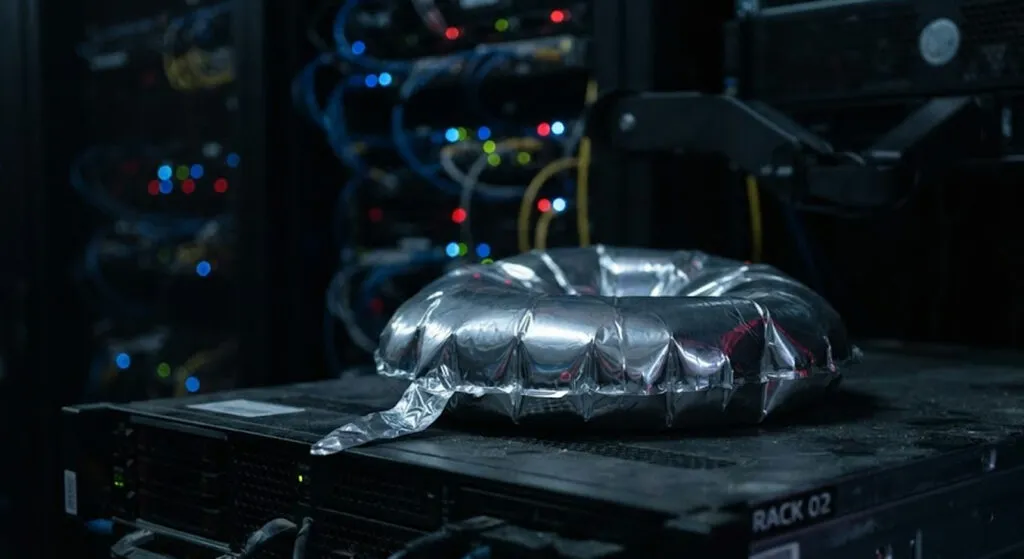
While investors around the world nervously watch hundreds of billions of dollars pour into artificial intelligence, China has already lived through what everyone fears. The tech bubble there didn't start to deflate - it burst.
In less than four months the STAR50 stock index, which tracks China's leading chipmakers and AI companies, fell by a full 40 percent. 480 billion dollars in market value has been wiped off the exchange, and the broader list of China's most valuable companies is around 20 percent below its June peak. "The stock market turned into wild speculation," says Dong Baozhen, an investment fund manager from Beijing. "And now we're watching that bubble burst."
Half the market in one basket
The fall is especially painful because AI-linked stocks made up a full 42 percent of the Chinese market's total value and accounted for more than half of all trading. Unlike Western exchanges, which are dominated by big pension and investment funds, in China a huge share of the market is held by small, ordinary citizens who believed the promises of a tech boom and invested their own savings.
The examples hurt. Demand for shares in robot maker Unitree at its stock market debut in August was 8,000 times greater than supply. A few months later, those shares have lost half their value. Shares in chipmaker CXMT lost more than a quarter of their value in a single month, MetaX and Moore Threads, which jumped as much as 700 percent after listing last year, have lost half since July, and Zhongji Innolight, a maker of optical components for data centres, has sunk by a full 60 percent.
"The excessive emphasis on technology has led to serious market distortions," explains Leo Wang, a partner at Beijing fund Qianchuang Capital. "A huge bubble was created in one sector, while money was completely sucked out of every other branch of the economy."
When the state is supposedly behind everything
Chen Wensheng, a small business owner from southern China, says he started buying shares convinced that the state and its funds were behind it all. Today he and his friends are just tallying their losses and moving what's left into safe bonds and gold.
That belief - that the state is behind everything and nothing can fail - is one the Balkans have already paid for dearly. In 1997 Albania learned what happens when thousands of ordinary people put all their savings into something that supposedly can't go under. The Chinese case is a different mechanism, but the psychology is familiar: when the promise is big enough, nobody asks who's actually making the money.
Is the West next?
America's tech-heavy Nasdaq has so far slipped only six percent from its recent record, and Chinese companies also had a problem of their own: US authorities are shutting the door ever tighter on Chinese hardware and preparing bans on its use in Western data centres. But many economists warn the underlying problem is the same on both sides of the world: companies are pouring enormous sums into equipment and servers, while real demand and earnings from AI products still aren't there.
The scale is visible in America too. According to documents published ahead of its stock market listing, one of the leading AI labs, Anthropic, reported a loss of 80 billion dollars, with plans to spend another trillion dollars on data centres over the next ten years. "All the chipmakers and AI equipment suppliers will eventually end up in a price war and squeezed margins," concludes Chinese fund manager Wang Zhuo. "There are no exceptions. Every stock market bubble eventually has to burst."
The question isn't whether it will burst, but who will be left empty-handed when it does - the funds that get out first, or the ordinary investor who was the last to believe?
The latest 10 news from this category
The official report records 132 workplace accidents; the unions talk about roughly two thousand injuries a year. Between the two...
A 90-days-in-180 rule, bilateral visas only with Switzerland and Croatia, and a route to Germany that crosses several more countries....

4.3 percent growth in the second quarter, the highest in the region, pulled by construction that grew almost 22 percent....

Almost one in every nine dollars Microsoft earned last quarter came from the company it's fighting for the same customers....

The four-year-old firm rejected a takeover bid because it didn't top its valuation, then raised fresh money. The bet is...

For years Apple rejected the idea of a touch Mac. Now it's selling one, and with every upgrade the laptop...

The region is heading for 3.4%, Macedonia the other way. And only a third of new export ventures in the...
In 2015 the cap on new contractors was 1%, backed by the threat of prison - and the contractors piled...
Revenue and spending are each cut by 5.3 billion denars. When the money runs short, the first thing to go...

The chatbot allegedly wrote her a taper schedule down to zero pills and praised her for refusing a blood test....
This site uses cookies - is that okay? Learn more
Be the first to know when Metla launches something new
Leave your email and we will write when there is a new guide or something new on Metla.


