

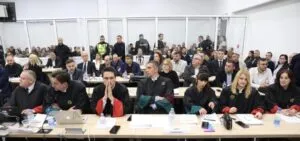
Experts on the Puls fire: the ceiling foam released cyanide as it burned, and the inspector could and should have shut the place down
02.09.2026


02.09.2026
02.09.2026
02.09.2026
02.09.2026
02.09.2026
02.09.2026
02.09.2026
01.09.2026
31.08.2026

02.09.2026

02.09.2026

01.09.2026

02.09.2026

02.09.2026

02.09.2026

02.09.2026

01.09.2026

31.08.2026
02.09.2026

02.09.2026

02.09.2026

02.09.2026
01.09.2026
31.08.2026

09.03.2026

27.02.2026

19.02.2026
02.09.2026
01.09.2026

01.09.2026

23.04.2026

23.04.2026

12.04.2026
Armenia has finally said out loud what it has been half-saying for years. Prime Minister Nikol Pashinyan stated that the country will not return to the activities of the Collective Security Treaty Organisation (CSTO) for the next five years, and that it will soon launch the formal process of applying for European Union membership.
"We have no plans to return to the CSTO in the next five years. I can say with certainty that we will not intensify our work within the CSTO," Pashinyan said while presenting the new government's programme in parliament.
From freezing to a welcome expulsion
Until now Armenia had spoken only of freezing its membership. This time Pashinyan went further - he recalled that the organisation's charter provides for the possibility of expelling a member state, and said such an outcome would in fact resolve Yerevan's dilemma over whether it should leave the alliance itself.
That is a sentence worth reading twice. The prime minister of a member state is openly saying it would suit him for his country to be expelled from the military alliance it belongs to. That is not a diplomatic signal - it is a request for a divorce, said out loud, before parliament.
The plan towards Brussels, step by step
Pashinyan announced that Yerevan will "in the near future" launch the procedure for submitting an official EU membership application. The sequence is carefully set out: first the formal request to Brussels, then waiting for a reply, then a possible agreement on a road map, and only at the end is the question of membership put to citizens in a referendum.
"Armenia is currently the only country with which the European Union is conducting active visa liberalisation talks," Pashinyan said, adding that he expects visa-free travel by 2029.
The Kremlin answered without flinching
The Russian president's spokesman, Dmitry Peskov, said Armenia is free to leave the CSTO if it considers that to be in its national interest, and that Moscow is open to such a decision. A calm tone, no drama - and that is precisely why it is worth noting. When a big player does not object to an ally walking away, it usually means the calculation has been made somewhere else.
The Balkans knows this phase
Armenia has entered the stage this region has been going through for decades: you leave one structure before you enter another, and that in-between space is exactly where a state is most vulnerable. Pashinyan is playing for time - application, reply, road map, referendum - and every one of those steps depends on somebody else's mood.
The promise of visa-free travel by 2029 sounds concrete because it has a date. But how many governments in this region have stood before their citizens with an exact year, only for that year to quietly shift? That is not a criticism of Yerevan - it is what everyone waiting at Europe's door already knows.
Armenia has made its decision. The rest is not in its hands - and that is the part that hurts.
The latest 10 news from this category
Three drones at one airport, a hit substation in Brandenburg and two states that already know who is guilty. Only...
When Moscow wants to prove why it does not want a ceasefire, it reaches for our nineties. The Balkans is...
Football matches cancelled, trams stopped, hotels requisitioned. Operation K was drawn up in 1991 and nobody hoped to use it.
Every day of war is a step backwards for humanity, Modi said. That same day India carried on filling the...

Ankara has held this role twice already, and twice it ended without a lasting deal. Still, when every other channel...
Merkel called on Germans to fight for democracy a week before an election the AfD is leading comfortably. The most...
Four years in prison and two rape convictions did not remove him from the procession carrying Harald V's coffin. The...
At least eight dead, 249 rescued, the vessel at 514 metres depth. The captain and seven crew members are under...
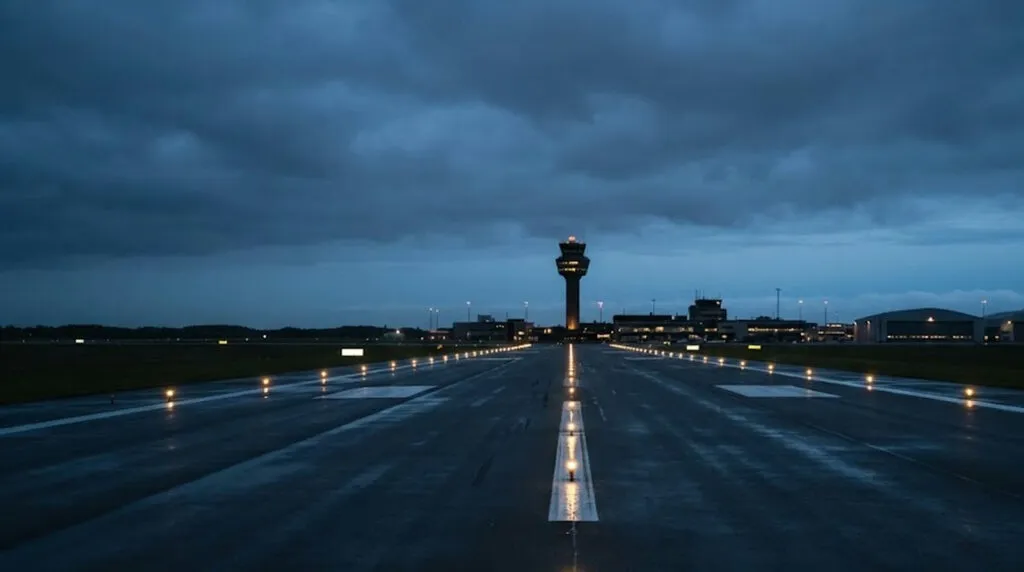
Merz promised measures "in the coming days" and confirmed the partners already know what is coming. The response is German...
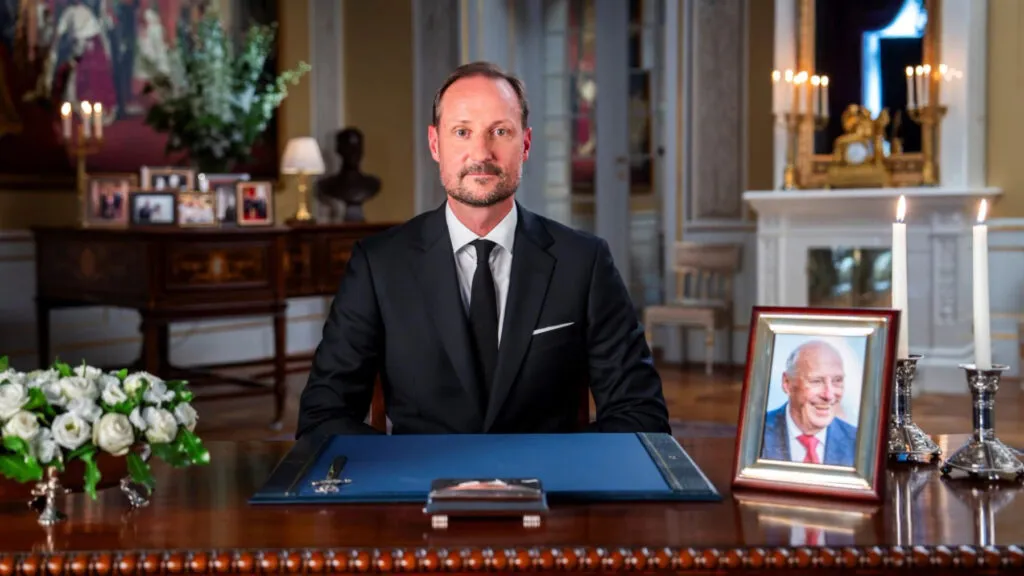
A day after Harald V died, the new king sat down in front of a camera with a photograph of...
This site uses cookies - is that okay? Learn more
Be the first to know when Metla launches something new
Leave your email and we will write when there is a new guide or something new on Metla.
