
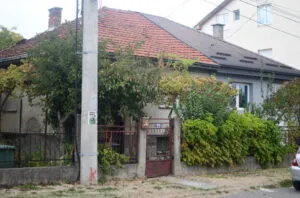
Four detained over the killings in Hrom and Gjorche Petrov: the targets were elderly people living alone
29.10.2026


29.10.2026

29.10.2026
29.10.2026

29.10.2026
29.10.2026
29.10.2026

29.10.2026
28.10.2026

27.10.2026

29.10.2026

29.10.2026

28.10.2026
29.10.2026

29.10.2026

29.10.2026

29.10.2026

28.10.2026

27.10.2026

29.10.2026

29.10.2026

29.10.2026

29.10.2026

29.10.2026

28.10.2026
29.10.2026
28.10.2026

27.10.2026
27.10.2026
26.10.2026
24.10.2026

23.04.2026

23.04.2026

12.04.2026

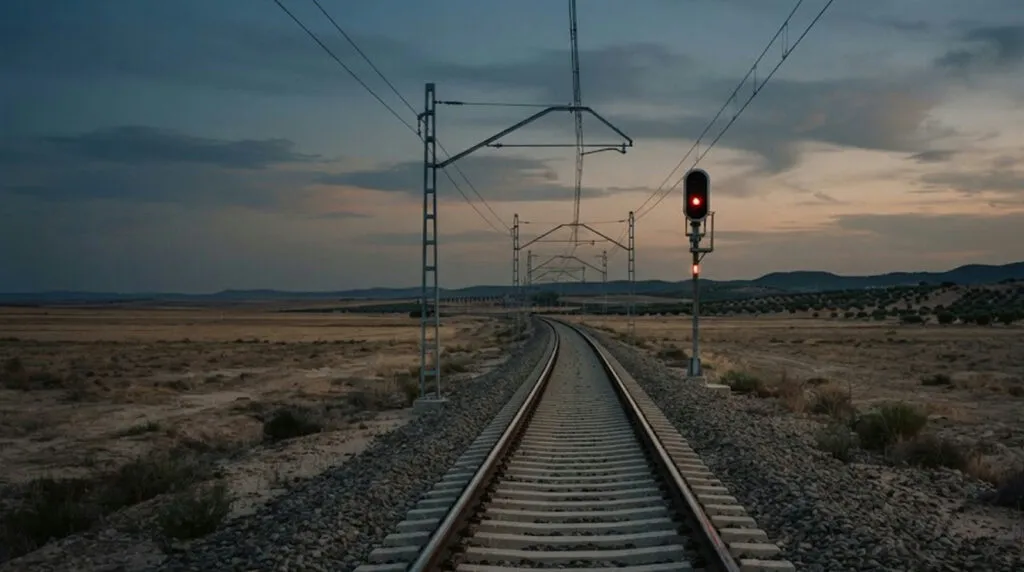
At least 68 people have been killed in a collision between two high-speed trains in central Spain, at kilometre 118 of the Madrid - Seville high-speed line, near the town of Urda in the province of Toledo. 107 people are in hospital, and traffic between Madrid and Andalusia has been completely halted. Rescuers and the army are still pulling victims from the crushed carriages, and the authorities don't rule out finding more bodies underneath.
This isn't a story about a storm or an old railway. This is one of the most modern high-speed networks in Europe - and, according to the government's own first explanations, the train was given permission to pass a red signal.
What happened on the line
Transport Minister Óscar Puente explained that a computer system fault caused a problem with the safety system on a 63-kilometre section, so every train in that area stopped automatically. State railway infrastructure company Adif then took over control manually. It was decided that Renfe's AVE high-speed train should continue south towards Seville despite the red light on the signal. That train then slammed into the back of a stationary train operated by Iryo. Two carriages were crushed and thrown down the railway embankment.
Puente called the traffic controller's order "inexplicable". All staff on shift at Adif's control centre in Madrid tested negative for alcohol and drugs. The independent accident investigation body, set up only in July, says it is too early for any hypothesis.
The warnings nobody heard
Beyond the death toll, the most questions are raised by what came before the crash. The leading train drivers' union Semaf had already announced a 24-hour strike for the very day after the accident. The reason: failure to apply necessary safety measures on high-speed lines and increasingly frequent signalling failures. The civil servants' union CSIF, meanwhile, says it warned back in September about excessive working hours at Adif.
Now CSIF is demanding the minister's resignation, accusing him of turning a hard-working employee into a scapegoat instead of taking responsibility himself. A scenario the Balkans know by heart: when the system fails, the first culprit is always sought at the bottom of the hierarchy.
"If you had described this to me a week ago as a hypothetical scenario, I would have told you the chance of it happening today was zero," said Francisco Badea Romero, a professor of engineering in Madrid. He called the tragedy something that "should never have happened" and criticised the lack of transparency in Spain's rail system, in which passengers are forced to "blindly trust that everything is fine".
The street demands accountability
On Wednesday evening around 500 protesters gathered outside the Transport Ministry in Madrid, demanding resignations in the government. Some threw bottles and flares at police, who used tear gas. Banners read "Get out!" next to a photo of Prime Minister Pedro Sánchez, and "Corruption kills". The far-right Vox party filed a criminal complaint for negligent homicide against those responsible at Adif.
Spain now has to answer the question every state avoids: is this one person's mistake on one shift - or a system that sent out warnings for months that nobody wanted to hear? If the answer stops at a single controller, the families of the 68 dead will have every right to ask why nobody higher up is answering for it.
The latest 10 news from this category
Neither Netanyahu nor Gadi Eisenkot has 61 seats. Likud remains the biggest party, but with no path to power -...
Convicted of extortion, decorated by Putin, paid for part of Trump's son's wedding. Now a joint hunt far from the...
Two Belarusians and a Ukrainian under investigation, targets picked by Russia across Europe, and a company that had just signed...

Дали двајца луѓе на иста возраст можат да стареат со различна брзина? Научниците открија дека дел од одговорот можеби се...
Демократска Република Конго се соочува со најтешката епидемија на ебола во својата историја. Според најновите податоци од 27 октомври 2026...
Флавиу Болсонару, син на поранешниот бразилски претседател Жаир Болсонару, според медиумските информации, го напуштил Бразил по изборниот пораз, во време...
He didn't turn up for Sunday family lunch, and that evening he was found dead behind Villa Sauber. The palace...
Brazil's first-ever fourth term, and the first win for a candidate who came second in the first round. The Bolsonaro...
Henry VIII broke with Rome over one divorce. Five centuries later, Charles III and the Pope are exchanging honours -...

One joke about the gilding, then the serious message: while the powerful admire themselves in the mirror, voters pay the...
This site uses cookies - is that okay? Learn more
Be the first to know when Metla launches something new
Leave your email and we will write when there is a new guide or something new on Metla.


